
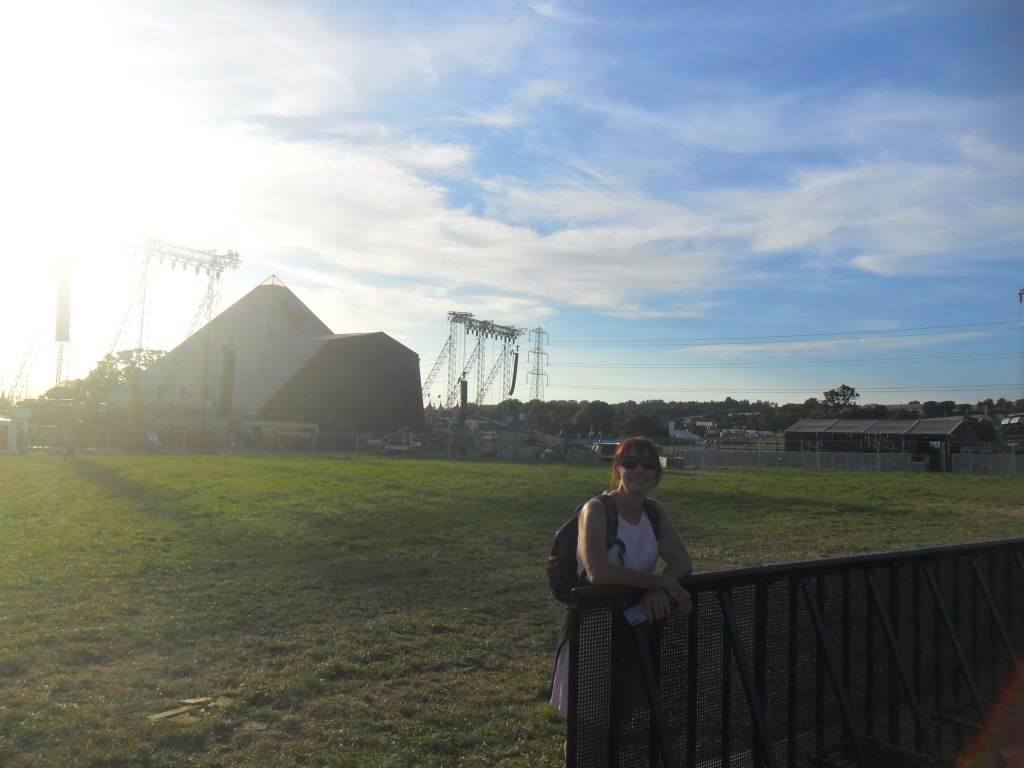
I have been going to Glastonbury Festival of Performing Arts for almost 40 years and it’s fair to say that it is a huge part of my life. I have been to the festival as a teenager, as a mother with my 3 children, as a grownup and more latterly as a worker. I am often asked advice – particularly from those who are going for the first time. So thought I would gather some of my top tips for having the best time, irrespective of weather, music preference or age.
Michael Eavis and his wife Jean’s first festival, the Pilton Pop, Blues and Folk Festival at Worthy Farm in 1970 was the beginning of the global Glastonbury brand we know and love today.
55 years later and Glastonbury Festival of Performing Arts covers 900 acres and welcomes 210,000 people every year – for context, twice the size of the City of Bath. You can compare it with your own city. Take a look at the comparison website here.
Added to the sheer size and scale of the festival is the unpredictable Somerset June weather. Therefore, if you are lucky enough to be going – planning is essential.
Before You Go
- Plan your journey there and back. Seems obvious right! But lots of people forget that you have to get there and back. There are numerous ways to get to the site – coach, car, train, bike, taxi, walk – some more complicated than others. There are 55 separate car parking fields, camper van fields and private campsite parking areas. If driving, have enough petrol for your return journey, water in the tank and oil. Some cars fail to start after the festival – you might want to check your breakdown cover. Make sure you photograph where your car is parked! It can be complicated – so check it all out before you set out.
- Pack carefully. See our What to Pack for Glastonbury Festival blog
- Invest in good quality equipment. The Love the Farm – Leave No Trace Pledge, has been around for many years now. The pledge encourages everyone to do their part in keeping the site clean and as sustainable as possible. Organisers encourage festival goers to use the bins responsibly and take all of their stuff home. Equipment that breaks, falls apart or is inefficient ends up in the 2000 tonnes of waste generated over the weekend. You will see the discarded, broken trollies as you walk to the gates! Think good quality small tents, trollies, sleeping bags, footwear and coats.
- Download the Glastonbury app. Paper Glastonbury guides have long gone – the festival organisers quite rightly, are doing everything they can to minimise waste. The app gives information about most of the main stages (there are between 80 and 100 in total) and works pretty well. You can plan which bands you want to see, and it creates a schedule for you. You can also share your schedule with others!
- Accept that you will have FOMO. Even the most experienced Glastonbury goers accept that you will never see everyone you want to see and do everything you want to do. Sometimes, set clashes are deliberately designed to ensure that all 210,000 people don’t all go to one stage, but are spread across a number. Trying to dash between stages – as you might do at other festivals – is not realistic – particularly if the ground is wet or they are a distance away. You will have FOMO – accept it.
- Arrange meeting points. If you are meeting up with friends – think about some good meeting points. Download the map from the Glastonbury website and decide which is going to be your meeting points. Many people meet at the Cider Bus in front of the Pyramid Stage – the Tower up in The Park area – the meeting point at Williams Green or anywhere else. Remember – the site is huge and navigating it takes time and often patience, due to the sheer number of people moving about.
- Camping. If you are camping onsite – think carefully about where you want to camp before you arrive. Different areas attract different people, depending on where they want to be based. Look at the map, think about which car park and which gate you will be arriving at. On Wednesday, when the gates open at 8am – there will be a huge number of people heading to their favourite camping areas. Make sure you know where you are going. Talk to the really helpful camp stewards when you get to that area. Remember – you will be carrying all of your stuff, and the distances can be huge. Especially if it is wet underfoot.
- Arrival time. Sort out when you are arriving. Many will queue to get in on the Wednesday morning when the gates open at 8.00. Be prepared for long queues through security – bring plenty to eat and drink and accept that you will need patience.

 We travel not to escape life, but for life not to escape us.