

Phuket is the largest island in the Andaman Sea and a busy tourist spot. As with everywhere else in Thailand, it has beautiful beaches, temples, mountains and boat trips galore. Phuket attracts visitors from across the world and there is something for everyone – but you need to do your homework well. There are some quiet stunning beaches in Phuket, some beautiful hotels and spas and some great cultural excursions. If you like a neon-lit strip full of night clubs, loud bars, strip clubs and hawkers, then Bangla Road at Patong is for you!
Travelling around Thailand gives you the opportunity to compare and contrast different locations. Having been to some amazing smaller islands, Phuket is a totally different deal. Holiday destinations are very much about the interests, needs and desires of the traveller. We were flying home to England from Phuket so knew that it would be good to have a couple of days there – we stayed two nights. But we also knew that some areas of Phuket really weren’t for us – too busy – too many cars – too many tourists. Consequently, we avoided the big resorts and chose to explore Phuket Town instead and we weren’t disappointed.
Phuket Old Town is the capital of Phuket Province and like any city, has traffic, people and industry. But in the centre is Phuket Old Town – a charming conglomerate of pretty, bustling shops, cafes and restaurants. The architecture is brightly coloured, flamboyant and distinct – a fusion of the 16th century original settlers from India, Portugal and China – keen to be part of the thriving tin mining scene. As such, it has a different feel to other parts of Thailand shown in its Phuketian cuisine and culture. It is a charming and unique part of Phuket’s history and a great place to while away a few hours.
What to do in Phuket Old Town
Explore the wonderful and well-preserved Sino-Portuguese architecture, concentrated on Thalang Road, Phang Nga Road, Yaowarat Road and Soi Romanee. It’s lost its reputation for opium dens and brothels and instead, each shop front is full of interesting things to buy, peruse and marvel at. Sit on one of the bars outside stools and people watch for a while. Relax in one of the modern cafes. It’s a photographer’s dream – the buildings still representative of a unique part of Thailand’s history and the influence of foreign immigrants. For those who enjoy a movie location, The Memory at On On Hotel was used as a location for the Leonardo DiCaprio film The Beach – it is meant to be the Bangkok hostel where the main protagonist is given the map. It is the oldest hotel in Phuket Old Town opening in 1929 and visitors come from all over the World to visit it. It was beautifully refurbished in 2012 from a rundown hostel to a lovely hotel at very reasonable prices. Definitely worth trying to book a room there!
At night, Phuket Town comes alive with street sellers, pretty lights, flowers and art. It’s a great place to people watch from a comfortable bar stool. We were recommended to go to Club No 43 – an intimate and small cocktail bar and we weren’t disappointed. It sells the most incredible and creative cocktails – reasonably priced and with a 5-star service. Don’t be put off by the unsmiling bar tenders – even a squeaky chicken bought at the market couldn’t illicit a smile – but what they create is truly magical.
The Sunday Night Walking Street Market, known as Lard Yai, is truly spectacular. Visitors come from all over the island, and it is easy to see why. It starts at 4pm and closes at 10pm – with everything efficiently cleared away within the hour! The normally chaotic roads around it are closed to traffic, as thousands pour in to sample the delights of the food stalls, the creative arts stalls and the usual collection of tourist souvenirs. It is loud, lively, busy and great fun. We managed to time it so that we stayed over on the Sunday night, minutes from the market, which made the whole experience super relaxed. Unlike a tourist who we overheard asking a taxi driver for the price of a lift back to Khao Sok Village – 154 Km and 2.5 hours drive – he wasn’t impressed with the response.
Beaches
Depending on the length of your stay, you can visit a host of beaches for days out from Phuket Old Town. We had a few hours on our final morning and already feeling sad that we were leaving, we caught a taxi to a local deserted beach for breakfast[HM1] . We arrived at 9am and it was absolutely deserted – blissful. We only had a couple of hours and the taxi driver lent us beach mats and hung around! We walked, swam and had a very unimpressive breakfast – but it did mean we grabbed a last swim in that aqua water before heading back to London in March.
Accommodation In Phuket Old Town
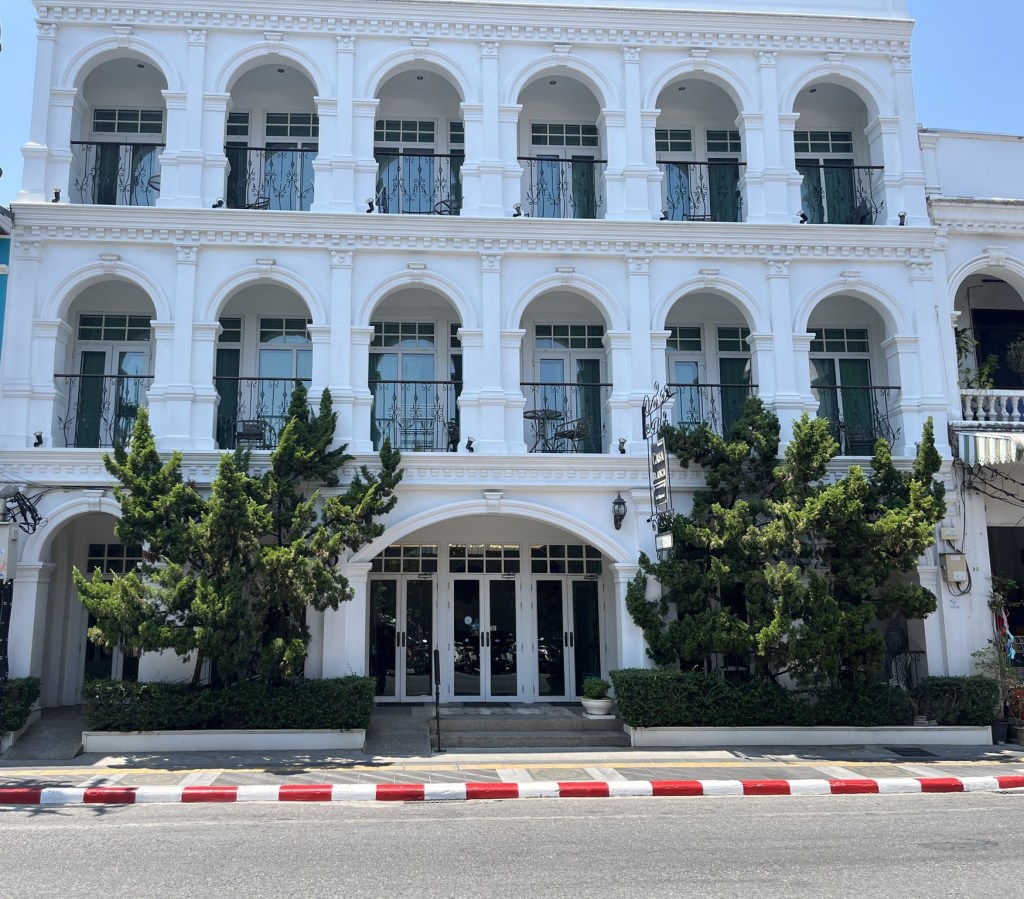
There is lots of accommodation available in Phuket Old Town and easy to get something lovely at a low cost. We have already talked about The Memory at On On Hotel. We stayed just round the corner at the Casa Blanca Boutique Hotel. It says it’s 3-star, but we really couldn’t fault it. It’s in a charming colonial building right in the heart of Phuket Old Town. The service from all staff was incredible, the interior filled with beautiful art work, staircases and plants – truly beautiful. We had a great room looking out onto the street. There is a large bar opposite with live music, which we enjoyed having a drink at most nights – though book a room at the back of the hotel if you like to be in a quiet bed by 10 O’Clock.
Travelling to and from Phuket Old Town
Many of the speedboats and ferries come into Rassada Pier from the islands and Krabi. It is 5.2 Km from the dock to the Old Town – so not greatly walkable in the heat and with luggage unless you are very fit and don’t mind walking along a dual carriageway. The lovely Casa Blanca Hotel where we were staying, offered to send a taxi – at a very reasonable rate – which proved to be a life saver. There are taxis waiting at the dock – but we were glad not to have to haggle the price with the multitude of drivers and their bosses – the world over – they are the same.
A note about speedboats – they are great fun – fast and busy – treated like buses by[HM2] locals and tourists alike. They are also very noisy – two to three large engines in close proximity is deafening – bring some headphones if you have them. They are also cramped, not greatly comfortable and there is always the possibility of getting wet – so put valuables in a waterproof bag. Luggage is stored by the crew – outside on the front of the boat. You can take suitcases – though sometimes there is a weight restriction. Make sure you keep valuables on you – protect any delicate items (the bags get thrown on top of each other) and make sure zips/locks are done up. See our blog on What to Pack for Thailand[HM3] .
Elephants
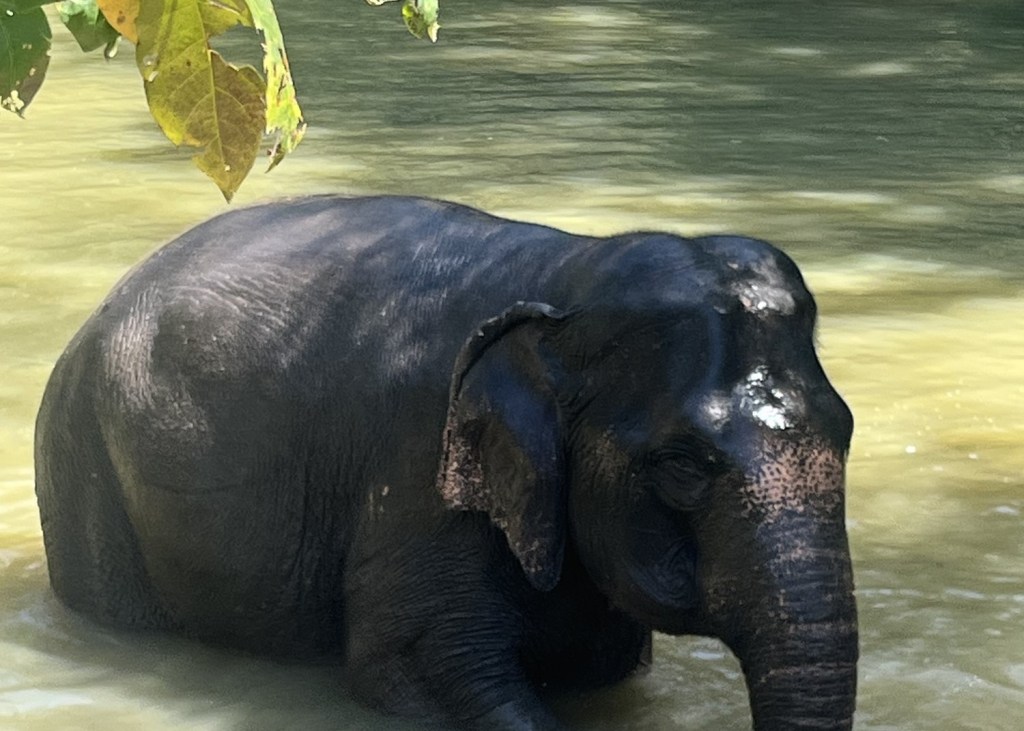
Phuket has many tourist elephants and believe it or not tiger attractions. This makes us very cross – for all the obvious reasons. Many claim to be ethical sanctuaries or trick tourists into believing they are. As I said at the start of my Thailand overall blog – a quick internet search of ‘elephant crushing’ the technique used to train baby elephants – will hopefully deter you from encouraging this tourist industry. As one local told us – wild elephants are native in the north and in the rainforests of Thailand – those used in the tourist industry have been brought there. Animals being used for tourism is not illegal. The only way to stop this cruelty is to stop paying money to ride or bathe elephants. We did our homework and visited ‘Phuket Elephant Sanctuary’. Be careful – lots of less reputable companies pass themselves off as this one. The owner, used to be a trainer and is well aware of the cruelty he used to inflict. It now rescues elephants from the trade and they can roam freely over the 30 acres of forest land. They have an education programme, are building a veterinary centre for free medical care for locals who still have elephants and a huge overhead walkway where you can walk and view them. It is not cheap – we did a half day which was about £180 – but it was well worth the money. We were picked up at our hotel – had a leisurely breakfast at the sanctuary in their beautiful outdoor café (don’t eat before you arrive) – watched an educational video and then went to meet some of their rescued elephants. You can feed them snacks – the elephants take it in turns to gorge themselves on the treats given to them. Remember these are elephants that have interacted with humans since they were ‘broken’ as babies. You can watch them roam, relax, bathe. But you can’t ride or bathe them. We were then provided with a huge and diverse vegetarian lunch and returned home. This sanctuary is perhaps not as hands-off or wild as some of those in Chaing Mai and the like – but it is making a huge difference to educating locals and those tourists who are encouraging the trade by going on the elephant excursions.

 We travel not to escape life, but for life not to escape us.