
We had this romantic idea of throwing our devoted cocker spaniel, Rosie into the car and exploring Ireland with her. Visiting Ireland with a dog is a little more complicated than that, namely getting there, staying there and the documentation that you need to get in.
Initially, we were going to head to Belfast, so that we could visit Nigel’s eldest. Not being able to fly with the dog, we decided to book the Stena ferry, Liverpool to Belfast. Dogs are only allowed in allocated dog cabins on this ferry and although we planned the trip early, the limited number of dog friendly cabins meant they were fully booked throughout the whole of June, July and August. The only other way that dogs can travel on the Stena ferry is by remaining in the car on the car deck for the 8-hour journey or kept in the pet kennel area – neither of which was an option for our beloved, and fairly elderly dog. So back to the drawing board. Instead, we opted to travel from Pembroke to Rosslare on Irish ferries, only a 4-hour journey. They have a ‘pet den’ area, which is clean and has an adequate outside deck. Distances in Ireland are not huge, so we thought we would use the opportunity to explore a little of the Republic of Ireland and then travel up into Northern Ireland.
The sticking point is the documentation needed to travel to Ireland with a pet. Northern Ireland, as part of the UK is pretty straightforward, you go to the gov.uk site, complete a simple form, download, print and take it with you. It costs nothing. The Republic of Ireland remains however, part of the European Union and consequently, you will need to obtain the relevant documentation. This includes getting a rabies jab for your dog, a few weeks in advance, a ringworm tablet within 4-5 days of travelling, checking your pet’s microchip and getting your vet to complete the documentation. This came to an extortionate £250 (approximately) and heaps of inconvenient vet visits, even though we were only staying in the Republic of Ireland for a couple of nights. If you book early enough and travel into Northern Ireland, you can avoid paying for this documentation.
Equally challenging was finding accommodation that would take dogs. Booking.com make hoteliers choose whether to advertise as pet friendly accommodation or not. Many times, we booked something that was advertised as ‘pet friendly’ only to discover that they weren’t or they only had one pet friendly room which was already booked. One exceptionally friendly landlady actually phoned me to explain that the best way of securing a pet friendly room was to call the hotel directly. This did extend the amount of time it took to book – especially as we like high quality accommodation at manageable prices. Strangely, if you can afford much more expensive hotels – we are talking 300+ per night, there did seem to be lots of pet-friendly options. I am not going to lie, it was challenging finding nice accommodation, particularly as it isn’t in abundance for anyone, let alone those with pets. But we managed to find 9 nights worth, none of which were horrendous and some that were exceptionally lovely.
So, with the ferry costing £430 return and the pet documents £250, travelling to Ireland with your dog is not cheap, but as we discovered, with a little planning, very worth the effort.
This is what we did on our trip to the Republic of Ireland and Northern Ireland.
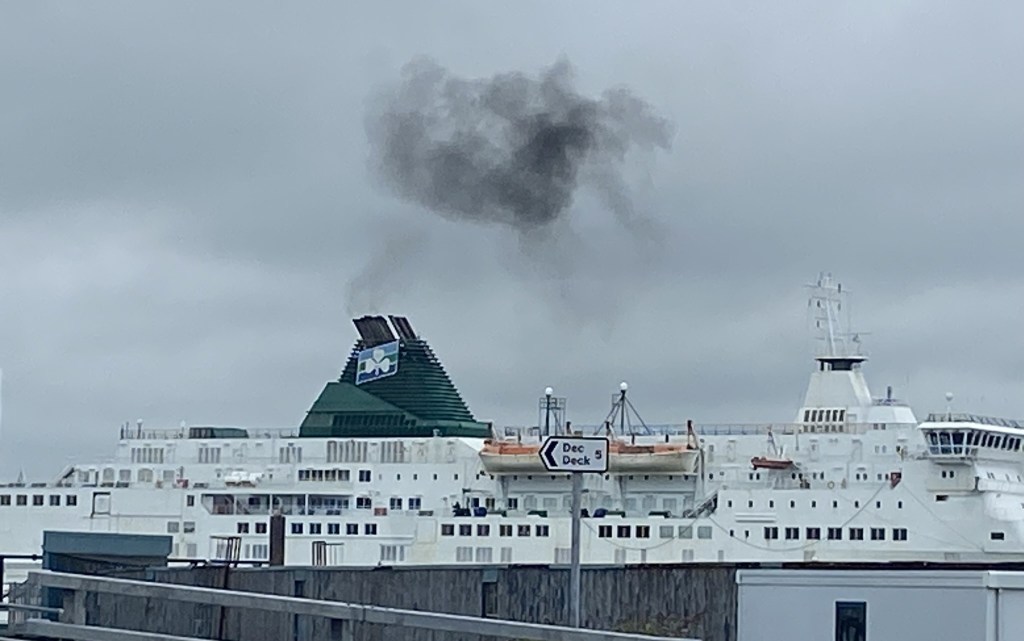
We caught the 13.45 ferry and settled in for the 4-hour journey, which was quiet and very pleasant. Originally, we had planned to stay overnight close to the ferry port but completely failed to find any nice accommodation that would take our dog. Instead, we travelled north to the seaside resort of Bray and stayed in a large pub on the seafront. The drive north was very simple; one straight road, we barely saw a car on the dual carriageway and there were regular places to stop for a comfort break.
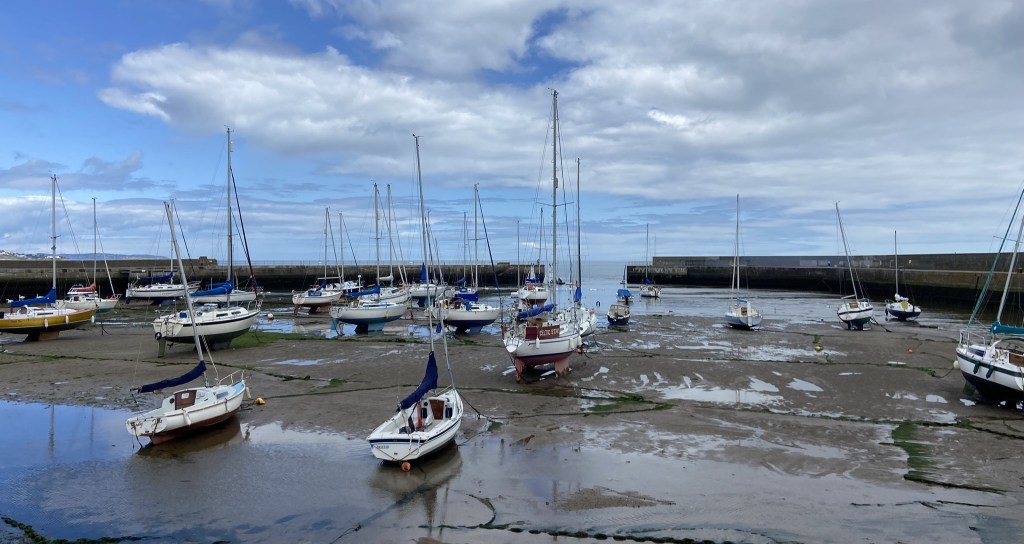
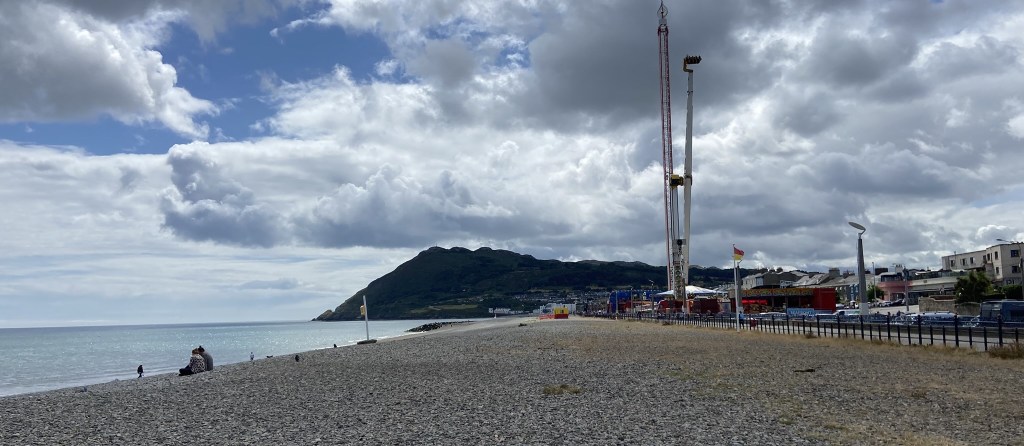
Bray is a typical seaside resort, with an array of hotels, cafes and bars along a traditional seafront. We stayed on a Thursday night and the bar where we were staying was quiet with a talented ‘trad’ band, of mixed-aged musicians playing traditional Irish music. Rosie (our dog) was welcomed, fussed over and given a bowl of water. It was a really lovely evening. However, we were told that Friday and Saturday nights are very different in Bray. It’s a popular place for Dubliners to come and party. The pub we stayed in has an in-house DJ on Friday and Saturday nights playing until 2.30am and the hotel warns guests that it will be very noisy.
The following morning, we took a leisurely, promenade stroll, to a recommended cafe at the far end of the beach for breakfast – which was lovely – before heading off to the Wicklow mountains.
Wicklow
We headed to Powerscourt Waterfall which is 6km away from Powerscourt Estate (dogs aren’t allowed on the estate). For a small charge (at the time of writing it was €15 for two adults), you can scramble over the waterfall rocks, take a lovely walk in the woodlands and grab a coffee or ice cream. When we arrived, it was packed with families enjoying their BBQs and picnics in front of the cafe. However, as with everywhere, if you walk for a couple of minutes, you will quickly leave the throng and find some quiet. It’s very beautiful, very well looked after and Rosie loved diving in and out of the pools as we scrambled over the rocks.

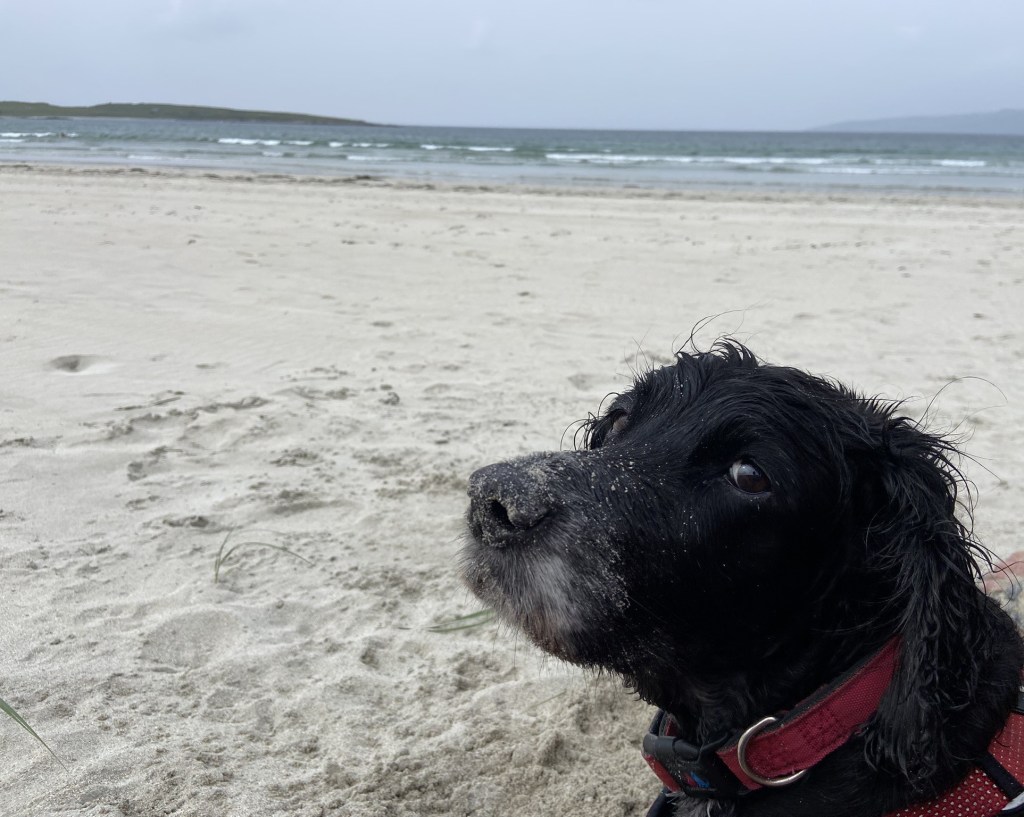
We then headed to Brittas Bay, 5km of sandy, deserted beach, which was a great way to run, splash and generally let off steam. Rosie enjoyed it too!

We were staying up in the Wicklow mountains and had a long and scenic drive to a remote B&B, where we discovered that the pub (we hadn’t eaten anything) was a further 30-minute drive up and through the mountains. We didn’t see another car until we hit the car park, which was full and lively and ironically, full of dogs!
We like to run, so took the opportunity to bag a Republic of Ireland Parkrun in the Avondale Forest Park. This is a beautiful estate, with great, dog-friendly facilities and an exceptionally welcoming Parkrun community. This is also the place where you can clamber over one and a half kilometres of a tree-top walkway – not dog-friendly, so I took one for the team and relaxed with Rosie instead.
Lower Lough Erne
This beautiful expanse of water is surrounded by small jetties and a whole host of water sports and small pathways. Sadly, at the time of our visit, the lough had been plagued with blue green algae so unsafe for Rosie to swim, though there were plenty of people in the water.
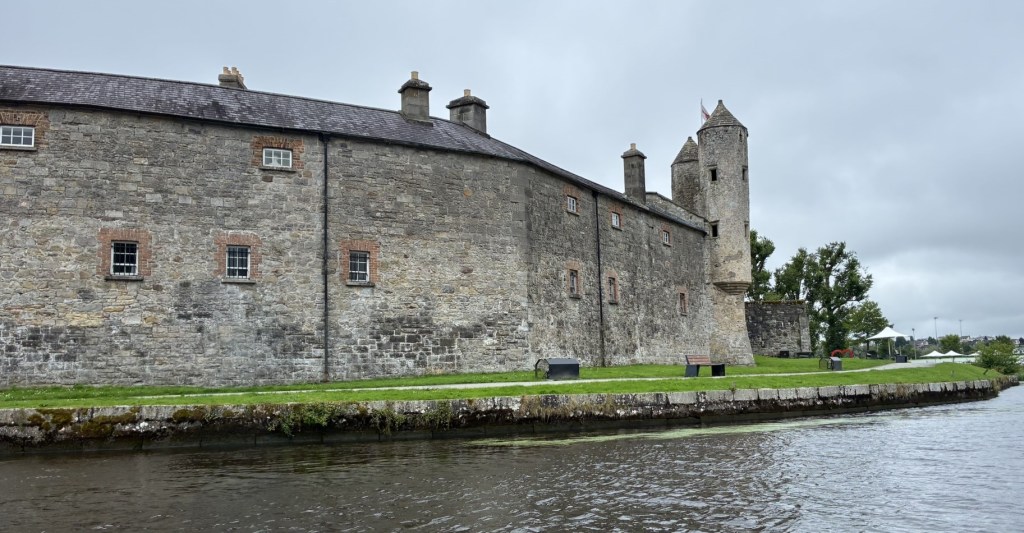
Enniskillen
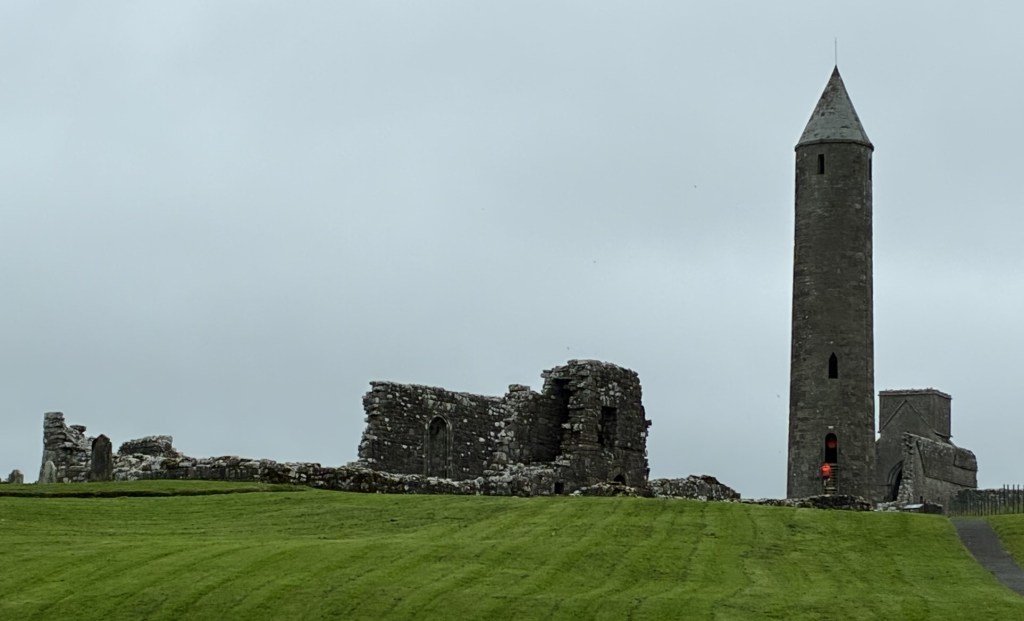
We found Enniskillen to be a beautiful place to wander, soak up the atmosphere and learn a huge amount about the history of the area. We started at the castle in the centre of town and although Rosie couldn’t go into the two small museums, she was allowed in the main section and battlements, so we took it in turns. In the afternoon we took a boat trip to Devenish Island, to see the 6th century monastic site. It’s a great way to learn more about Enniskillen, potter around the ‘island town’ and its waterways and finally explore the deserted island. The history of Devenish island, is exceptionally interesting, with its remaining buildings and impressive 12th century roundhouse. The roundtrip is about two and a half hours and is reasonable at €15 a person. Booking in advance is worth it – the morning trip had already sold out, meaning we had to rearrange our plans. We were planning on doing the Culcagh Boardwalk trail, that climbs 1500 feet, with a round trip of nearly 7 miles. We didn’t do it for a couple of reasons. Firstly, we discovered that dogs aren’t allowed on the boardwalk during the summer season as the walkway is too narrow. Secondly, it was absolutely teeming with rain! However, this meant that we could factor in time to explore the real Enniskillen. We found it a totally adorable place and far removed from some of its more recent, tragic historical events.
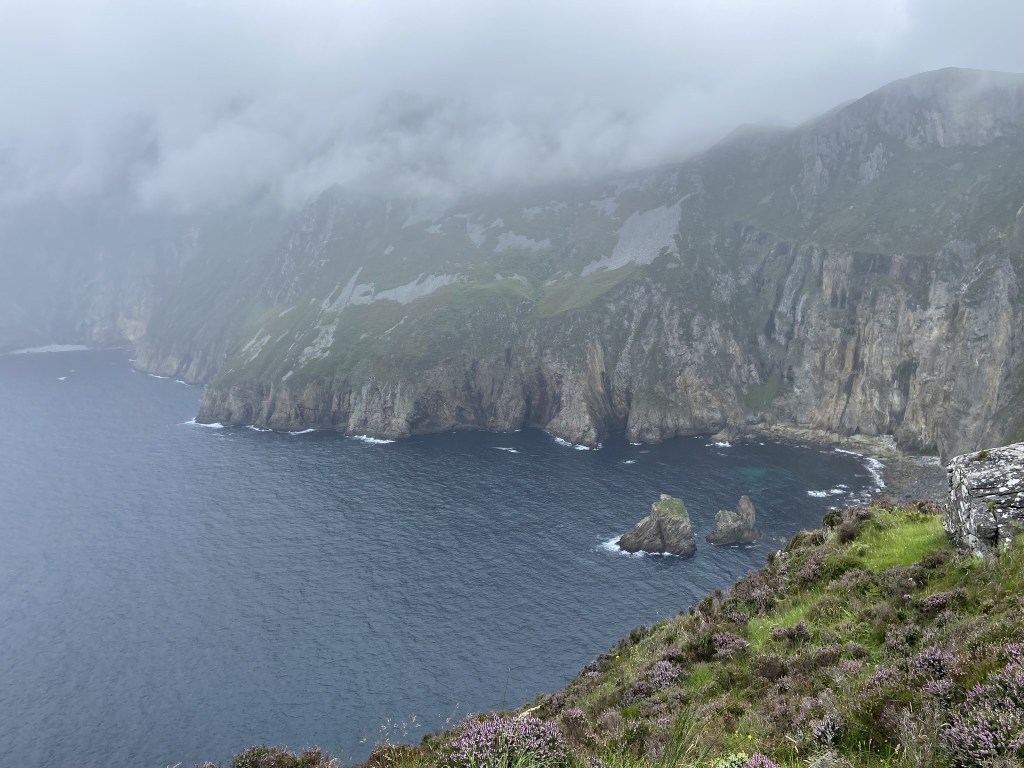
Donegal – Slieve League Cliffs
We headed first thing to Slieve League Cliffs, arriving shortly after breakfast to avoid the crowds. The drive through the Glengesh pass was stunning as we carefully navigated up to the visitor centre, with various scenic ‘viewpoints’ on the way. The trick is to park at the huge visitor centre and get the shuttle bus up to the first viewpoint, which is spectacular, and from there, you can walk as high up into the mountains as you like. We didn’t know this, so didn’t get the shuttle bus up, instead walking, a pleasant 25 minutes up a very steep road. From there, we walked to the next higher viewing point. It was a lovely walk, but we wished we had saved our energy to go up much further, getting the shuttle bus, would have saved us time and energy. On our way down, we saw many who had parked much further down from the visitor centre and were wasting a lot of time walking an uninteresting, steep road to the visitor centre! The views from the cliffs are spectacular – they are some of the highest cliffs in Europe and on a bright day, like we had, they are totally spectacular.
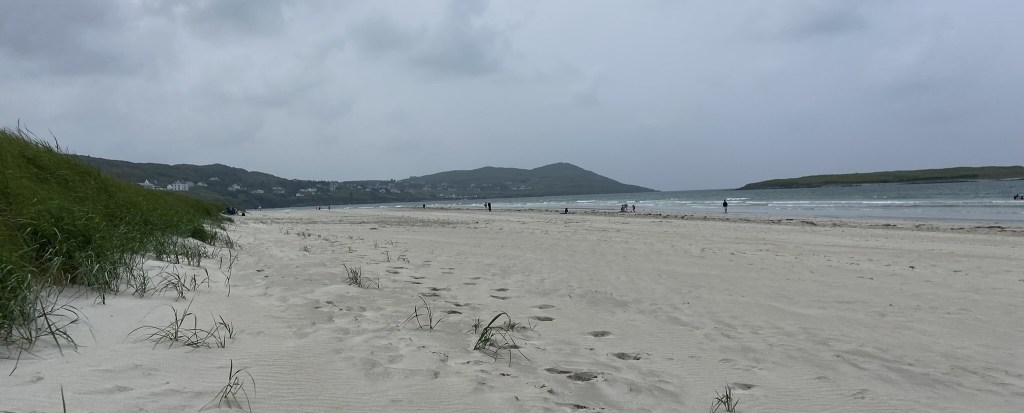
Narin Beach
Narin beach is a blue flag, white sandy beach, over two kilometres in length with impressive sand dunes. It is popular with families and safe to swim. Dogs are allowed once you get past the lifeguard supervised section and you can walk for an endless time. On a hot, sunny day, it is perfect for sunbathing, relaxing or simply having a picnic.
Glenveagh National Park
Our packed itinerary meant that we pushed ahead, travelling through some grandiose scenery in Glenveagh National Park, particularly seeing the majestic Errigal, the highest peak in Donegal at 2464 feet – one on our list for another day. It’s meant to be very accessible, as the route starts from quite high up, meaning the walk is a 3.4 mile out and back, though the climb is still steep. This is a beautiful and wild road, through some stunning mountains, avoiding the sheep who bravely wander the roads.
Castle Doe
Castle Doe is a romantic-looking, medieval castle, sat in an inlet of Sheephaven Bay. It was built in the 1400s as a home for the MacSweeny chiefs who ruled there for over 200 years. It is famed for giving refuge to survivors of the Spanish Armarda fleet in 1588. It is eerily quiet, open to the public to scramble around and breathtaking in its romanticism. I love a castle and this didn’t disappoint.

Beaches
Everywhere you travel along this section of the Irish coast you will find beaches…big…deserted…windswept. This abundance of spectacular beaches provide great places to walk, run, picnic, fly a kite – weather permitting. Every time you turn a corner on the coast road you will find another, and it is hard to highlight any of the numerous we visited.
Lough Swilly ferry
We decided to get the ferry across Lough Swilly on our journey to Malin Head. We picked it up in Rathmullan and at the time of writing, paid €20 for a car and two passengers. Fortunately, it was a calm day on the Lough and the boat trundled across in around 25 minutes. Not only did it cut off the drive through Letterkenny and Derry, it was also a great way to see the Lough. It’s a small ferry you drive on and off, and sit upstairs on deck letting the cold wind blow through your hair.

Malin Head
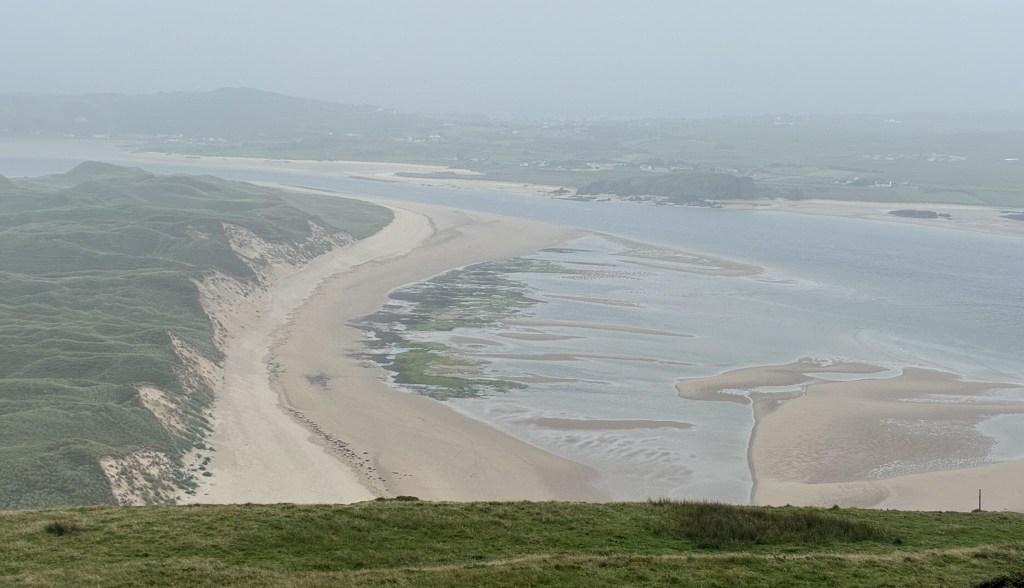
We knew nothing about Malin Head other than its location on the Inishowen Peninsula in County Donegal, the fact that it is Ireland’s most northerly point and that we managed to find some accommodation there. The landscape felt quite wild – rocky shorelines, disparate houses, cows and windy, bendy roads. There is a signal station at Banba’s Crown, right at the end, and some absolutely delightful bays and caves. We arrived quite late, not knowing what to expect, however the warmth of some great food at one of the local pubs and some surprisingly great accommodation soon warmed us to Malin Head. We would recommend a visit here.
Londonderry/Derry
Derry is a wonderful city, full of charm, history and style. We arrived early, parked easily in the centre of town and walked along the city walls, which are a great and free way to see the whole city. I say this as other city walls, such as the ones in Dubrovnik in Croatia for instance, cost an absolute fortune to walk, so it’s always extra special to find ones that you can meander calmly and freely. The walls are a great way to navigate the city and get a sense of the history of this very special place. Not only as a historical stronghold but as a place that faced some horrific tragedies and civil unrest.
When you look out at the Bogside area and see the murals telling the story of those who lost their lives, you get a sense of the deep divides and civil inequalities that have raged for centuries. A short walk from the walls by the Bogside murals is the Museum of Free Derry. The museum is run by knowledgeable and committed staff, keen to tell a balanced and accurate account of what happened in the ‘Battle of the Bogside’ and ‘Bloody Sunday’. It does this with compassion, real film footage and witness statements. It is a moving and personal account of the impact of civil unrest on a marginalized community. The Museum of Free Derry costs less than £10 each to get in and is well worth a visit.
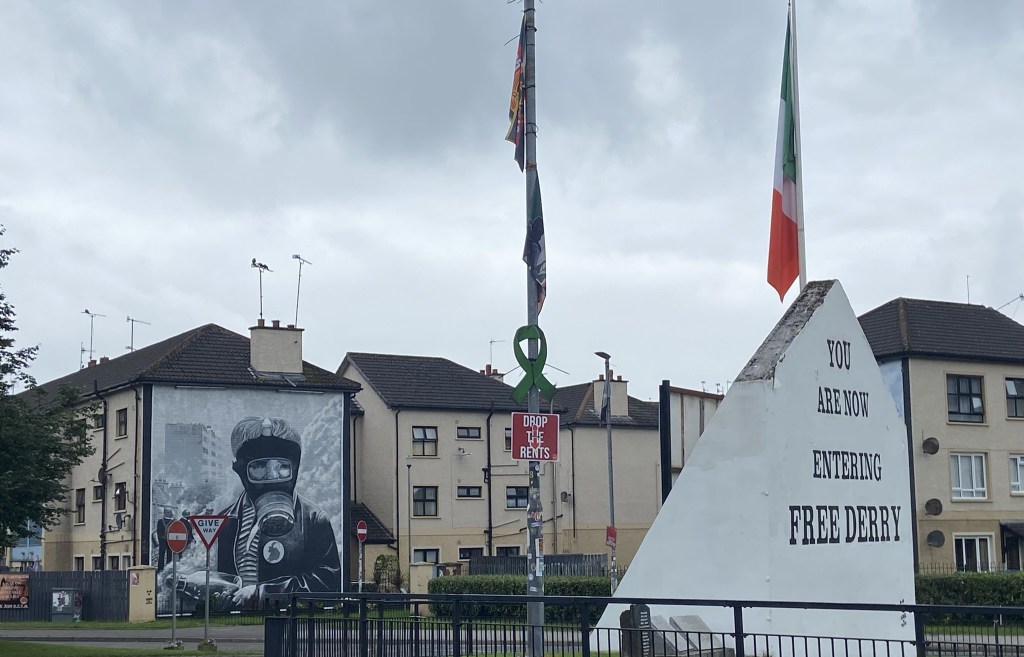
Continuing around the walls, well-located placards give you snippets of the history of Derry and help your navigation. Look out for the huge mural depicting the leads from the popular TV series Derry Girls. The Tower Museum, just round the corner, has an exhibition covering the Derry Girls, and promises an interactive experience that is being created over the coming months.

We dipped into the centre of town for lunch, finding a charming square and a thatched cottage café for some very wonderful savory pancakes.
Portrush and Portstewart are two Victorian seaside resorts on the Causeway Coast. While close together, they are very different in atmosphere. Portstewart has numerous upmarket shops and cafes, boasting the Portstewart Strand – a two-mile sandy beach – used as a location for Game of Thrones. Portrush, equally with lovely beaches with a promenade and various bars, restaurants and entertainment, including Curry’s Fun Park. At the time of writing, Portrush had just played host to the Golf Open Championships at the Royal Portrush Golf Club. The infrastructure was still in place, and the prestige wines (bottles still priced in the £100s) still for sale in the ordinary pubs on the front. One of the main attractions is the Bushmills Whiskey distillery. Established in 1784, you can take a tasting tour and shop. Be aware of two things. Firstly, they don’t allow dogs and secondly, you do need to book in advance.

The Causeway Coastal Route
One of the benefits of driving in Ireland is that you can traverse the Causeway Coastal Route at your leisure. Running from Belfast to Londonderry/Derry, this exceptionally scenic drive takes in romantic castles, deserted bays, sleepy towns and of course, The Giants Causeway. Wherever possible, try and avoid the tourist buses that plague the route. You will see when you read the reviews, that many tourists spend more time on the coach and at service stations, than actually at the attractions – so if you are going with a guided tour, choose wisely. You will see the coaches stop, everyone jumps off, takes some selfies and then it is back on to the next place. We enjoyed the freedom of exploring what we wanted, when we wanted.
We are Game of Thrones fans, so downloaded a free guide from the Irish Tourist Board, who are keen to promote it. It’s a great guide and shows you all the places where snippets of episodes were filmed, with information on who and what went on. There is also a Game of Thrones Studio Tour, 30 minutes from Belfast, which is an interactive exhibition – we didn’t do this – for obvious reasons – we had Rosie the dog with us. However, we did do many of the other iconic film locations – ticking them off as we went.
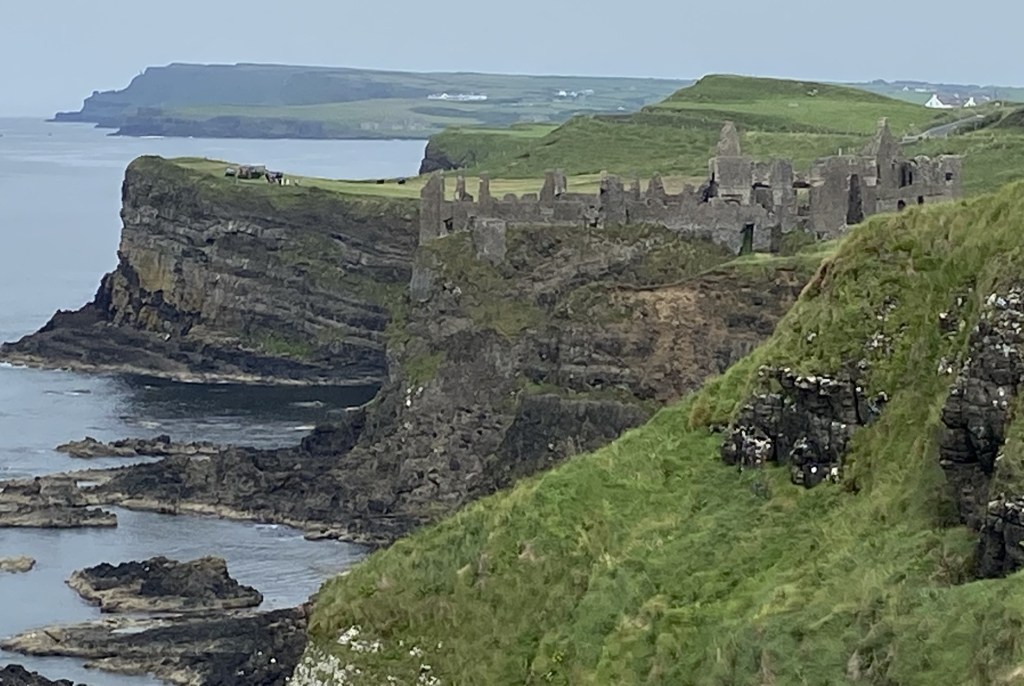
These were some of our highlights:
- The Giants Causeway – Northern Ireland’s first UNESCO Heritage site is managed by the National Trust. We didn’t know what to expect, having heard varying reviews, but we were actually quite blown away by the causeway. I think we timed it right, going late on a sunny afternoon, so it was less touristy, and the sun began to go down, adding an extra wow factor. There’s something very magical about clambering freely over ‘40,000 basalt columns, formed some 60 million years ago’ (NT website), while the waves pulsate around your feet and in the distance, you can visualize the Scottish coastline. The Giants Causeway is steeped in legends – all worth a peek at prior to visiting. It costs around £15 each adult, plus £15 for the car park – to do the visitor centre. However, it is actually free to get on to the Giants Causeway. So, you can park elsewhere and walk, get the bus or do what we did, which was to arrive at 5.30 and park in the station car park down the road and stroll directly onto the causeway.
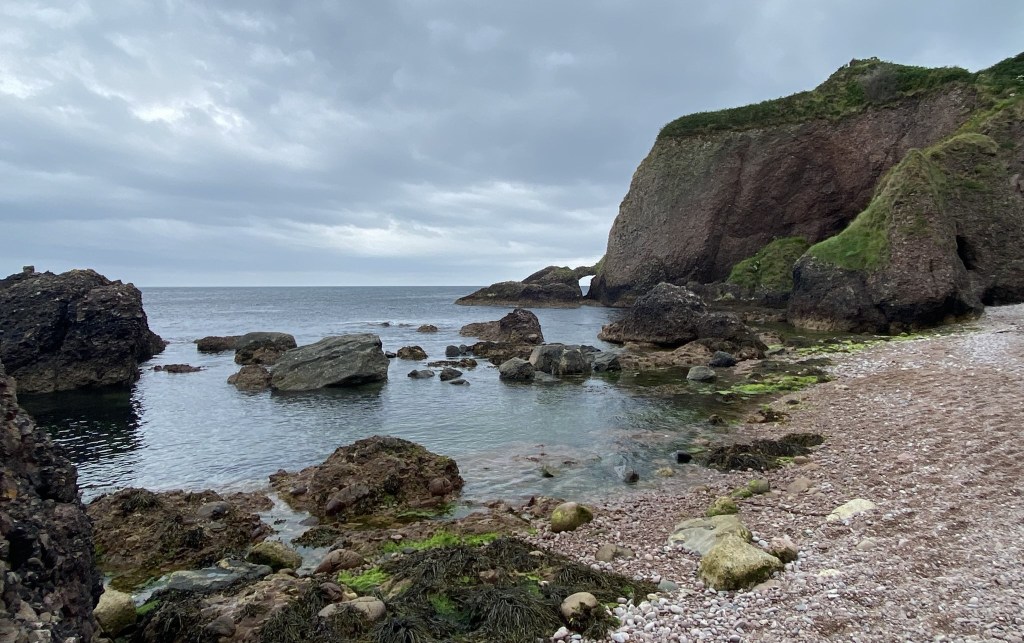
- Cushendun Caves – a short walk from the village of Cushendun, the caves are small but spectacular, dating over 400 million years old. We were lucky to chance upon them in a quiet moment and had them practically to ourselves.
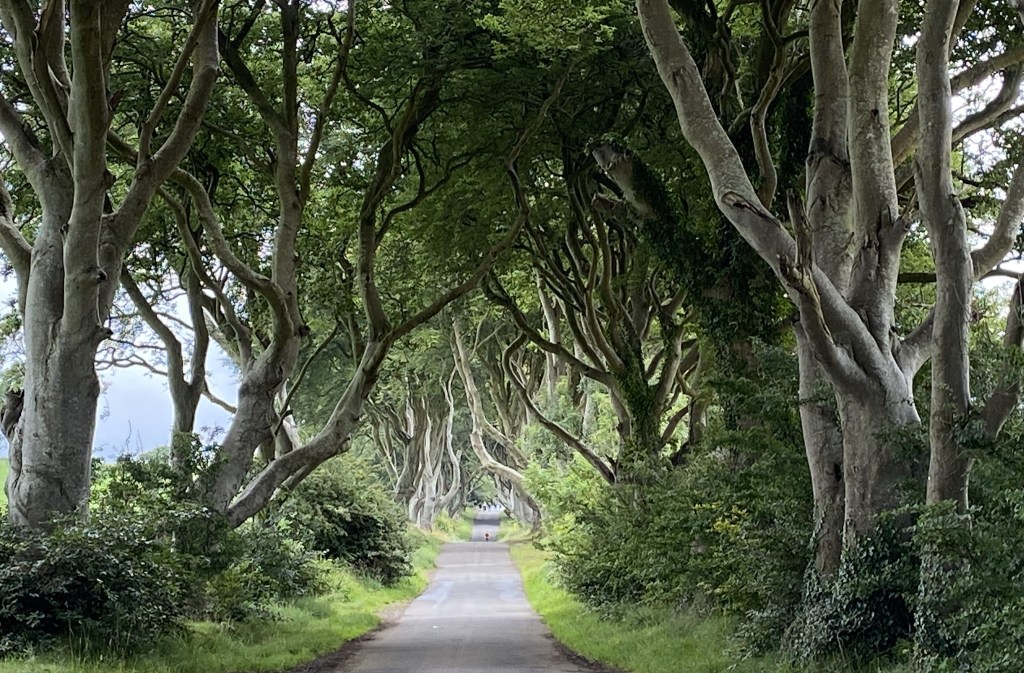
- The Dark Hedges – a short drive from Ballycastle, two rows of 150 beech trees, planted by James Stuart in the 18th century, to adorn his driveway, have become famous for their starring role in Game of Thrones. Though a GOT tourist attraction, we enjoyed the short walk, and they do have a sense of serenity and calm. You pay a small amount to park.
- Dunluce Castle – a spectacular castle on the cliff tops. It costs very little to go in and wander the ruins – but be aware, they don’t allow dogs – so you will have to visit in shifts.
Eating out with a dog
We found eating out relatively simple once we worked out how to do it. Most restaurants didn’t allow dogs. Most pubs didn’t allow dogs where people were eating. However, many pubs had outside areas, often pleasant and weather resistant ie. covered and warm. Sometimes a kindly publican, who didn’t want to turn away the trade ‘sneaked us in’ via a back door in one case, so that he wouldn’t upset the rest of his clientele. Fortunately, Rosie is exceptionally well behaved, choosing to skirt quietly underneath the table, never making a sound, so she’s pretty simple to miss. It’s good to ask around and ask for recommendations. These always proved fruitful, and it was rare that we had an unpleasant experience. Once in, staff couldn’t be more helpful, offering to bring bowls of water and lavishing attention on Rosie the dog.

 We travel not to escape life, but for life not to escape us.