
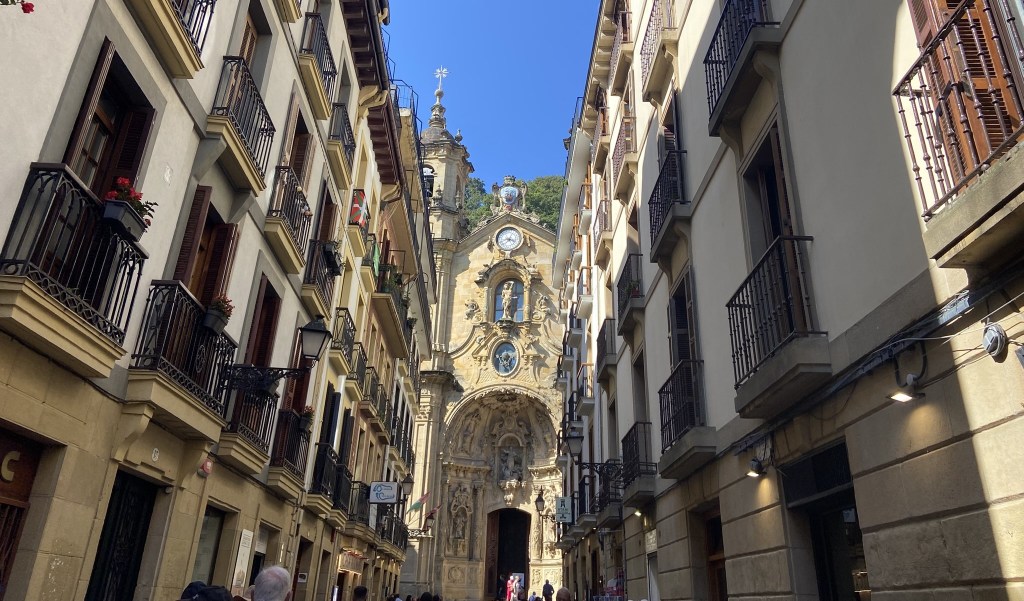
We knew nothing about San Sebastián other than it came highly recommended from friends and family. To be honest, we did little research before we went, hoping to capture some end of summer sun and relaxation. However, within a few hours, we found ourselves completely enthralled, enraptured and entranced by this beautiful Spanish, seaside town.
How to get to San Sebastián
Getting to San Sebastián from England economically, proved tricky initially. You can fly direct from London City Airport, but the price was eye watering for a short haul flight. It was also with British Airways, who we have vowed never to fly with again, having been abandoned completely by BA at Edinburgh airport for over 10 hours – they genuinely have zero customer service. Instead, we took an early morning flight from London Stanstead airport to Biarritz in France. From the airport, we took a coach across the border directly into the centre of San Sebastián – it was super easy, very cheap and only took around an hour. There are no passport controls, you traverse seamlessly across – one minute you are looking at French road signs, the next Spanish. We arrived in a large, subterranean and brilliantly organised, bus station right in the centre of San Sebastián, which was in walking distance of our hotel.
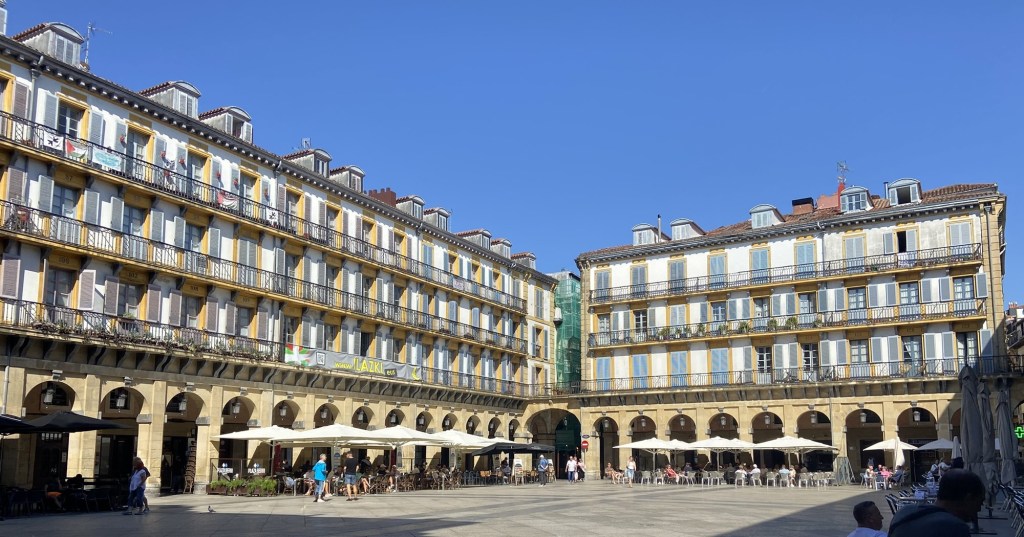
Finding great accommodation, within budget in San Sebastián proved to be challenging. Little did we know when booking that our weekend away coincided with the 71st San Sebastián international film festival (SSIFF) opening weekend, which attracts international films and their stars. This seriously affected the price of an already expensive city, still in the throes of high season, even though it was the tail end of September. We persevered with booking, deliberately choosing refundable accommodation and swopping a few times in the weeks leading up to the weekend. Pensions can be a good option and you do get to stay in great locations. They are often family run, or small establishments, and can be great value for money. One cautionary note, read the description carefully, as many come with shared bathrooms. Finally, we stayed two nights in one hotel- great location, very mediocre hotel and one night in an expensive pension, that was absolutely delightful.
Eating out
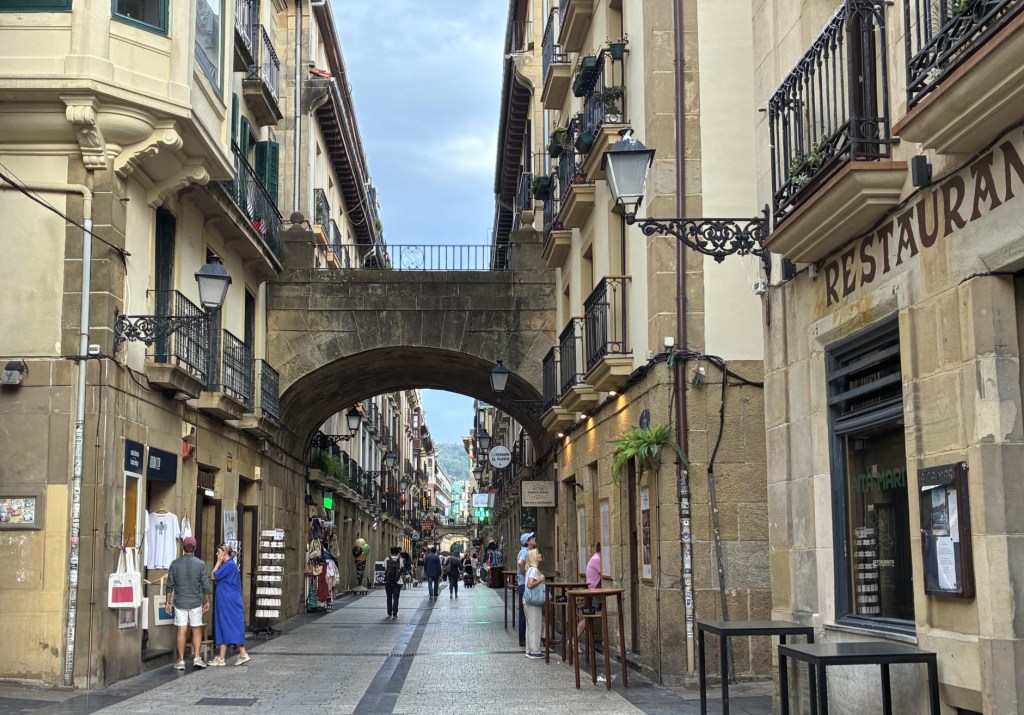
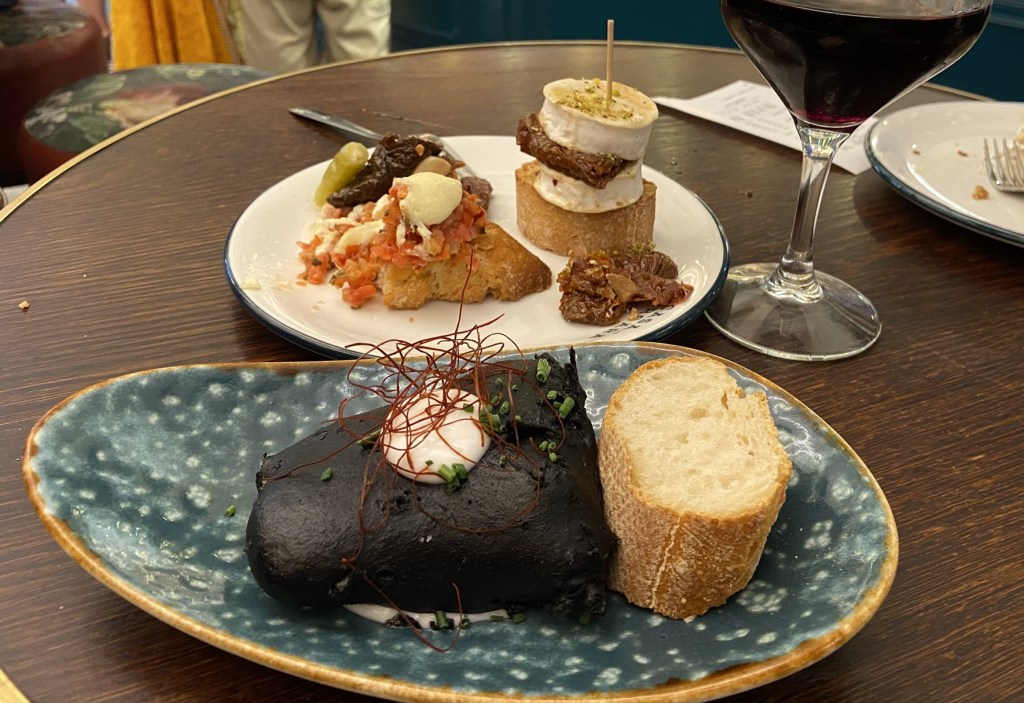
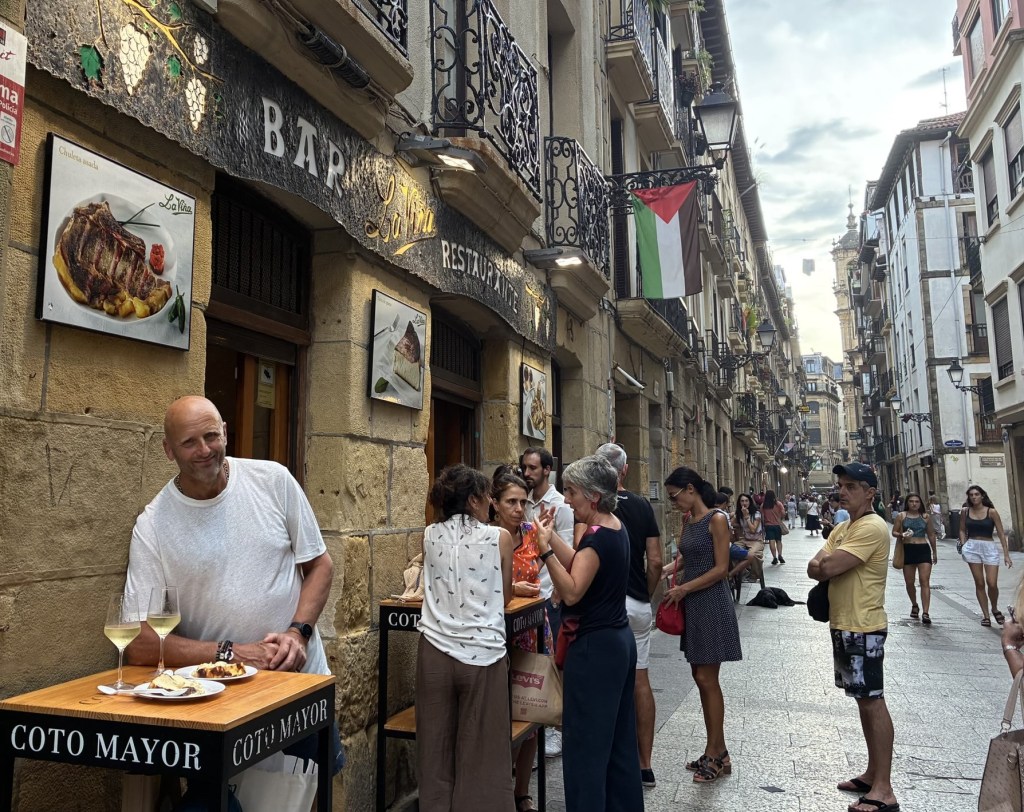
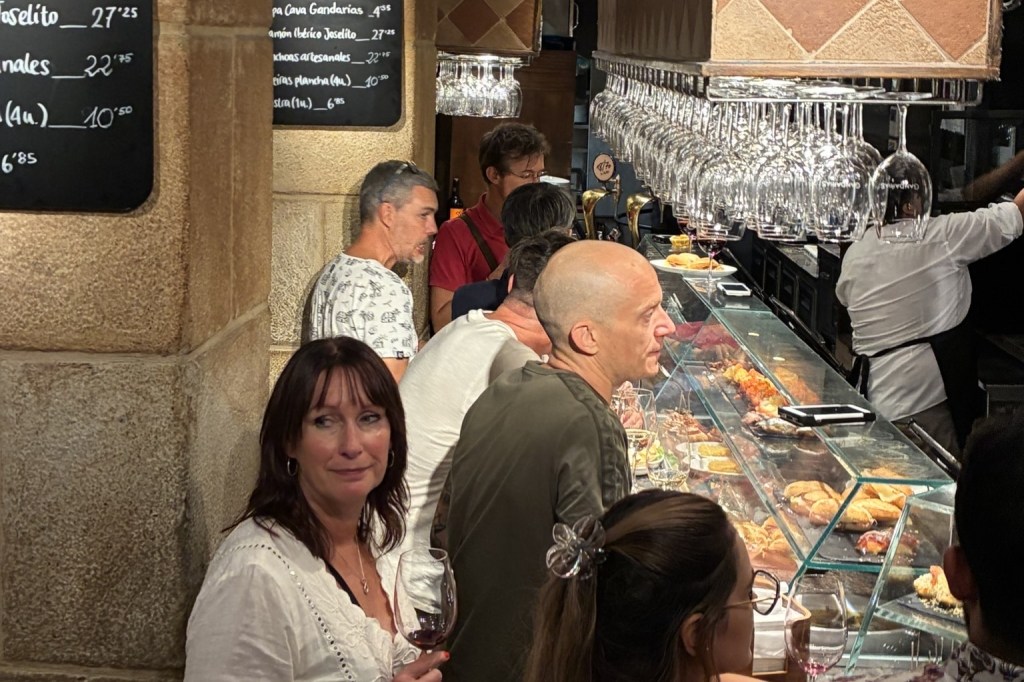
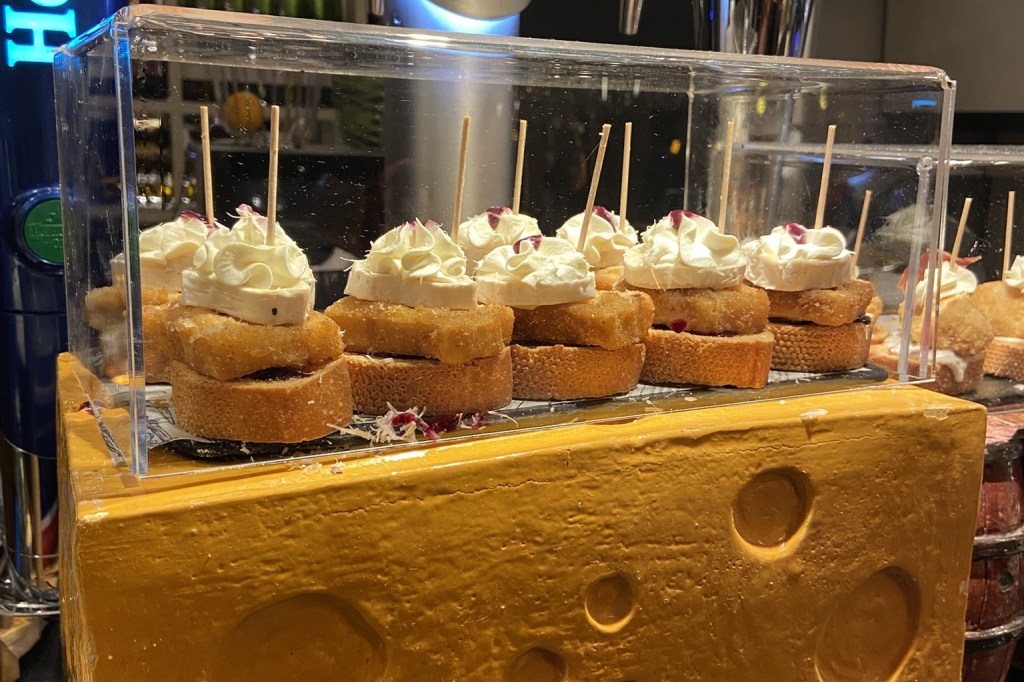
San Sebastián is known for its food and foodies. It has lots of Michelin stars and some claim it has one restaurant per 200 inhabitants. Most famously and wonderfully, it sells pintxos (pronounced Pinchos). Similar to tapas, but more interesting, these Basque dishes adorn every bar top and are very reasonably priced – the majority no more than around 7 euros and many much cheaper. The choice is outstanding, and no two bars sell the same, from baked sea urchin, fried cod fish and goats cheese to simple toasted bread (like bruschetta) with different toppings. The name pintxos, refers to the Basque/Spanish word for skewer or spike, as many have a cocktail stick that secures the different toppings. You can choose cold ones from the bar top or order hot ones from the menu. These are eaten standing ( there is limited seating in many bars) with a glass of wine. The joy is the vast array that you will find – different in every bar – and the relaxed loveliness of standing in the sunshine with a glass of local Rioja and a small plate of delicate flavours. Equally, you can treat yourself to a restaurant meal – heavy on fish dishes, though you will find meat and vegetarian options. It didn’t seem to matter where we ate, the food was universally excellent.
The San Sebastián, or Basque, burnt cheesecake is exceptional and a must have. It has a caramelized exterior, which looks slightly burnt and a velvety interior, importantly with no biscuit base. It was created at the La Vina restaurant, which opened in 1959 and has become a firm favourite ever since, both in Northern Spain and across the world. In San Sebastián, you will see shops devoted to it and it is easy to find the best cheesecake being sold in the bars, as the queues are huge and outside space a premium. A delicate glass of white wine and a hearty slice of cheesecake is an afternoon norm for many. Equally, pair with a glass of Tixakoli, a lightly sparkling, moderate alcohol, dry white wine. Poured from a great height, to enhance the bubbles, it is a light and refreshing drink on a sunny afternoon or to enhance your pintxos.
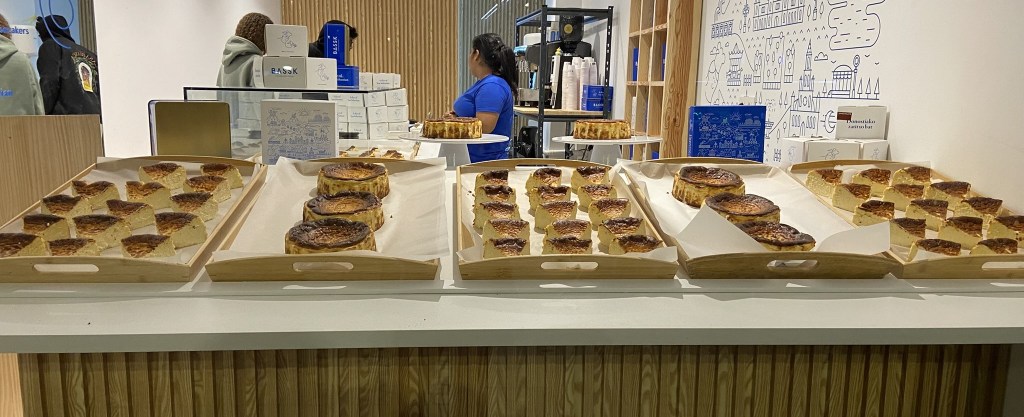
Here’s what we did during our weekend.
Day one
Having travelled all morning, we checked into our room and then headed to the old town to explore the myriad of ancient streets and pintxos bars. Cobbled, with bars, restaurants and churches around every corner, this was a delight in the warm September sunshine. We chose a busy bar with seats inside and explored our first taste of pintxos and a glass of Rioja.
San Sebastián has three main beaches. La Concha and Ondarreta beaches – both curvey, calm and sandy and Zurriola – a surfers’ beach with stronger currents and water sports. We headed to La Concha, enjoying a relaxing swim and some downtime to catch up on sleep missed through our early trip to the airport. Though still classed as Spanish high season, there were fewer foreign tourists and instead, many local families visiting the beach for a swim and picnic at the end of the school day.

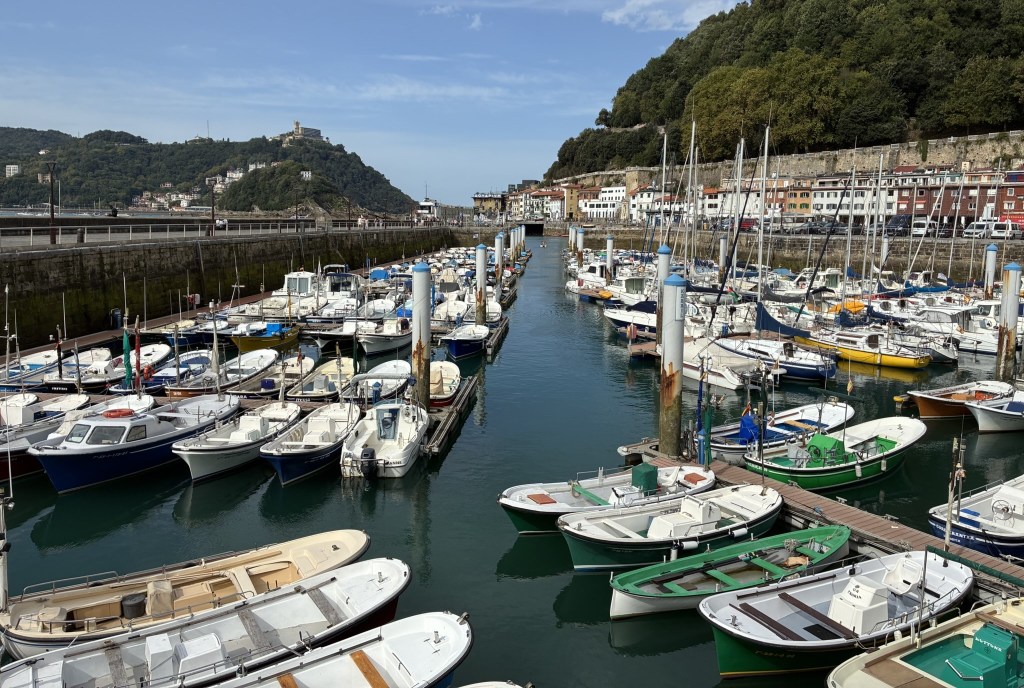
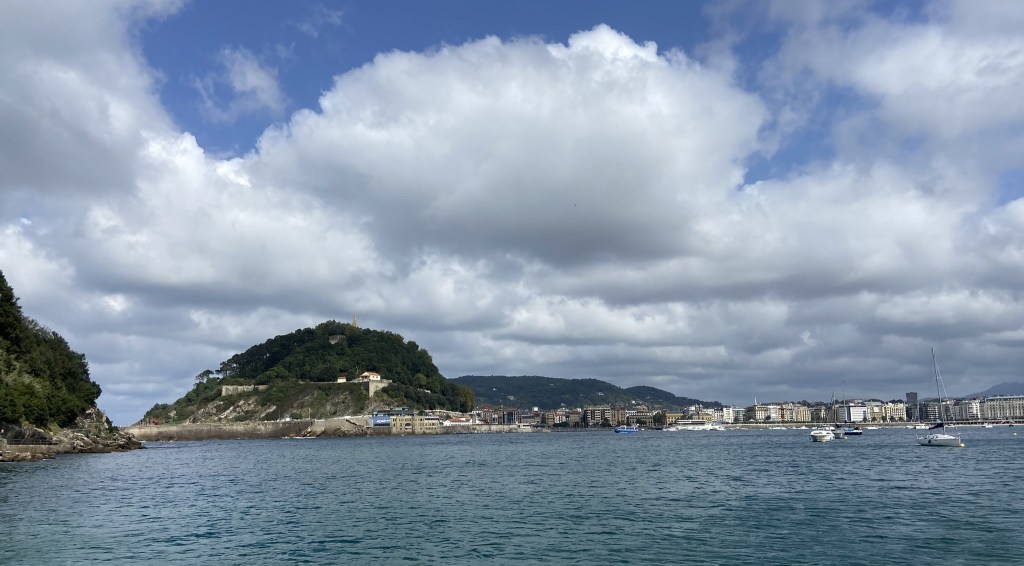
We walked around to the port area, Donostia de San Sebastián, a compact harbour at the eastern end of La Concha Bay. Mount Urgull rises majestically behind it and had we had more time, we would have climbed as the views are meant to be exceptional. The harbour sits at the bottom of the old town, and is littered with fish restaurants, small independent shops and no-frills bars where you can sit and enjoy the view out over the bay and final warmth of the evening sun.
Evenings in San Sebastián are relaxed and simple – good food, good wine and interesting company. There are plenty of excellent restaurants – ranging from those with Michelin stars (currently 18 reside in San Sebastián across several restaurants), those serving great food and a multitude of superb pintxos establishments. We sampled numerous – choosing a couple of plates and a glass of wine – before moving onto the next. Tables are optional – with many choosing to stand and perch, sharing a high-top table and enjoying the warm evening air.
Day Two
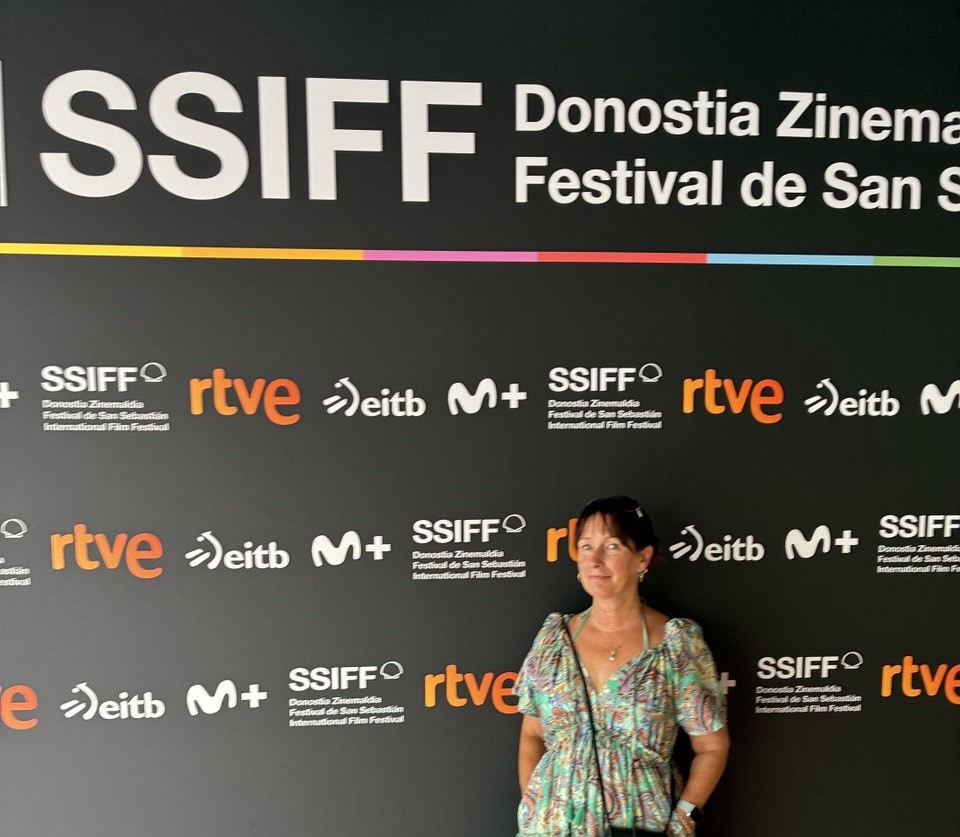
On our second day, we decided to explore the main town and have a walk along Zurriola. This involved walking past the huge cinema complex being used as the epi-centre of the film-festival. This resulted in us buying tickets for a film that night, in a smaller, viewing cinema and a premiere the following night. The atmosphere in town was electric, with visitors, press and the like, gathering at different points during the day for timed, red carpet moments.
In the afternoon, we caught the 30-minute ferry across to Santa Clara island, which sits calmly in Donostia bay between the two main mountains of Urgull and Igueldo. It is a compact and steep island – with tiny strips of beach you can swim from. We walked to the top to admire the view and gained entrance to a current art installation. The island has one set of public toilets and a small café. We stayed for a few hours, watching those brave enough to swim the 406 metres across to Ondaretta beach, pottering around in the warm water and enjoying a glass of wine.

In the evening, we watched an English language film on first release, and then explored more of the bars and cafes in the old town.
Day Three
We began by checking out of one hotel and walking across town to check into another. We then decided to savour the last of the fine weather, by having some hours at the beach. By four O’Clock, there was increasing torrential rain, which didn’t mar our spirits, as we had already secured tickets for a Swedish film premiere that evening and had found a cosy bar to eat cheesecake in beforehand. Having never been to a film festival before, we did get rather taken away with the glitz of the red carpet – the director/star interviews and the viewing – all very magical.
The following morning, we checked out, ready to get the bus across to Bilbao for the next section of our journey. Some British travellers, fly to Bilbao and transfer across to San Sebastian. We were spending a night in Bilbao before heading to Barcelona. You can get a train to Bilbao but it takes quite a long time, as it is a commuter train and stops in lots of places. We found it much more convenient to book a coach, which left from the central bus station and took about an hour.
In conclusion
We loved San Sebastián. It had it all – interesting architecture, great beaches, amazing food and wine, lots to do and a great atmosphere to do it in. This was our first time in northern Spain and we will definitely return. It was stylish, grown up and sophisticated.

 We travel not to escape life, but for life not to escape us.