
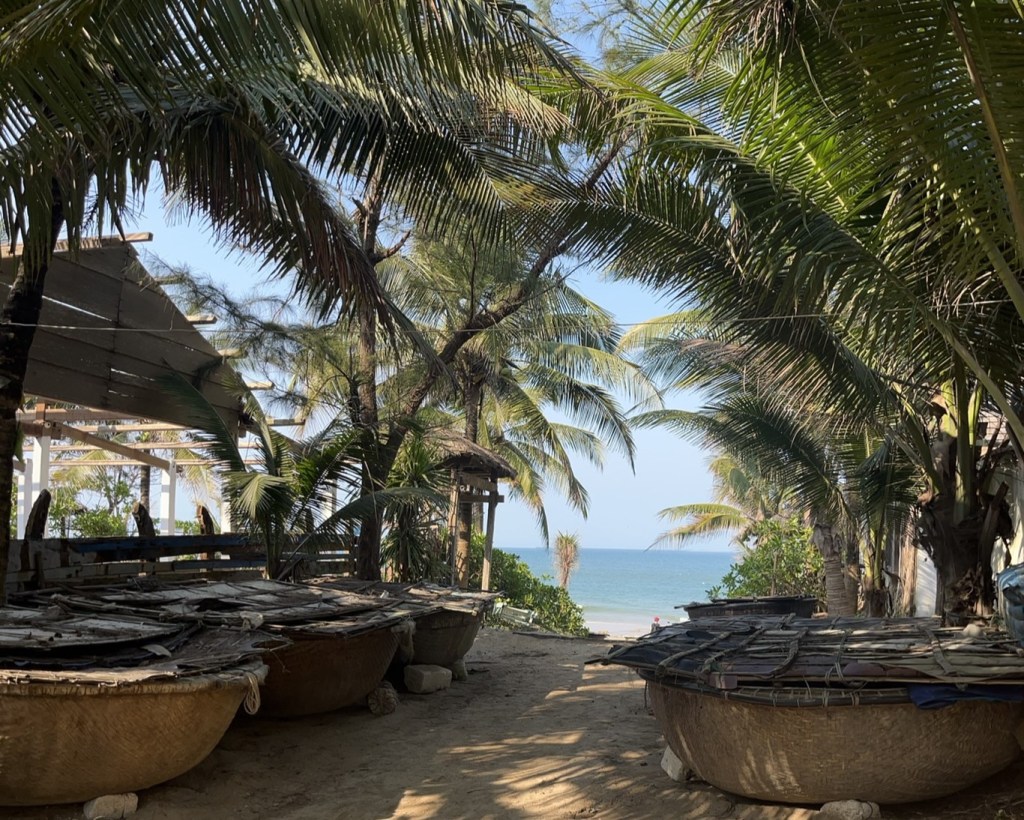
We have always wanted to travel to Vietnam. We were young when the Vietnam War finished in 1975 but grew up watching a very Americanised version of the truth via Hollywood blockbusters. In fact, the history of Vietnam, particularly in the 19th and 20th century, is highly complex and sensitive, a nation invaded throughout history by both its neighbour China and those further away, France, the United States, Portugal, Japan and the Netherlands. Whatever we thought we knew about Vietnam, we realised we only knew a fraction of the truth. A truth that varied depending on who we spoke to on our travels. A truth that demonstrated the deep beliefs still held and passed down through generations of Vietnamese, differing based on where they live and their politics. Subsequently, post our travels in Vietnam, we have continued to read and watch documentaries about the fascinating complexity of politics in this region. If you are into geo-politics, this is about as exciting as it gets, and it is only set to escalate. Currently a communist country, Vietnam is aware of both the benefits and challenges of having China looming over its borders. As you travel north to south, or like us, south to north, you will begin to understand the complex history of this beautiful place.
Vietnam – things to consider
- VISAs. You don’t currently need a VISA for Vietnam but there are some specific requirements regarding your passport. Check https://www.gov.uk/foreign-travel-advice/vietnam/entry-requirements
- Currency. The official currency is the Vietnam Dong (VND). There are no coins, just notes ranging from 10,000 VND (29p) to 500,000 VND (£14.50). Careful – the 20,000 and 500,000 are in similar shades of blue – don’t get them mixed up. Be careful allowing ‘helpful’ locals to help you sort your notes in order to pay them – also known as money switching! Use a bank rather than currency convertor establishments –less chance of you being scammed.
US dollars are also accepted in Vietnam, and it is good to have a combination of both. Unlike some other South-East Asian companies, it is pretty simple to use cards in Vietnam. ATMs are available and simple to use.
- December to April is considered the best time to visit Vietnam but be careful of Tet – the Vietnamese Lunar New Year throughout January and February. On the one hand, you will see cities dressed for this annual celebration, flowers, window displays, streets decorated and everyone going out of their way to look nice. But during the actual Tet festival, many will travel to celebrate with families, so traffic might be heavier, and some tourist areas might be closed – think Christmas Day in central London. Get your timings right.
- Dress code. As with all South-Eastern countries, you may visit temples, places of worship or in Vietnam’s case – memorials. It is important that you dress appropriately, covering shoulders and knees. See our ‘Essential packing’ blog for ideas on what to bring. In rural areas, it is important that you dress appropriately.Many places expect you to remove shoes on entering.
- Travelling around. This is pretty straightforward if you are sensible. Many locals ride their scooters and motorbikes everywhere and tourists are often encouraged to hire them. Think carefully about this. Make sure that you have appropriate insurance (remember alcohol in your system negates your insurance). Make sure the bikes are in good condition – the bikes of most locals are a patchwork of parts they have acquired over the years. The roads in towns are completely rammed with traffic and in the countryside seeped with potholes. We downloaded Grab onto our phones – South-East Asia’s version of Uber. Unlike Uber, you pay the driver directly in cash. So, you book on your phone – it gives you a price – you pay them that fee at the end of the journey. It’s very economical. You can get public coaches – or trains – we did – though we did avoid night coaches – more because of accidents on the poorly maintained roads than anything more sinister.
- Tuk Tuks – since 2008, tuk-tuks have been banned in Vietnam. Use Grab instead.
- Distances. Don’t underestimate the distances you will travel between places. Think carefully about the pros and cons of flying versus coach or taxi.
- Tourist scams to avoid. As with all travel, just be alert to anything that appears too good to be true and act as you would in any major city in Europe. Don’t have your photo taken with a local unless you are prepared to pay them and absolutely avoid photographing government sites. Also, be aware of overly friendly strangers who approach you. if a stranger approaches you and offers to take you somewhere, an attraction, their home, a game of cards – it probably isn’t wise to go. Avoid ATMs in quiet streets/areas – ATM card skimming. Avoid beggars – many are organised gangs who exploit children. Avoid shoe shiners – they will shine your shoes without your permission and then demand a high fee. As you would in any major city anywhere in the world, lock your valuables in the hotel room safe and be careful of your handbag/phone when walking on the streets – scooter theft and pickpockets can be rife. Check that restaurants include their prices on the menu so that you don’t get hit with a massive bill. It’s all common sense – just don’t be lured into a false sense of security because you are in a foreign country.
- Orphanages – it is illegal to volunteer at an orphanage in Vietnam unless you are working for a professional organisation.
- Avoid any tourist attractions involving elephants. We love elephants – many of us do. Elephants in Vietnam are critically endangered, with only tiny amounts of elephants left in the wild. Many are exploited for the tourist trade. Animal welfare charities have highlighted the terrible treatment many of these elephants experience and the horrific ‘training’ programmes, baby elephants undergo in order to perform for the tourists. If you are in any doubt about how baby elephants, stolen from their herd, are trained for the tourist trade you can see the cruelty of ‘elephant crushing’ or ‘training crush’ on the internet. Fortunately, riding elephants has become increasingly unfashionable lately. A recent, high-profile case of a young traveller in Thailand, killed by an elephant while she bathed him – might also discourage travellers. If you are an animal lover like us – be very wary of elephant ‘sanctuaries.’ There are a small number of truly ethical sanctuaries in South-East Asia – most that come with an appropriately high price-tag. Sadly, many more that pass themselves off as ethical while in reality, are still beating and bullying these beautiful creatures into submission. Do your homework carefully and book in advance. If tourists stopped paying to ride and bathe elephants – we could stop this cruelty.
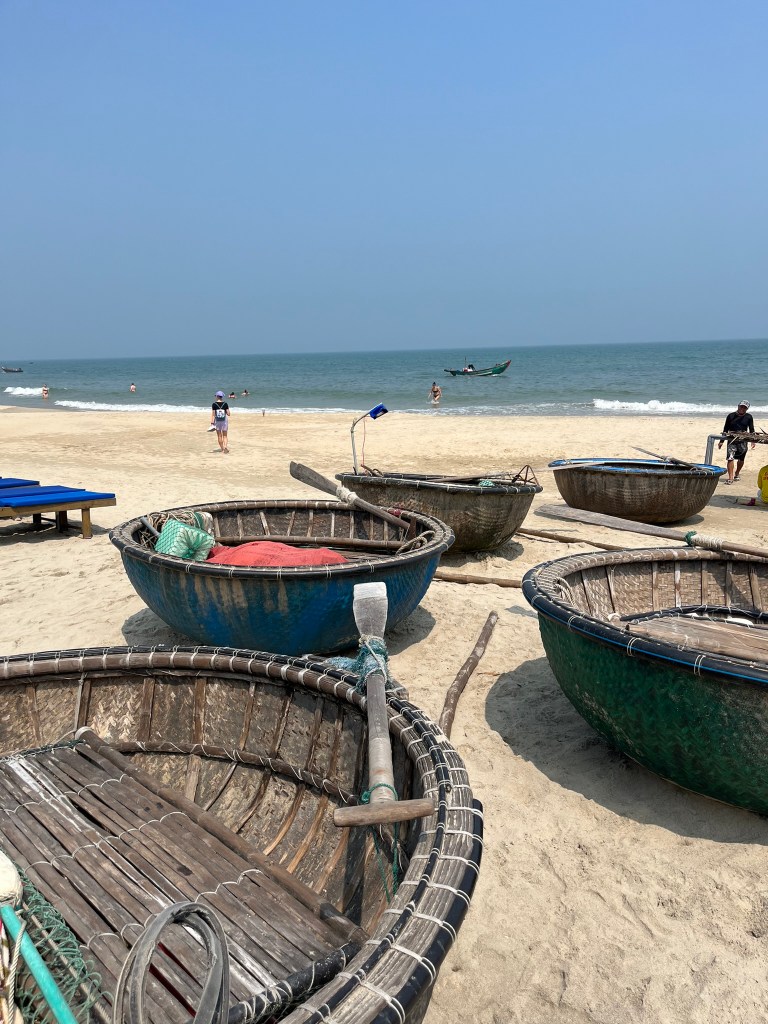
Ho Chi Minh City – what to do in Ho Chi Minh City in two days
We started our journey in the South of Vietnam, in Ho Chi Minh City, as we had been in Cambodia and so it seemed logical to work our way south to north. We flew into Ho Chi Minh City and took a taxi to our hotel – it’s about 8 kilometres but can take around 50 minutes depending on the traffic.
Ho Chi Minh City, named after the leader ‘Uncle Minh’, is still sometimes referred to as Saigon. It is a vibrant, culturally rich and lively city. The cacophony of traffic and people is overpowering when you first arrive, but you will quickly find yourself confidently crossing the road and navigating the busy streets. If you have time, it’s worth reading up a little on Ho Chi Minh and his influence over this nation in their fight for independence from colonalists.
We were keen to find out more about Vietnam’s history, particularly the conflicts that have plagued them – so deliberately picked tourist attractions that would shed more light on the experiences of the Vietnamese during the wars.
This is what we did in two days.
Cu Chi Tunnels. We booked a small, early morning group tour of the Cu Chi Tunnels. We were picked up by minibus, met the other two couples travelling with us and headed to the tunnels, 40 kilometres away – though believe me – if felt longer due to the traffic. The guide, a proficient English speaker, gave us a brief history lesson in preparation. The tunnels were originally started in the 1940s by the Viet Minh troops as a way of evading capture by the French colonists, who at the time were ruling Vietnam. Post World War 2, the Viet Cong (north Vietnamese) expanded the tunnels to approximately 250 square km, in their conflict with South Vietnamese troops and the American forces. The Viet Cong, lived, communicated and fought in these tunnels. Only a small section can be accessed today, and it has become a tourist hotspot.
You have to accept two things visiting the tunnels. Firstly, that it is a tourist attraction and therefore, there will be lots of other people doing exactly the same as you – taking the same photos – going down the same holes. Secondly, that depending on the politics of the guide – the narrative will be slightly different. What struck us to the core, was a reminder of the total pointlessness and decimation of war – how awful it must have been on both sides irrespective of your politics, beliefs and rationale. The experience was made all the more eery due to the tourist gun range – you pay extra on top – which meant wherever you are in the jungle/tunnels, you can hear constant gunfire.
We found the Cu Chi Tunnels sobering, but also incredibly interesting and were really glad we did the excursion. Be aware, that it is an early start and long morning and so we were very glad that we hadn’t booked anything else that afternoon – choosing instead to relax and explore the city.
War Remnants Museum
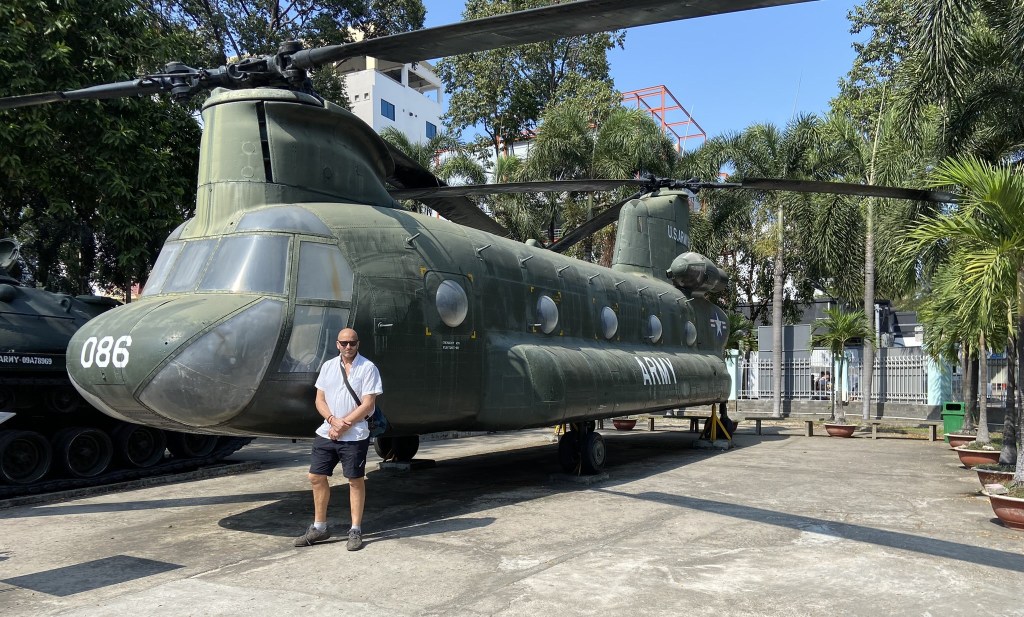
We got a taxi (very reasonable cost) to the War Remnants Museum and then ambled our way back to the hotel, exploring the city’s lovely green spaces as we went.
The War Remnants Museum is a highly respected and beautifully laid out exhibition, recording the history of Vietnam through real people’s perspectives. It’s cheap to get in, you simply buy a ticket at the door and well worth a few hours of your time. Outside, it has a number of war planes and tanks from the Vietnam War, plus an exhibit of real French ‘tiger cages’ used to imprison political prisoners. Inside, the exhibitions are organised in a coherent, informative and sensitive way. We quietly navigated our way through, diligently reading each plaque, our horror intensifying, particularly around the use of Agent Orange, Napalm and atrocities such as the My Lai massacre. Visitors, both European and locals, were uniformly quiet and sober, given the horror that is recorded here. It deals with harrowing topics in a balanced way and is historically and factually accurate.
We found the museum to be thoroughly thought-provoking, and it inspired us to do extensive reading and documentary watching on our return to the UK, regarding the actual Vietnam War – rather than the Hollywood version we had grown up with.
The War Remnants Museum is a must if you are in Ho Chi Minh City.
Exploring the Ho Chi Minh City. We enjoyed wandering the bustling, noisy and fragrant streets and markets, stopping for lunch, sipping a beer and people watching. We were on a limited time scale – only two nights – so prioritised the museum and tunnels and used the remainder as down time to explore.
Mekong Delta disappointment – we had fully intended to go to the Mekong Delta. You can travel by boat up into Cambodia, which would have been wonderful – but we were coming the other way. We spent considerable time looking at a ‘day trip’ to the Mekong Delta – but finally decided against it. Every trip we looked at from Ho Chi Min City, included very long transfers, lots of visits to local craft ‘villages’, butterfly parks, sweet making etc. and only a very short time on an actual paddling boat. All we wanted to do was paddle on the river, see some nature and some local life. What we didn’t want to do was sit on a coach for hours as they transported us to various tourist spots. We agonised over the decision – spent considerable time discussing the pros and cons and then decided on balance – that the cost and time required would not be worthy of the actual experience we would gain. Others may have found a great package – but frustratingly we couldn’t.
Hoi Ann – What to do in Hoi Ann
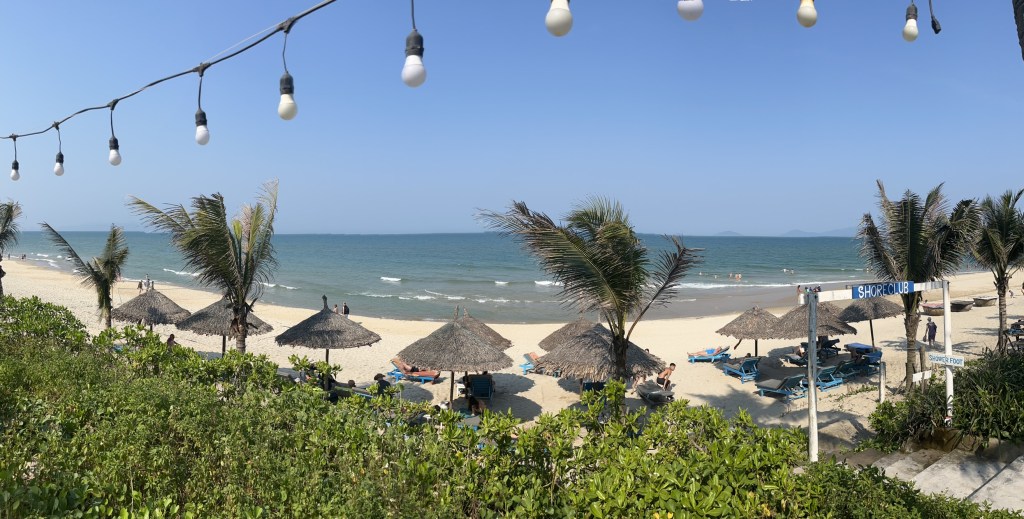
We flew from Ho Chi Minh City to Danang and then got a transfer via taxi to Hoi Ann – it’s a short distance 27.5 km and a reasonable price. We had planned this as a well-deserved rest in the middle of our holiday and oh my goodness was it wonderful! We stayed for three nights – but we could quite easily have stayed for at least two more! I think of all our experiences in Vietnam – this was our favourite place. Whatever you do, if you visit Vietnam – find some time for Hoi Ann.
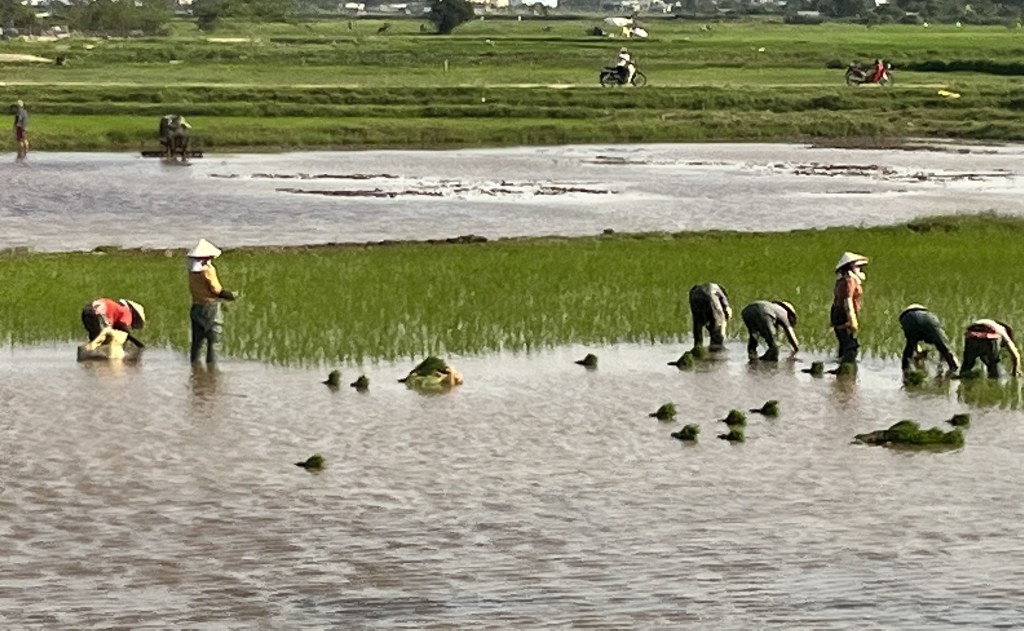
We were staying in a very reasonable but very beautiful hotel – with various pools and spa treatments. Having spent days travelling and visiting museums, temples etc. a few days to relax was wonderful. Following a leisurely breakfast, we took the short ride to the beautiful beach – relaxed – read – drank cocktails and thoroughly treated ourselves. Had we had longer – we would have borrowed bikes from the hotel and explored the flat, paddy-field countryside.
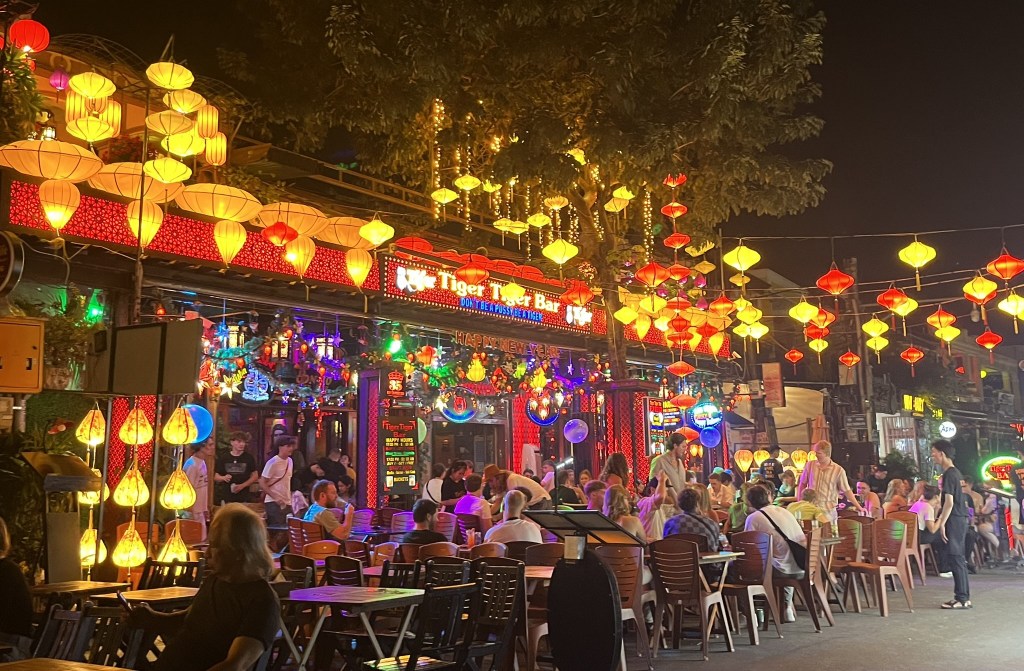
Hoi Ann itself, is a UNESCO-listed Old Town – full of merchant houses, temples, canals and a covered Japanese bridge. Its eclectic mix of French colonial buildings, Chinese shophouses, and Vietnamese tube houses – give the impression of having stepped back into a bygone age. But what makes the pedestrianised town truly famous, is its silk lanterns – they are absolutely everywhere. At night, the town is fully illuminated in colour and tradition. It is glorious to wander the tiny lanes, enjoy the specialist tailor or leather shops, and marvel at the multitude of lanterns. We paid a small fee for a traditional boat to take us up and down the river, and we lit candles in memory of loved ones who had passed. It is a truly magical experience.
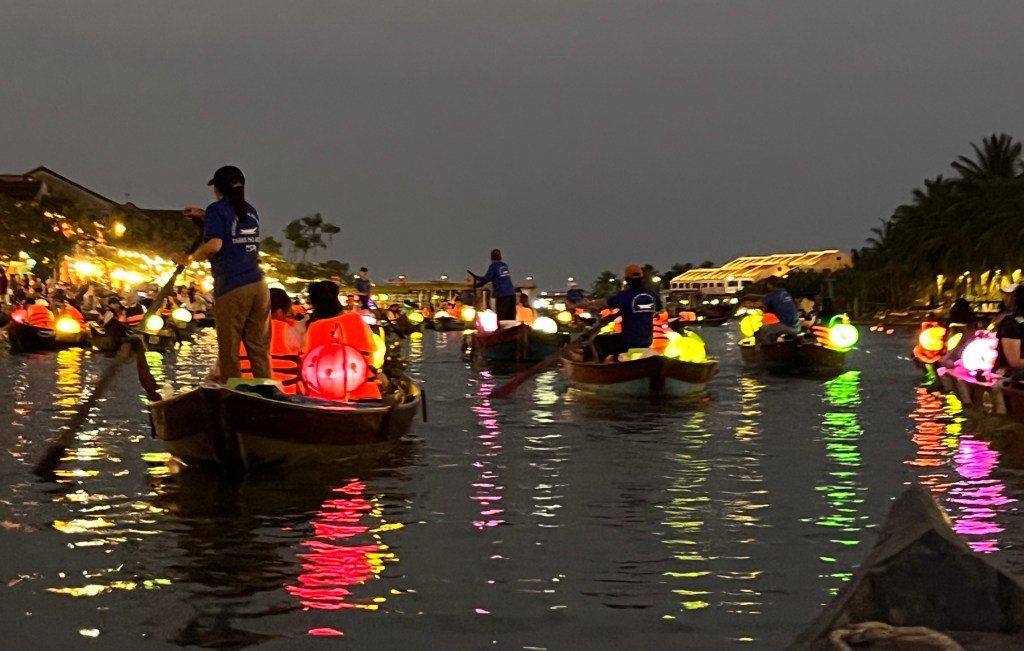
We had three nights in Hoi Ann, and we so wished we had had more. Hoi Ann is exceptionally beautiful and a wonderful place to stop, relax and recharge.
Hue – What to do in Hue
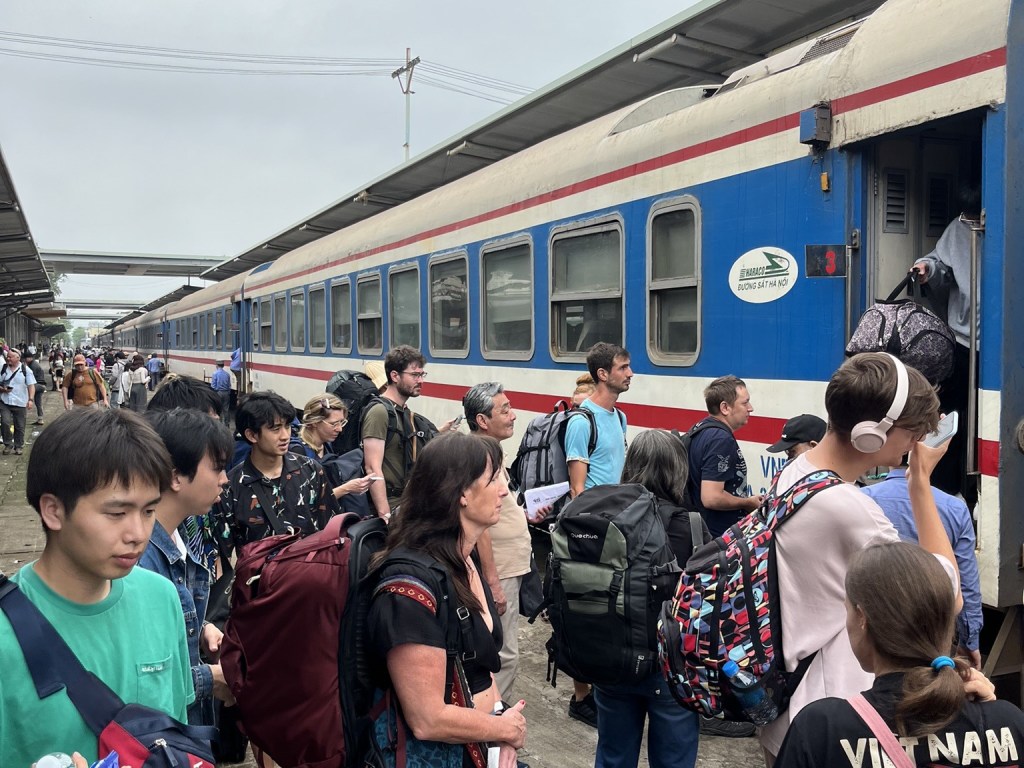
We had decided to do a scenic train during our stay in Vietnam. After much research, we decided against the night train – for many reasons. For a start, it is at night, so you don’t see much of the scenery and secondly, we decided getting a good night sleep was pretty essential. However, the train from Danang to Hue, travels through some incredible scenery over 103 km and takes approximately 2-3 hours. We got a taxi back to Danang, went to the station and caught the train. We paid for ‘first class’, which gives you some slight padding on the wooden seat. Sit on the right-hand side as you are facing forward – so that you get the sea views and take snacks and drinks – though there were vendors on board selling their wares.
The train ride took us through some breathtaking scenery and gave us a real sense of Vietnamese country life – well worth the small ticket price.
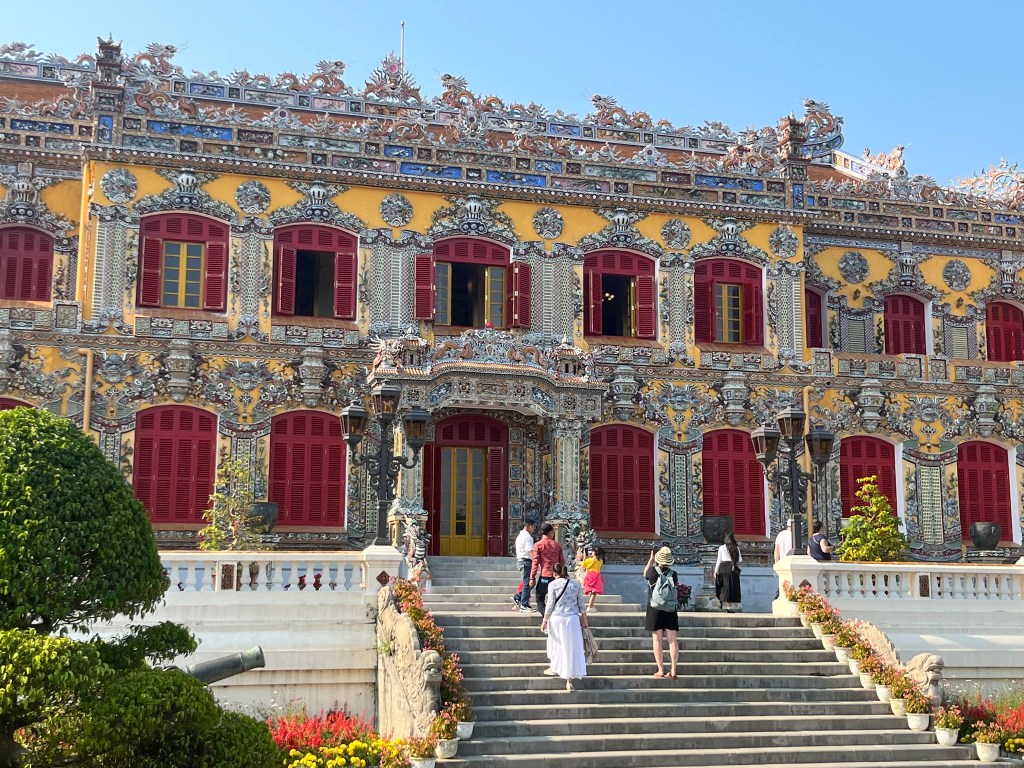
The train ride brought us into Hue station. While not originally on our radar as a destination, we visited Hue Imperial City (The Citadel) – a UNESCO World Heritage site. Covering a huge area, it encompasses palaces, shrines and the Purple Forbidden City, and served as Vietnam’s capital under the Nguyen Dynasty between 1802 and 1945. It was very quiet – few tourists and an enormous area to explore – beautiful and mystical.
We had one magical night in Hue – before flying to Hanoi.

Hanoi – What to do in Hanoi
We flew from Hue to Hanoi – as this seemed the most economical way to travel the distance. This huge, bustling city was a huge shock coming from the calmness and beauty of Hoi Ann and Hue. Sadly, it was also freezing cold – really cold and it rained heavily. However, this did not deter us from exploring its many highlights. We were staying at the heart of the Old Quarter, which meant everything was in walking distance. We explored the narrow streets, bustling shops and night market. At night, the Old Quarter comes alive with music and nightlife.
We spent an interesting afternoon at the Hoa Lo Prison – Hanoi Hilton. This was a really good way to spend a couple of hours and learn a different perspective of French colonialism and the Vietnam War. It has lots of heart-rending photos of prisoners etc. though the narrative is not balanced – it is definitely pro North Vietnam and pro communism. This did not spoil our visit – it made us realise how different views are across this vast country – the further north you are – the more communist the beliefs – whereas, in the south, views were far more liberal.
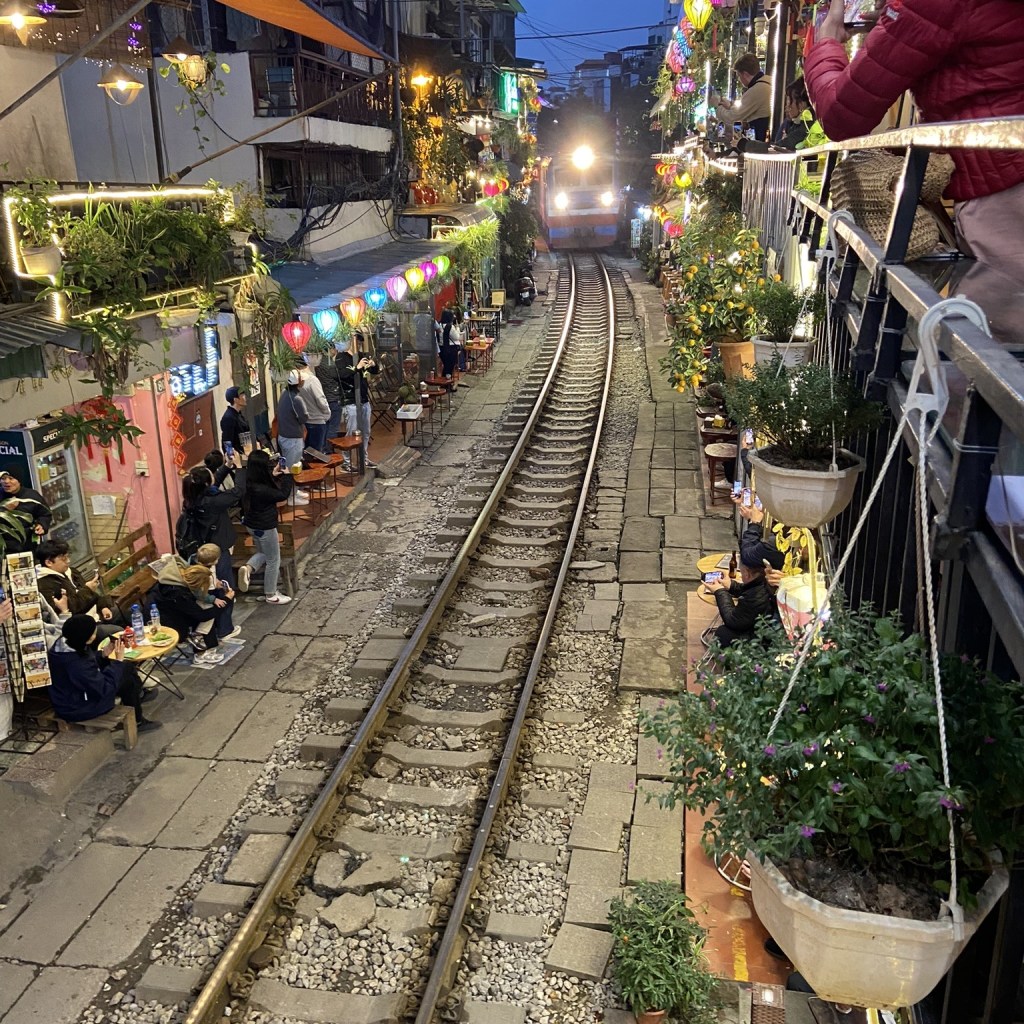
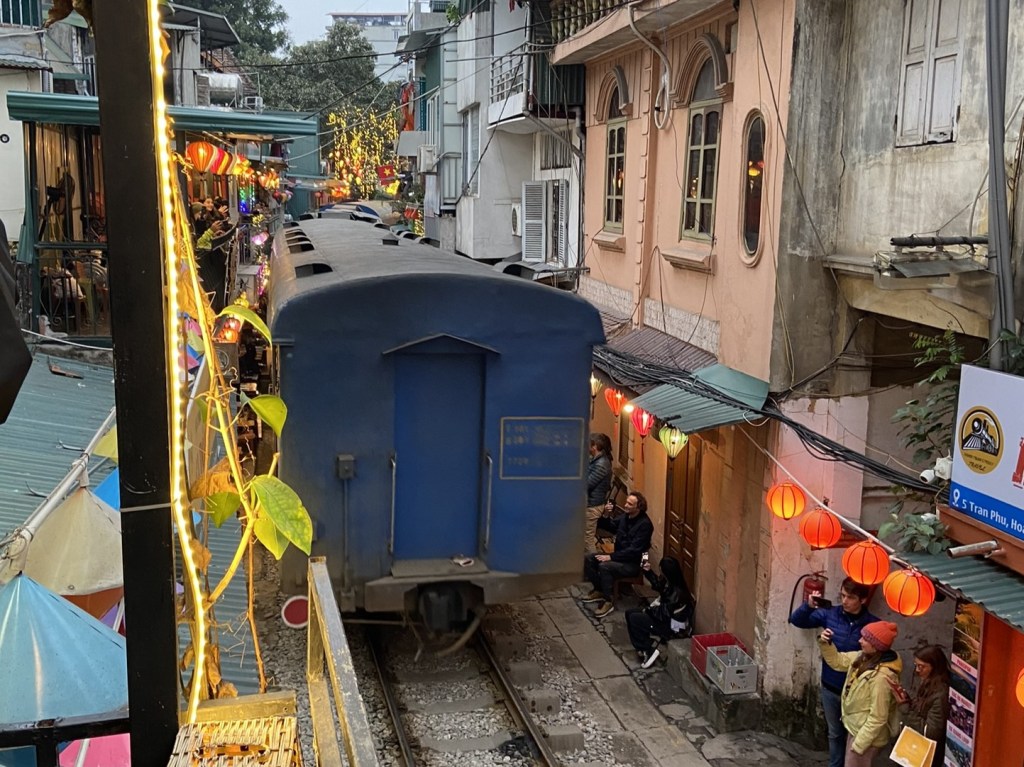
Hanoi ‘train street’
This is a must-do experience. Find your way to train street in the Old Quarter. It’s a narrow stretch of track between shops, cafes and homes. The train times are posted on line. Get there early to secure the best spot. We sat upstairs in a café – had a beer and watched the trains come past an inch from us! It really is a once in a lifetime experience. They do put on security to try and avoid disasters as it is very popular – so wise to get there in plenty of time.
In Hanoi – at various points throughout the day – there are communal loudspeaker announcements. A couple of times, we asked friendly bar tellers, what these announcements were – some refused to acknowledge them – said they were traffic warnings or changed the subject. We didn’t persevere! Equally, watching global news in our hotel room – there was regular censorship – the screen would go blank and a sign would be displayed for a few minutes. Let’s never underestimate the importance of democratic societies.
Halong Bay
No one travels to Vietnam without visiting Halong Bay – a UNESCO Heritage site. We decided on an overnight cruise – which cost three times the amount of a hotel room. It’s 173 km from Hanoi and takes almost 3 hours to get there by bus (we were picked up from the hotel). As you get closer you will see gigantic, hotel complexes, one after the other, blighting the landscape. What’s even sadder is that everyone is completely empty. The guide explained that they have been built with Chinese money and Chinese workers, though they may never open for business – this has not sat well with the average Vietnamese worker. These ghost cities were built for Chinese tourists, who post-COVID have not materialised in the numbers expected.
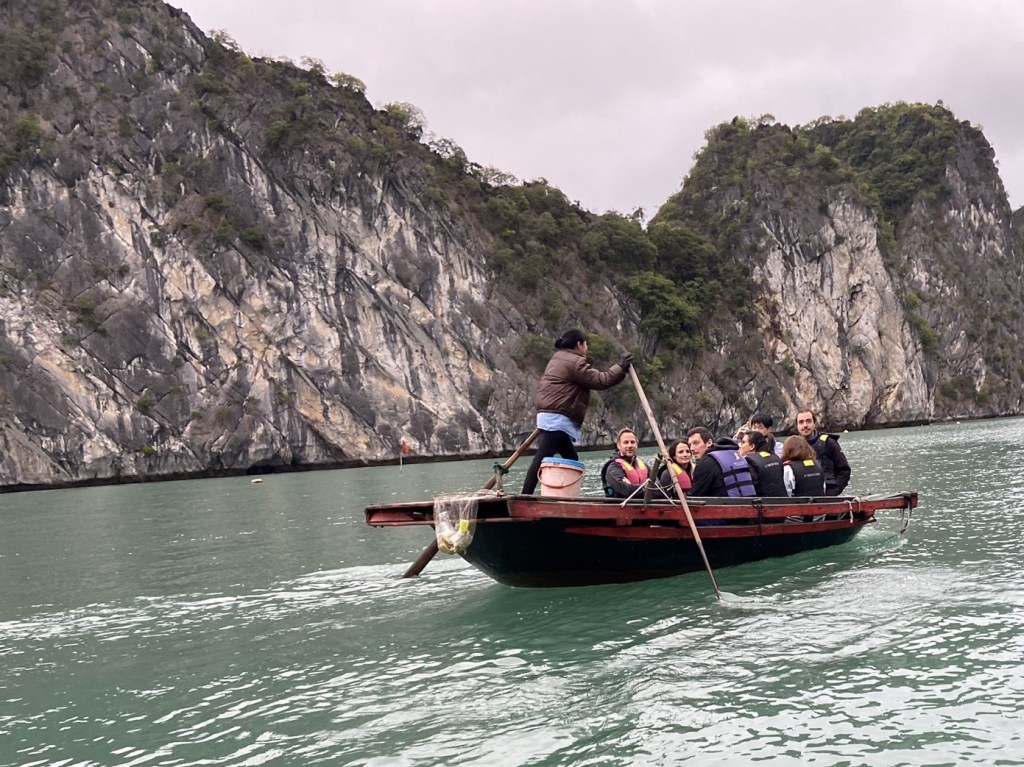
Halong Bay is exactly as you imagine it. Famous for its thousands of limestone islands topped with rainforests and extensive waterways. Having never been on a cruise ever before, this was an experience we shall never forget. Coaches arrive from everywhere, depositing tourists to the numerous boats departing that morning. It is regimented, organised and slightly surreal. There are boats in various sizes and shapes everywhere – some traditional and old – some masquerading as modern vessels. We decided to throw ourselves into the experience. On board, we ate consistently – 4 course meals in the ornate dining room – high tea and super. We learnt how to make a spring roll – we took part in night fishing – nothing caught – swam to the horror of the crew who told us the water was too cold – believe you me it was warmer than the average summer sea in England and canoed (with absolutely no health and safety checks.
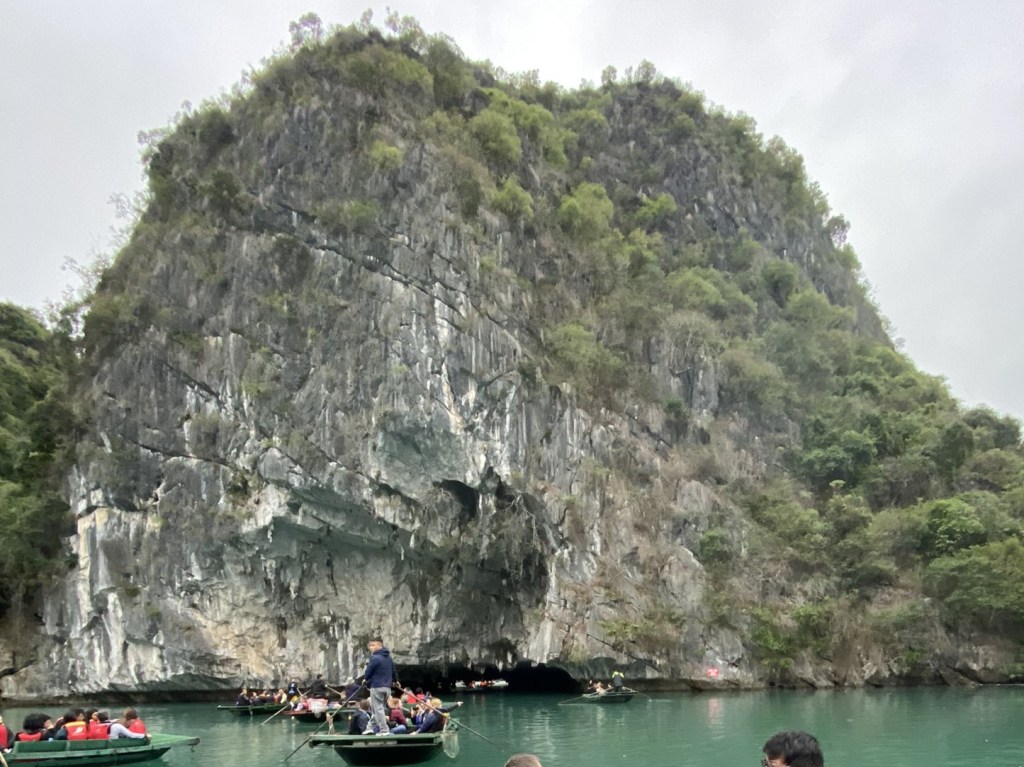
Halong Bay is beautiful but – dare we say it – you don’t need to spend two days on it. We met some interesting characters on board and had a lovely evening sharing stories and playlists – but the actual cruise experience is not for us – we would have had a similar experience of the bay doing a day trip. Our biggest disappointment was how filthy the bay is – rubbish floating everywhere – brought home the blight humanity has brought onto the natural world.

 We travel not to escape life, but for life not to escape us.