Sri Lanka has had a complex history and a particularly rough and bloody few decades. But it is a paradise island, that bursts enthusiastically with originality, culture and aesthetic pleasure. Approximately the size of Ireland, with a population of around 23 million, it has multiple, tropical beaches, jungles, lagoons, rivers, looming mountains and tea plantations. It is brimming with exotic birds, animals and sea life. Tea, spices, fruit, gems and elephants are in abundance. A tropical island with spectacular natural resources, populated by the most optimistic people I have ever met.
The sheer amount of natural resources and the close proximity to India has meant the history of the island is one of colonisation – first the Portuguese in the 16th century, the Dutch in the 17th and 18th century and finally the British who ruled from 1815 until independence in 1948. You will find remnants of this across the island, from colonial houses, the names of some locals and the crisp, white uniforms worn by the school children. A young Scotsman, James Taylor, brought commercial tea plantations to this island and is still revered by many locals in the hill country. Ceylon tea is still sold and enjoyed worldwide. But throughout history there has been a human and animal cost.
Its more recent history has been equally bloody and divisive and well worth reading up on if you are interested. Almost 75% of the population are Sinhalese, with Sri Lankan Tamils making up approximately 12%, and the rest Indian Tamils – originally brought across from India by the British as slave labour to work on the tea plantations. The majority of Sinhalese are Buddhist, though you will see many Catholic Churches sprinkled around – particularly in the cities. The Tamils are Hindu. This gives the country its deep cultural richness: Stupas, temples and churches dominate the skyline in many places.
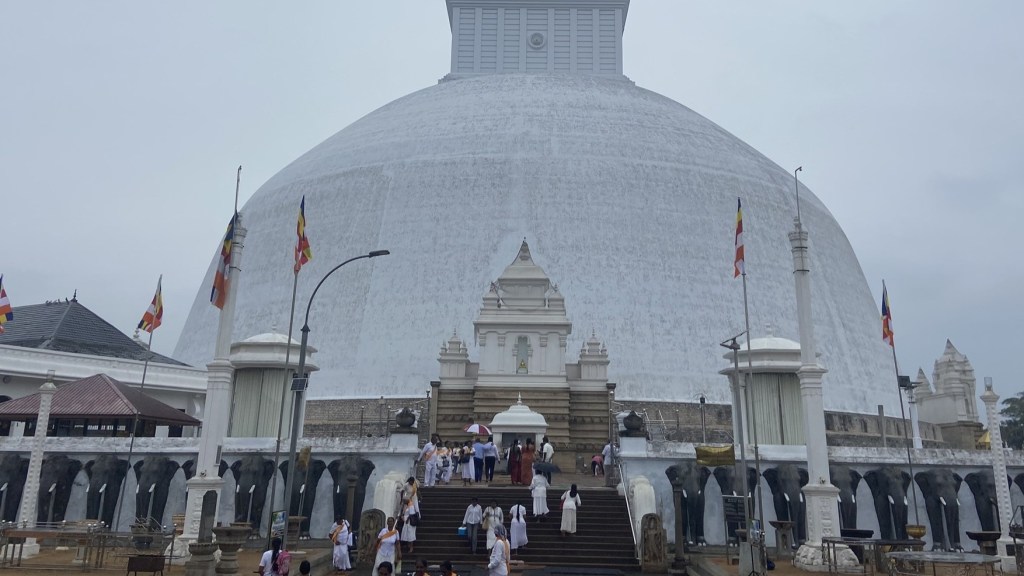
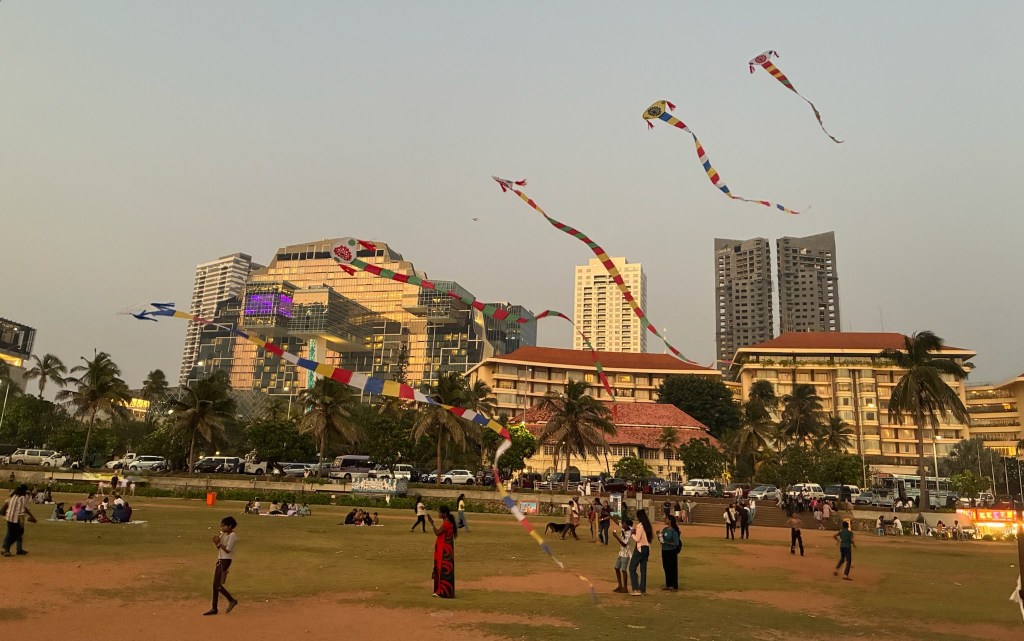
On Poya days – bank holidays marked by full moons – you will see families of all religions congregating seamlessly together in public places to fly kites and enjoy picnics. But this seeming harmony was not always the case. The Sri Lankan civil war lasted 26 years between 1983 and 2009 – with minority groups, particularly the Tamils, fighting for rights and independence in the north and east. Widespread killings, disappearances, bombings and bloodshed assaulted the population – the fear still very present today. Many do not want to discuss what happened. Most want simply to have high aspirations for the future.
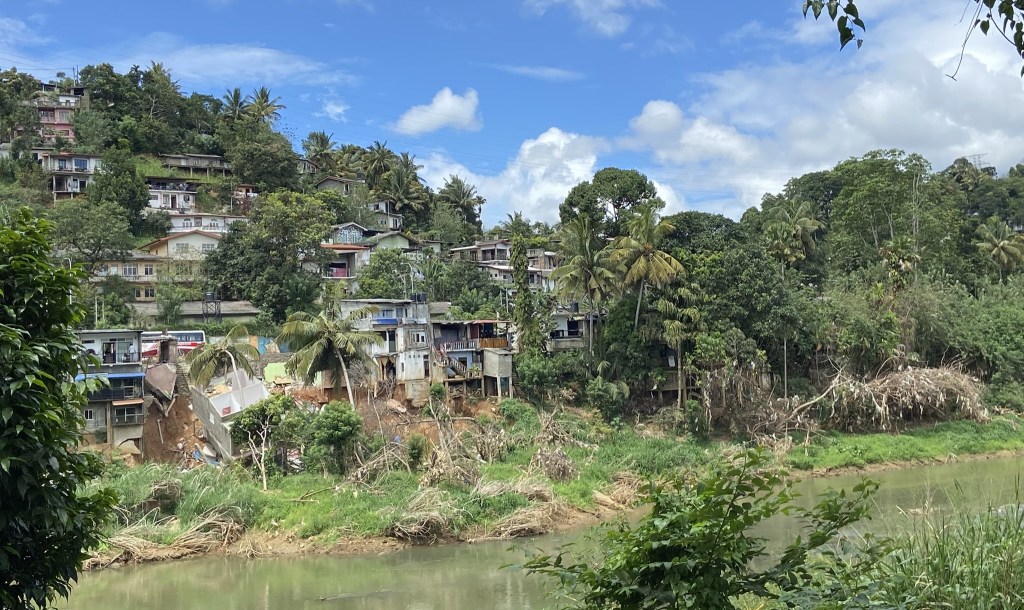
The Boxing Day tsunami in 2004 – killed 35,399 Sri Lankan people and destroyed much of the infrastructure and the natural landscape. Then between 2019 and 2024, the island suffered a catastrophic economic collapse followed by Covid-19. Then in 2025, a storm damaged much of the hill country, destroying homes and roads. All of which had an enormous impact on the tourist industry. It is now showing the slow, embryonic green roots of recovery.
But for all of this, Sri Lanka is a nation on the rise. It prides itself on sustainability – currently much of the revenue from tourism goes straight back into the local economy. There is free education for everyone including university and free health care. It is a very clean nation – people routinely sort and bin their rubbish. You will see street dogs everywhere – but no poop!
The beaches are immaculate. The roads are choreographed chaos, but you won’t see piles of rubbish and plastic on the roadside as in other parts of south-east Asia.
Tourism here feels strangely embryonic and it is wholly refreshing. Everyone is just trying to make a living in any way they can. Forget branding and marketing – it’s all a bit ad hoc. And that’s what we loved about it!
Hotel bookings
Having spent our usual hours trawling the internet to find interesting accommodation, our biggest surprise in Sri Lanka was the variation in price.
Overall, our hotels ranged from around £35 a night to just over one hundred. But be careful – we realised on arrival that the price you thought you were paying on the internet often doesn’t include taxes, which varied based on how much the hotel was. This did add quite a bit to our overall trip. Unlike many places, where the platforms take the money from your credit card a few days before, in Sri Lanka you pay on arrival. You will get a much better deal booking directly with the hotel if you know where you want to be and don’t need cancellation facilities, as a big percentage goes to the booking platforms. Our best experiences were in smaller hotels and accommodation. Unless you have very big pockets, the simpler hotels were much better. Some of the mid-range hotels were definitely ‘fur coat and no knickers’, if you understand the expression.
Quick top tips
- Exchange your currency at the airport on arrival. We arrived at 2.45am and there were multiple currency exchange places open – ask them to give you the smallest notes possible – 100 notes are the best…tuk tuks etc. charge a few hundred for a short trip and don’t give change. There are lots of ATMs for the major banks – there is absolutely no need to use a money exchange booth and we would strongly advise you not to.
- Travelling around. Download the ‘pick me’ app and order or check the prices from there – but beware – the price you agree on depends on whether they can find your accommodation – at times we drove round and around and were then told it would be an extra couple of hundred. The more you use ‘pick me’…the cheaper it got. We often looked up how much a trip would be and then checked whether the hotel managers ‘brother cousin’ could do it cheaper. The quality of our drivers varied enormously…some were slow and steady…some thought we were undertaking the Grand Prix. Prices varied enormously too. If you manage to find a good driver…hold onto them…take their number…they will often drive long distances to pick you up and take you somewhere. The bus in some areas is also worth it…though think the London Underground on a Monday morning during rush hour.
- All hotels want to organise trips, transfers for you…it is big business…be careful…one hotel ordered a tiny little car for us…for a 3-hour transfer – we are convinced that they ordered the budget car on pick me and then charged us twice as much. While another, matched the pick me price and arranged a lovely car and driver who stopped at various points on the way, including viewpoints and breath-taking waterfalls.
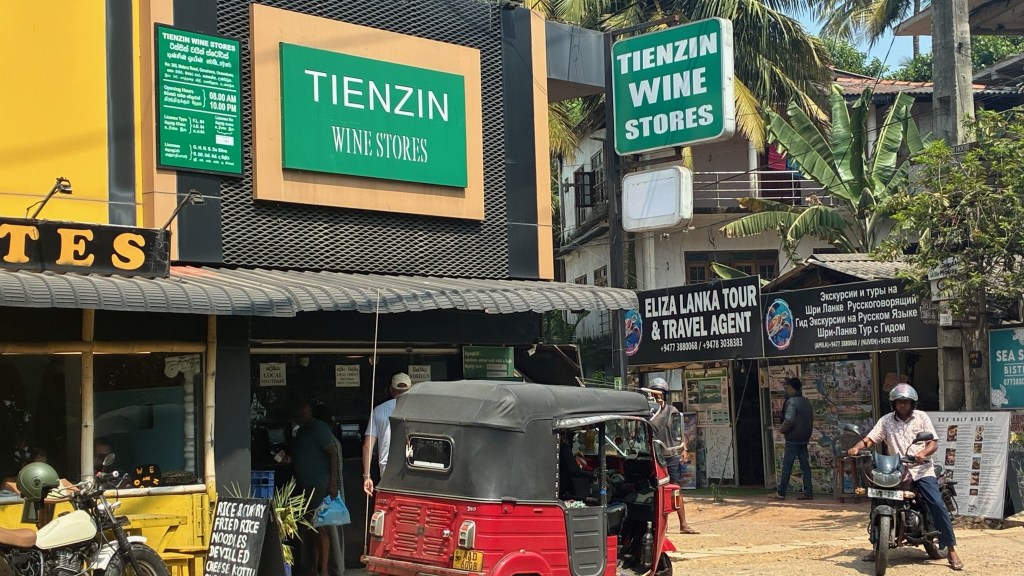
- Alcohol. Other than on Poya days, alcohol is sold in restaurants and hotels across the island, particularly Lion beer. However, many ‘home stays’ don’t supply it and it is not sold routinely in supermarkets. You have to go to a roadside wine store. There is a ‘local’ window and a ‘tourist’ window, from which you choose what you want behind the glass. Not only does it feel quite seedy – it is pretty ad hoc what you manage to buy.
- Mosquitos and biting insects are everywhere. We used deet sprays and covered up in the evenings. Bites are annoying and itchy, but you can also get nasty illnesses such as Dengue fever…so worth doing. The Sri Lankans use a herbal citronella spray, which we bought and loved. It proved as effective as the deet and didn’t make my nail varnish melt! This, plus long trousers, long-sleeved shirts and trainers all helped.
- Leeches. We sustained a couple of leech bites in the hill country following biblical rain. Ironically, not while we were walking in the hills – once while shopping and once on a transfer. They are small – drop onto you from leaves etc. and then gradually move to an area of skin. They have around 300 teeth so be careful not to yank them off. Citronella spray works.
- Plugs. We bought specific plugs but were surprised to find British sockets everywhere.
- SIM – we bought an online SIM at home before we left and it worked beautifully.
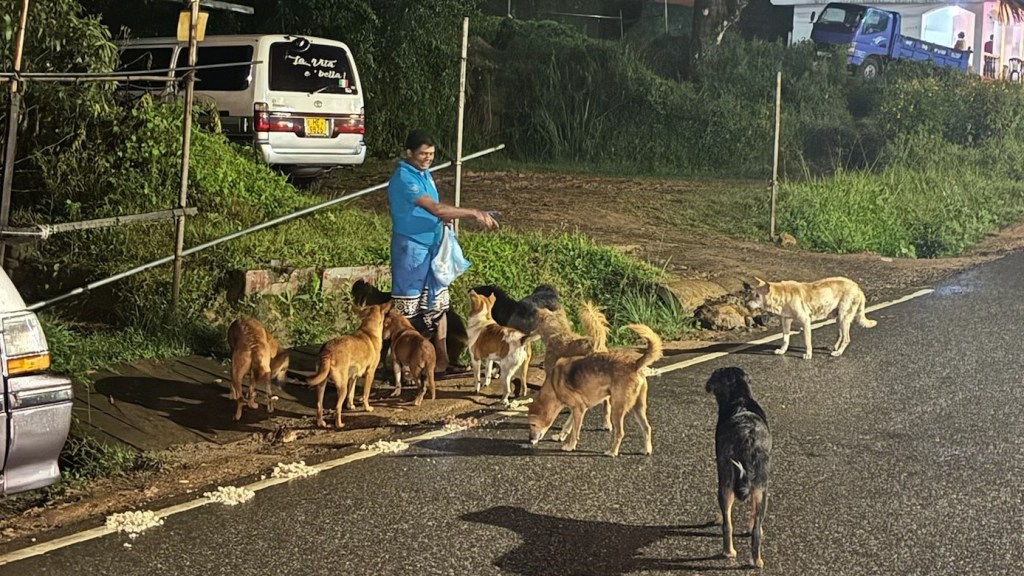
- Dogs. There are between 1 and 6 million street, Sinhalese hounds in Sri Lanka. The vast majority identify to a family, shop, or restaurant. Some wear collars. But they don’t get walked like European dogs. They roam. This means many are susceptible to the roads and you will see many limping or maimed in some way. None of the ones we met were at all aggressive. Most were happy for some attention. Many animal charities work here tirelessly…dealing with sick and injured dogs and routinely castrating street dogs. You will see some dogs have a small triangle cut out of one ear. This means they have been neutered, vaccinated and checked, before being set free again. Only once at Polonnaruwa did we see dogs in a really poor state, these roamed the ruins covered in mange, breaking into nasty fights and we found this very upsetting.
What to Pack
See our suggested travel list for South-East Asia.
Specifically for Sri Lanka we would add comfortable walking trousers and shoes/trainers, plus an umbrella! It was often too hot to wear our raincoats, but this is a tropical island and when it rains – it is biblical. We found a lightweight umbrella to be invaluable here. We would also suggest wearing flip flops or other slip-on shoes to temples, Stupas etc. You will be continuously taking them on and off and leaving them with the shoe guys, who expect a small donation for you to get them back.
Book recommendations
We rarely recommend specific purchases on this website – especially as we don’t receive anything for doing so. However, two books accompanied us on our journey in Sri Lanka and really contributed to our appreciation of this island – one fiction…one travel.
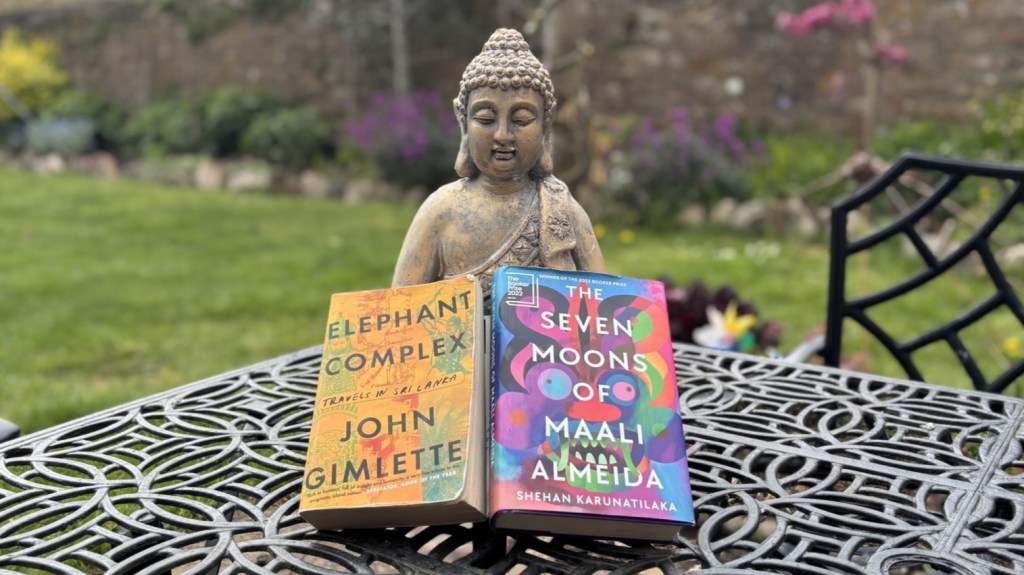
- Elephant Complex Travels in Sri Lanka by John Gimlette – we both read this before, during and after. It helped us appreciate the complexity of the history, the culture and the strides Sri Lanka has made over the decades. It also helped us appreciate what we were seeing on the ground.
- The Seven Moons of Mali Almeida by Shehan Karunatilaka. It’s a dark and brutal novel set in the civil war, but it is beautiful and poignant. It won the Booker prize for literature in 2022. It revealed a side to Sri Lanka not seen by the average tourist.
Negombo
We stopped off in Negombo as we arrived at 4am in the morning. While this meant two nights’ accommodation – sleeping on the beach is no longer an option we are prepared to do – however, we did save significantly by arriving in the early hours and meant we had a day flight which is always our preference. Our hotel was trying to be something it wasn’t; however, it was perfectly located on the beach…so minimum effort needed.
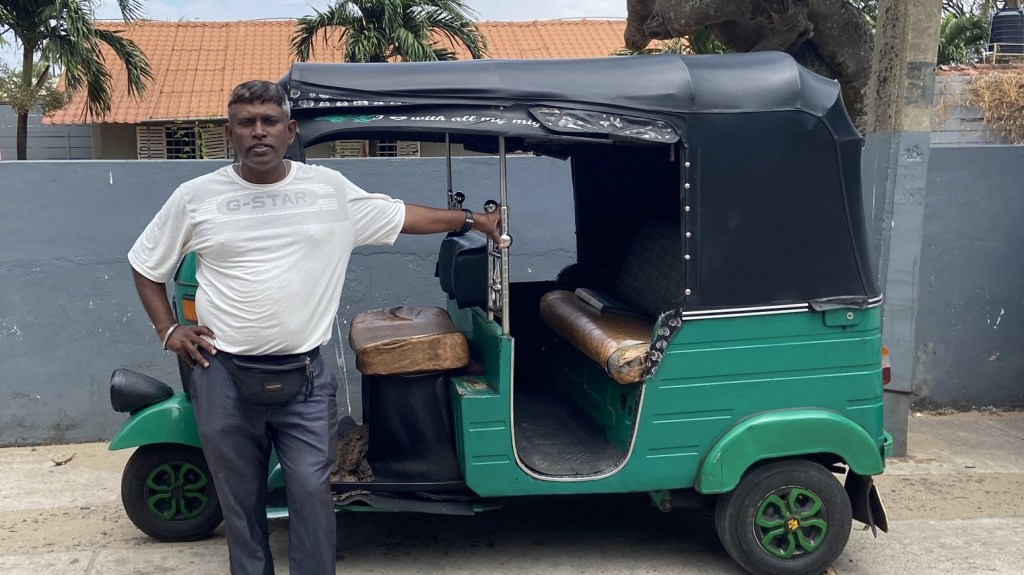
Negombo feels like a transit station – most travelers stopping here briefly following a long flight rather than a destination. The beach is long and sandy, with a couple of beach huts strewn intermittently, selling cheap and palatable food and beer. There is a ‘strip’ of small cafes and restaurants – though do not get excited. We only had one day, so allowed Christy, a Tuk Tuk driver sat outside the hotel, to show us the sights – a three- hour excursion for around £10. He spoke excellent English and enigmatically gave us a tour.
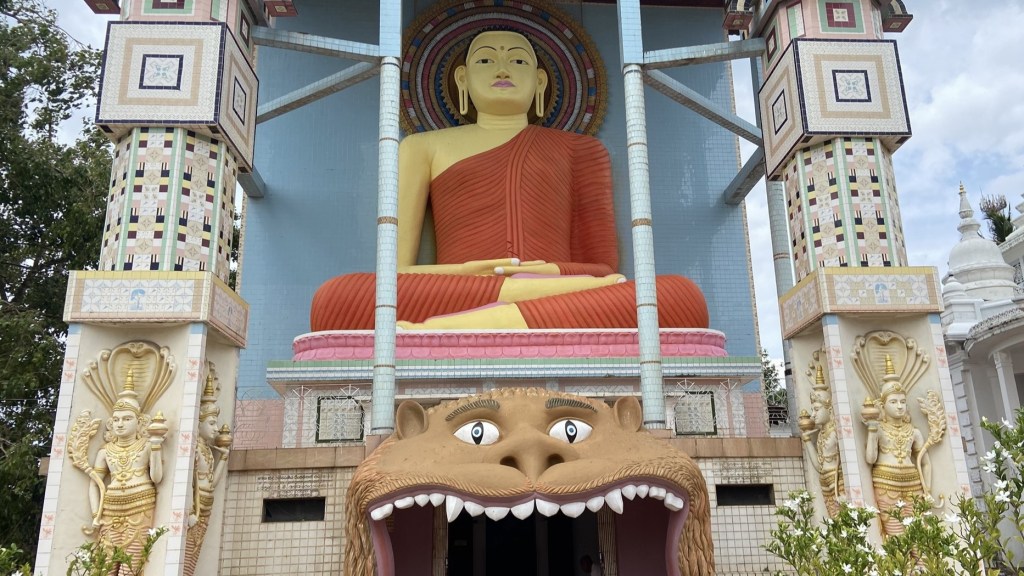
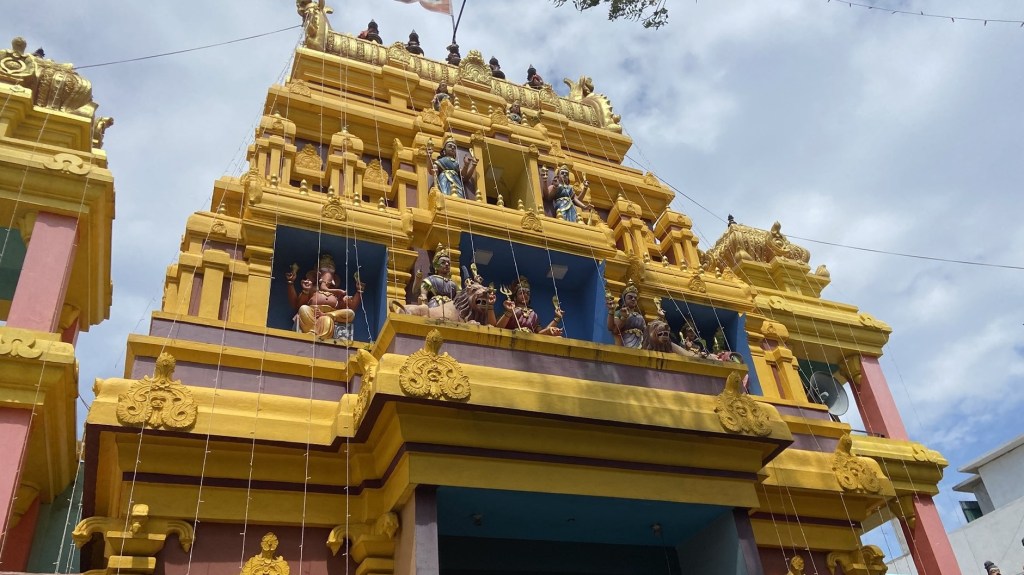
Fishing and religion are two of the big features in Negombo. So, we started at the Hindu temple, went to the Catholic Church and then the Buddhist temple – my trusty sarong packed as usual, ensured I could cover my legs or my head!
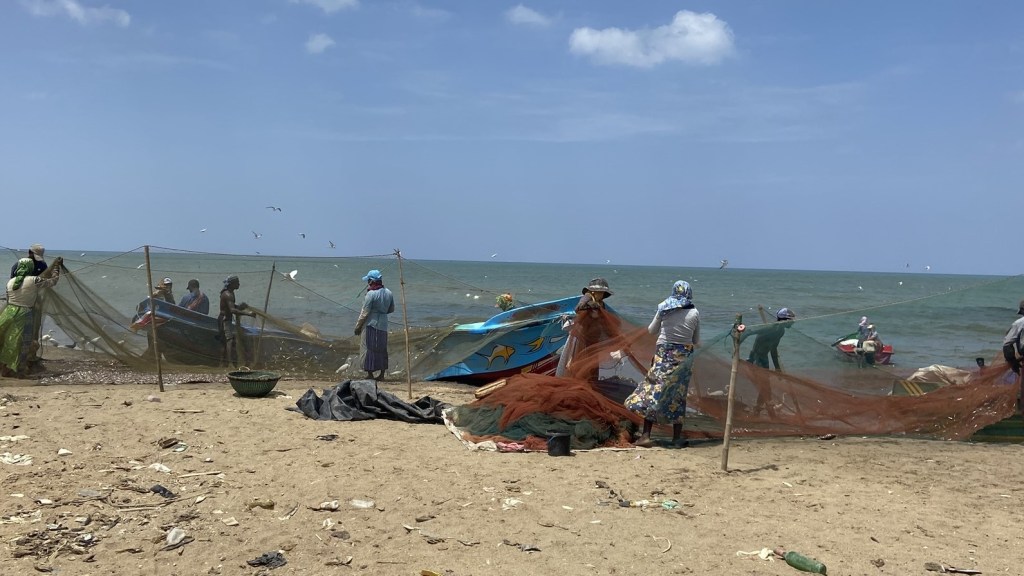
We went to two fish areas – the actual market where fresh fish is sold daily and the dried fish processing plant. Both are an interesting way to learn more about this town. The fresh fish market is as you expect. The fisherman are still there, with their families, vigorously shaking their nets of the fish they have caught that morning. It is then walked the 100 yards to be sold to the women bartering over the price.
A cacophony of fish and sea food is haggled over, bought and then taken to a row of men who slice, cut, gut whatever you have bought.
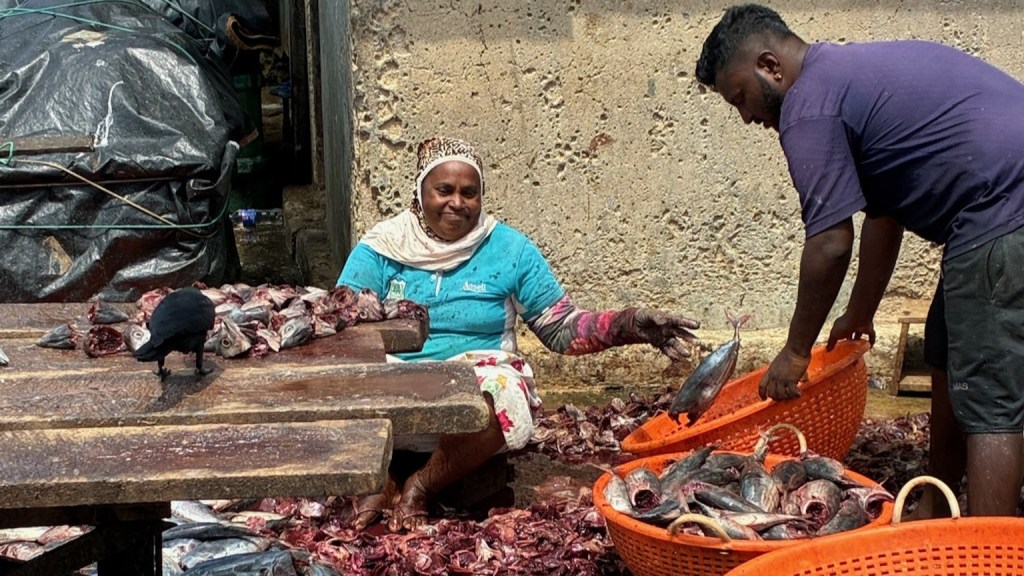
In contrast, the dried fish market is quiet and very organised. Fish blood and guts strewn across the sandy floor and huge buckets of fish heads are picked over by the crows, as they gouge out the eyes and tear the flesh. One elderly woman, squatting on her haunches worked methodically. She cut off the fish head with her sharp machete and tossed it into the buckets, while another disemboweled the guts. These fish, freshly caught are then placed in huge vats and smothered in thick salt.
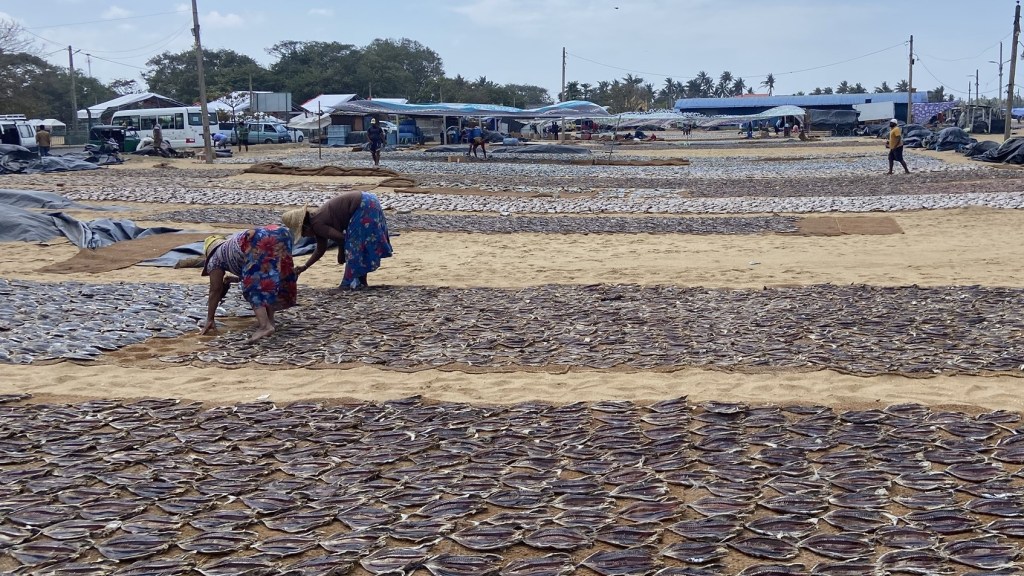
Around the corner, row after neatly aligned row of fish lie drying in the sun. Each row represents a different family’s catch. Every two hours, women work systematically along the rows, turning the fish. The dried fish are finally boxed and sold locally and form the basis of fish curries, rather than relying on expensive fresh fish.
The remains of decades of colonial rule are everywhere. Images of a translucent, lily-white, blond Jesus adorn the churches, statues of white governors stand outside the buildings – Catholicism is the majority group in this area. The remains of a Dutch fort looks out across the current prison holding 2000 prisoners and the queues of their families waiting in the hot sun to visit them. It felt strangely voyeuristic…but our guide Kristy was keen for us to photograph as the prison bus arrived.
Christy, like all Tuk Tuk drivers across the world, did all the sights of Negombo in the three hours we were with him, proudly giving us his version of the history of the Sri Lankan world as he knew it. He took us to his ‘brother cousins’ market, herbal garden and restaurant for lunch – the latter which we politely declined. We did buy some insect bite balm at the herbal garden, to alleviate the multiple bites we received there, but which proved to be welcome relief throughout the trip. We knew not to exchange currency anywhere other than banks, but Christy was insistent that he knew somewhere cheaper – which it absolutely wasn’t. However, not wanting to upset him we gave in and regretted it. So, to reinforce…always change your currency at a bank and avoid buying anything where the Tuk Tuk drivers takes you. In the end, they are all finding a way to earn a living, and this is their way of earning a little extra as they go.
We had a wonderful afternoon relaxing on the beach. Some fried fish, several G&Ts and a relaxing sunbed helped us recuperate after the flight. That evening we found a small, family restaurant selling home cooked curry – a real treat following the airplane food and it was excessively cheap. We finished the evening in the hotel’s sky bar and the obligatory local band of young men, crucifying the Cranberries ‘Zombie’ sung everywhere, every night in southeast Asia.
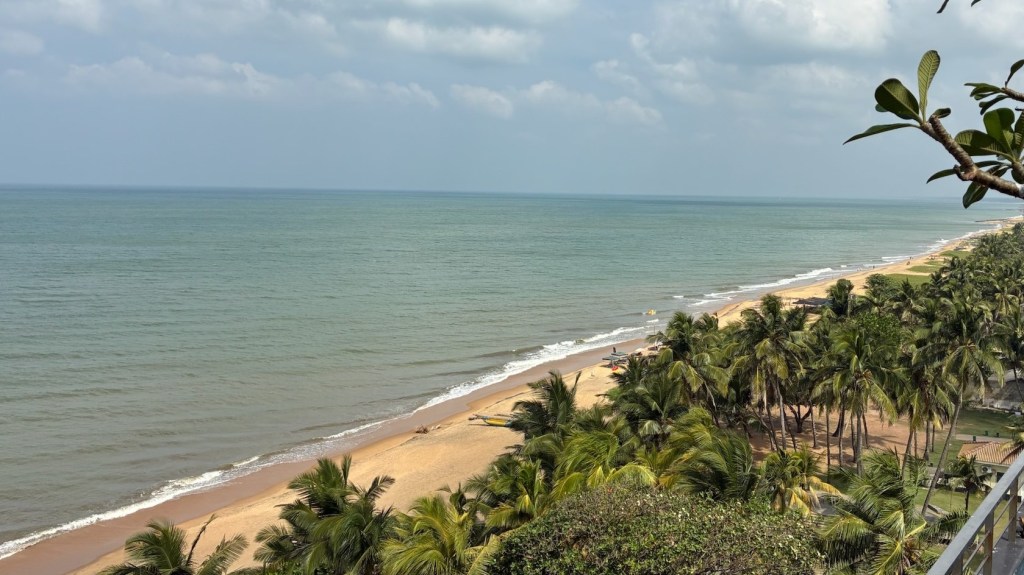
The following morning, a swim completed our time in Negombo. The sea here is rough, deep in places and invigorating. It is also pretty empty of tourists and locals alike. An apt end to our time before embarking on a three-hour white knuckle ride, taxi journey north to Wilpattu national park. There aren’t many roads in Sri Lanka but the ones that are there, aren’t for the faint hearted. Two lanes are treated as five, as tuk tuks, buses, cars, street dogs and the odd cow compete for the same section of tarmac. Our young driver, keen to get us there on time, even though he arrived an hour late, circumnavigated all of this on the road in heart-stopping speed and threw in at least one emergency stop to avoid a tiny puppy and child who had wandered into the road.
Wilpattu
Wilpattu national forest in the north is a haven for animals and humans alike. Much quieter than its counterpart Yala in the south, many come here in the hope of seeing a wild leopard or an elephant. Our accommodation was superb, spotlessly clean and new. The owner and his family wonderfully warm and proud of the ‘resort’ they had created on their compound. In the middle of nowhere, all guests bought their 12USD evening meal, that included chicken and rice, vegetable curries, poppadom, sides and numerous deserts, all cooked by the family. Everything was delicious, though slightly on the cool side – so keen were they to fill the table that at times some dishes sat quietly waiting. We didn’t partake of the night safari, knowing we had an early start, though many of our fellow diners headed off to look for snakes and spiders.
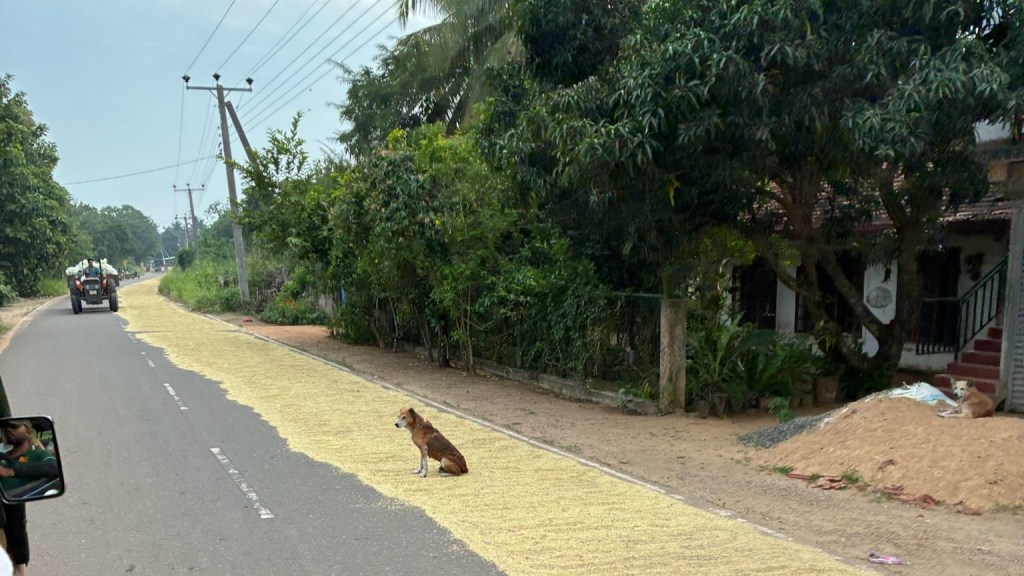
Wilpattu safari
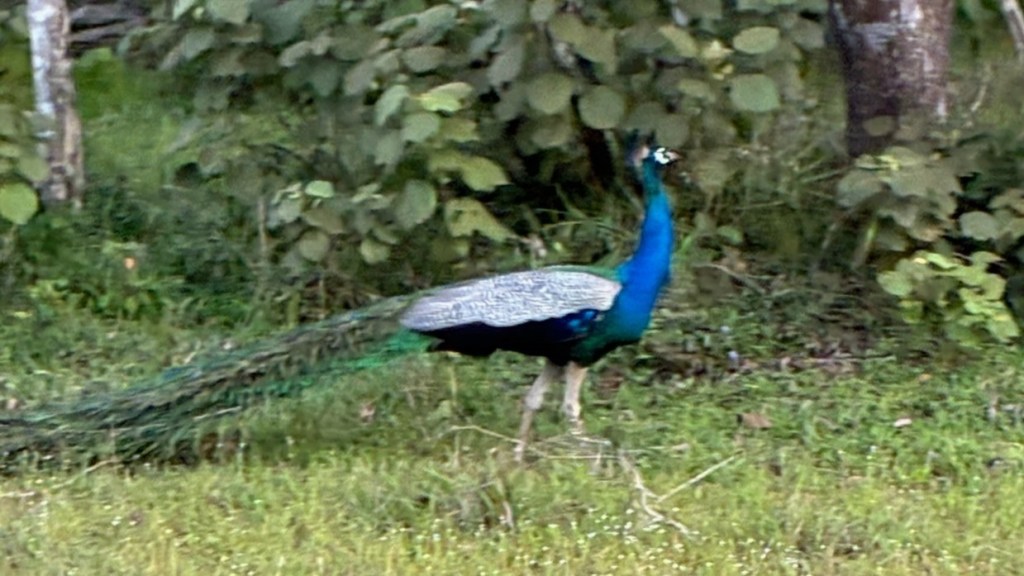
Wilpattu safari took resilience and grit determination to survive. We started early, meeting in the compound at 5.30am for the short ride onboard our safari truck to the National Park with another couple, full of anticipation for the day ahead. The park opens at 6am, so we sat in the queue of trucks in the pitch dark, waiting to go inside. The trucks are sturdy, old, and jolt your body in ways you never thought possible. At the start of the day, this feels fun, you like the thought of going ‘off-road’. This feeling lasts until about 10am. Our guide was a chirpy 19 year-old who knew the names of the animals we saw – but little else – so we stopped asking questions about the size, scale etc. In the first hour as the sun came up we saw birds of prey, owls, pretty deer, mongooses, peacocks sat high in trees and a brightly coloured ‘Sri Lankan junglefowl’ that we nicknamed the ‘chicken’. The truck, expertly driven, navigated dirt roads and ditches, throwing us side-to-side against the metal sides as we eagerly hunted for an elephant or a leopard – the holy grail of this safari.
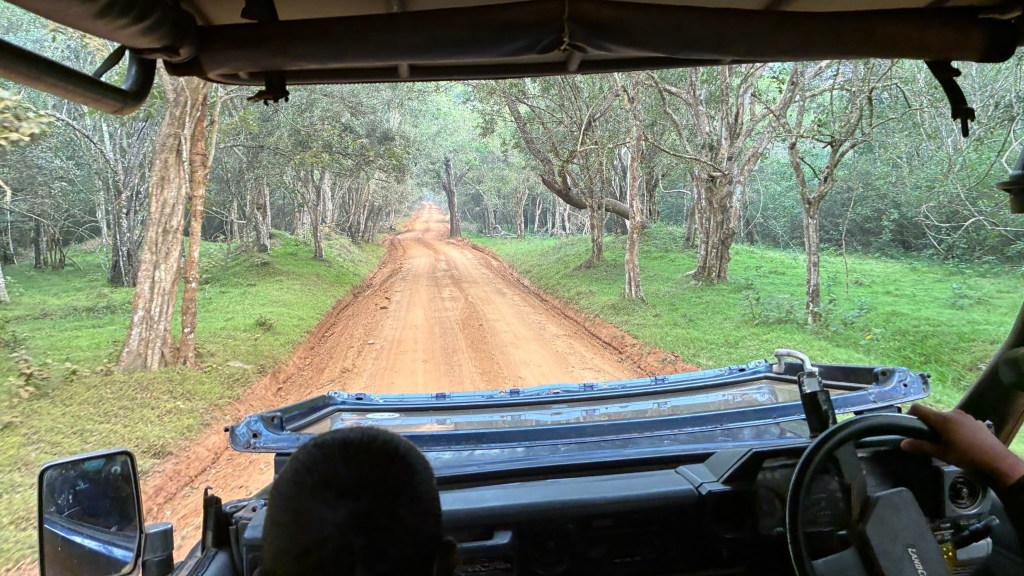
Five hours of roaming the same set of roads, we stopped for a very welcome break. For those of you not familiar with monkeys who hang around tourist hotspots, they are not that cute or fun. They are scavengers, who will do whatever it takes to steal your food, phone, camera, bag – they can scratch, hiss and bite, and we always avoid as really don’t want to visit a hospital and we hadn’t had the rabies jab. Our breakfast stop – the only one on the trip – meant we could use the toilets and eat the food provided.
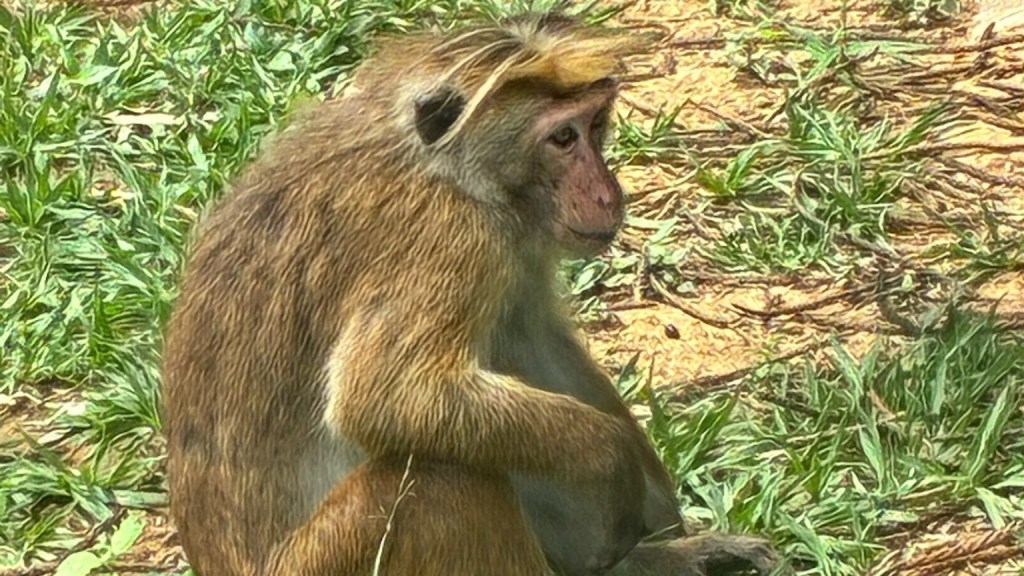
Monkeys were everywhere, loitering in the trees, squabbling and trying to climb into the trucks looking for food. We were told to go into a building – darkened by the wooden slats that prevented incoming monkeys – and ate a delicious breakfast. Little did we know that this would be the last opportunity to get down from the truck for another 7 hours. This rest stop in the centre of the park is very beautiful, the lake is teeming with fish, toads and birds, and aforementioned monkeys. Our advice would be to stretch, walk about, enjoy your time there.
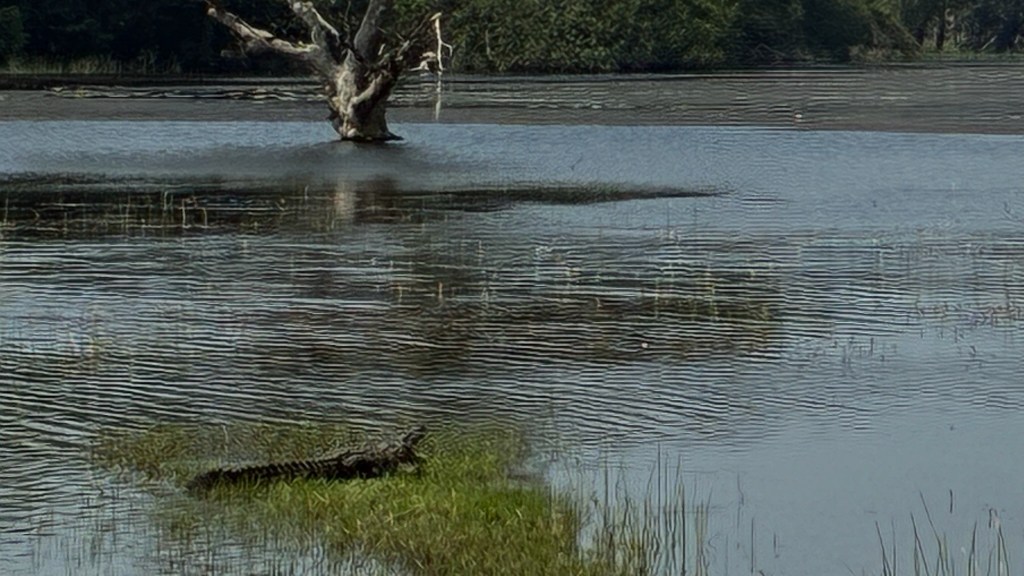
Back on the road, we continued our search for the elephant and the leopard. Our driver clearly was keen to deliver these. At times, his phone rang with sightings and we did three-point turns over treacherous gullies, rushing to the area, only to find nothing. This continued for hours, like some terrible fairground ride. All of us, including the guide, at various points slept, the jagged throwing of the ruck from side to side, like some strange lulling motion. At 1pm we stopped for lunch looking out at a beautiful lake and watched birds hunt and catch frogs, swallowing them whole and wriggling. But we weren’t, allowed off the the truck. The guide made it clear, that no one is allowed out of the truck during the safari – they receive hefty fines and bans if they allow the tourists to step foot anywhere but in the picnic area from our breakfast. So, we tried to stretch and wriggle, trying to ease the cramps and aches. Other trucks joined us – their passengers seemingly equally exhausted – many simply resigned to nap.
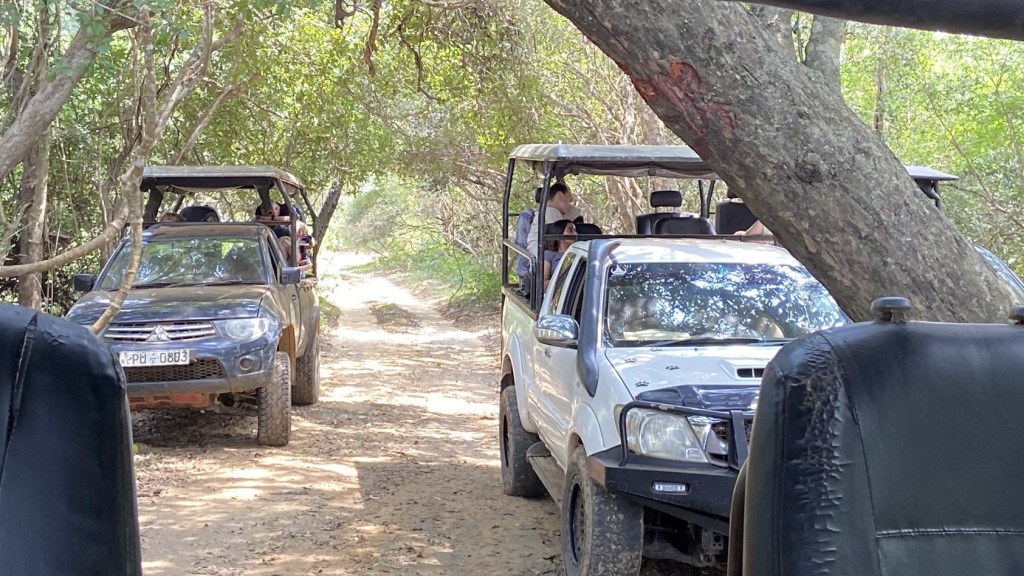
Finally, we were allowed one more toilet break before starting our long trip home. Then we saw it. A huge, wild bull elephant on the other side of a lake, bathing and drinking. We watched speechless.
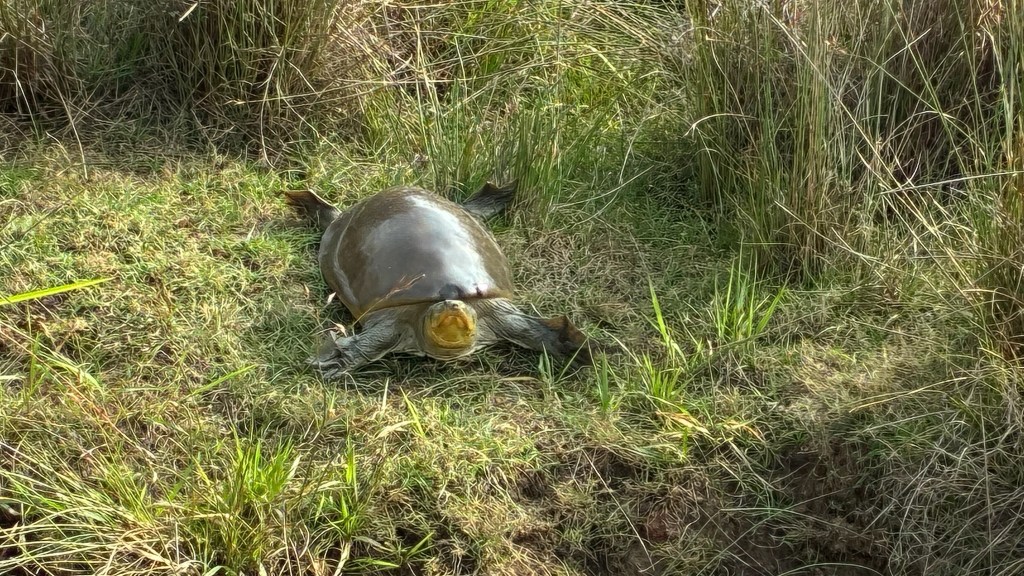
We spent 12 hours sat, being hurled back and forth across the back of a truck, arriving back at the accommodation at 6pm, dishevelled, very tired from 12 hours of sitting and covered in dust. We saw deer, birds of prey, mongooses, owls up close, crocodiles, plentiful peacocks, an amazing black rattlesnake that slithered across the path in front of us, colourful chickens, monkeys and a wild elephant. That night, over our dinner, we all shared stories of the resilience required and the animals we saw. Would we do it again – perhaps.
Our advice – don’t be convinced to buy the full day – a half day would be perfectly adequate to get a sense of a safari and see the animals we saw.
The Cultural Triangle
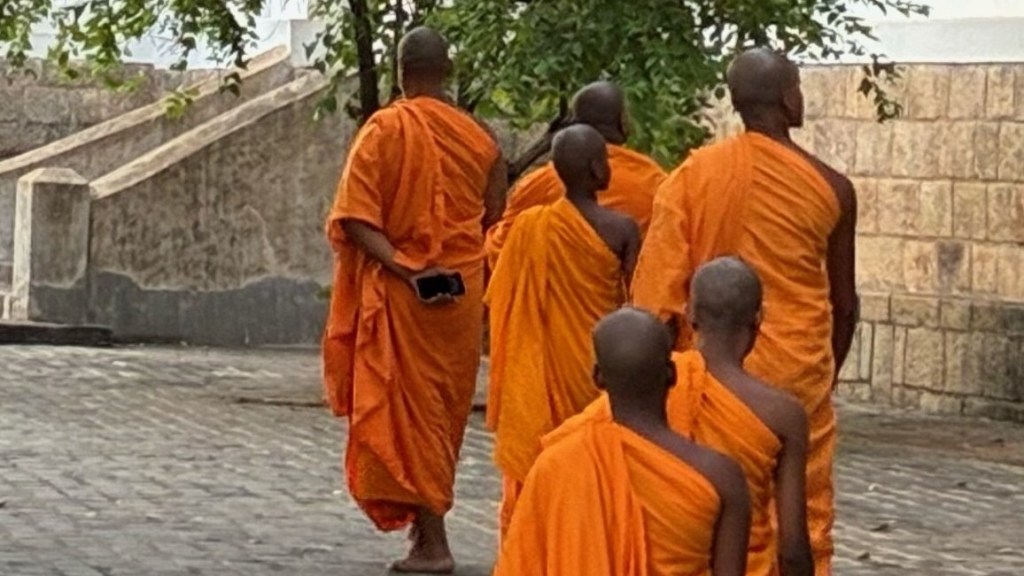
The first mistake we made in the cultural triangle was to stay in Dambulla. As it says in the guidebooks, it’s a collection of shops, businesses and homes along a boisterous and polluted main road – rather than a pretty village such as Sigiriya. Although our hotel was close to the Golden Temple and the Dambulla caves – everything else required transport. We had also made a geographical error. Anuradhapura was in fact, much closer to Wilpattu than Dambulla – so we travelled all the way from Wilpattu to Dambulla; only to have to go back again to visit the archeological site – though the effort was definitely worth it.
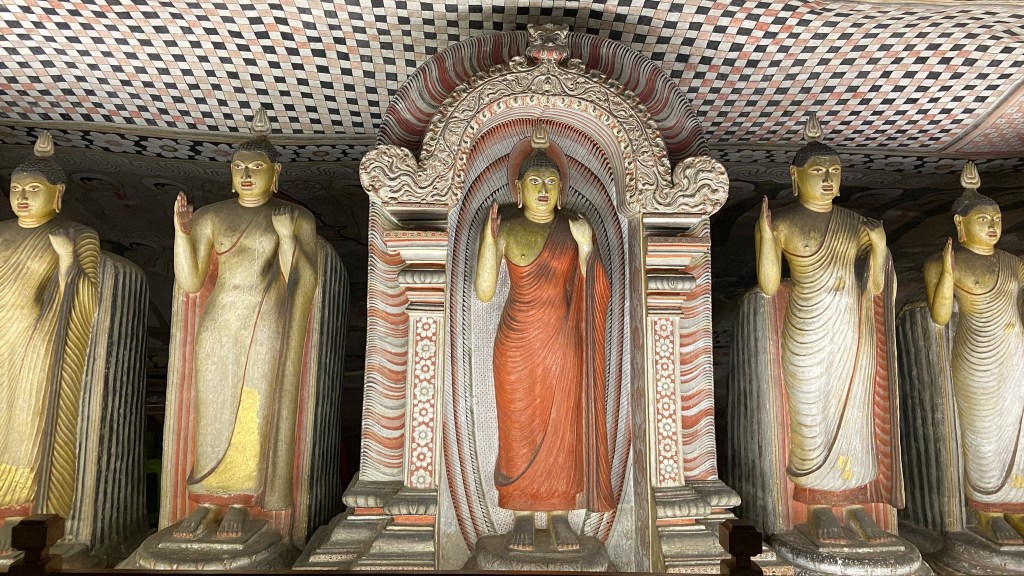
Dambulla caves
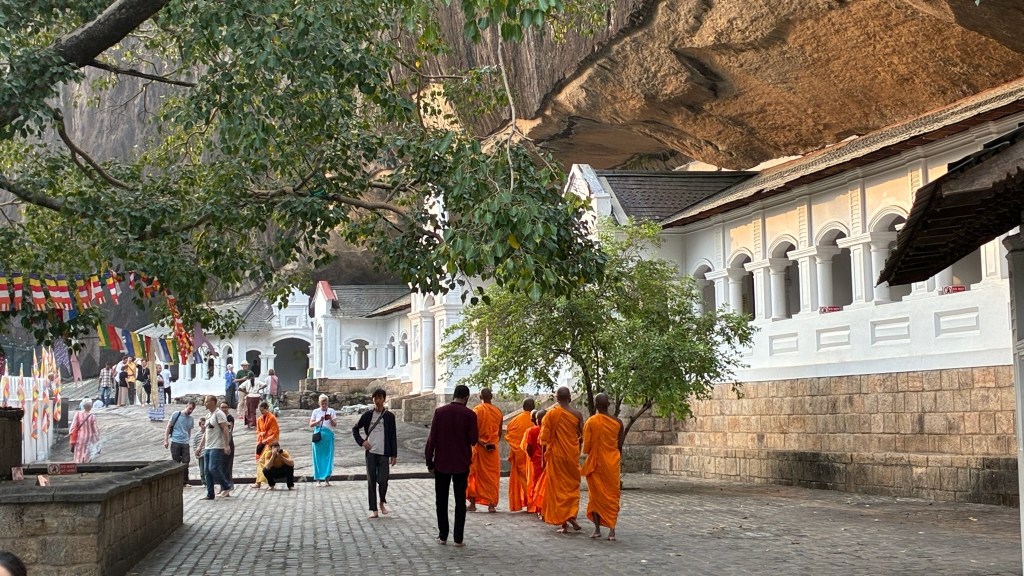
For a small entrance fee, and a hike up some monkey infested steps, you can explore the 5 caves. We went in the evening, just before sunset, so it was slightly less crowded, and it felt very calm and serene. We did the caves backwards – to go against the groups of tourists doing them in order and this worked well. You hand your shoes in to a man, who then gives them back when you make a small donation.
Pidurangha mountain
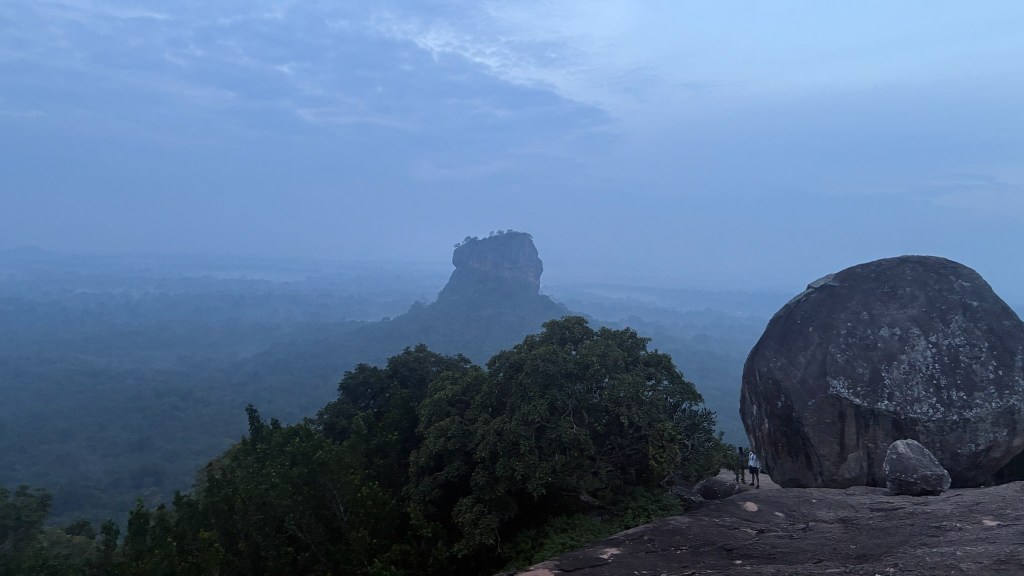
This was a ‘tour’ sold to us by the hotel, but it was so worth it. We left very early – 4.30am in the morning and travelled with our wonderful guide Samas, in the dark, to purchase a very cheap entrance ticket. Many backpackers choose this one over Sigiriya as it is pennies in comparison. So, we did feel like we were on a school trip, scrambling up the mountain in the dark, surrounded by very young, very eager backpackers. Reassuringly, they seemed to have to rest as much as us! The climb is very steep and near the top, there are sections that are quite tricky to climb, which means that little queues form. Though it is pitch dark, it is well lit and we didn’t need the head torches we had brought. Sat at the top – in calm silence – we all waited for the sun to come up behind Sigiriya. Sadly, it was too cloudy for a clear sunrise, but it was resplendent all the same. It is a wonderful thing to watch Sigiriya and then if you have the stamina…go up that rock too,
Sigiriya. – Lions Rock
This looked enormous when sat watching the sun come up on it from the top of Pidurangha But as soon as you see the hoards of tourists, old, young, babes in arms, you realise that getting to the top will be ok.
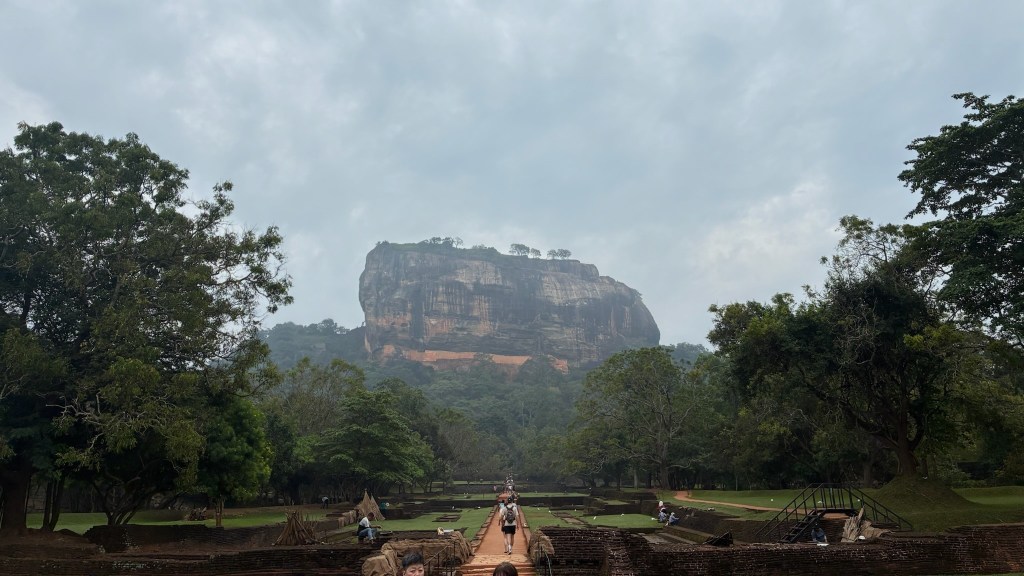
There are a lot of steps…both up and down…but well worth the climb. We sat at the top and read up on the warring families, murder of a father and the pleasure house the fortress had once been. Metal steps take you up the steepest sections, and you need patience if you get stuck behind a slow group.
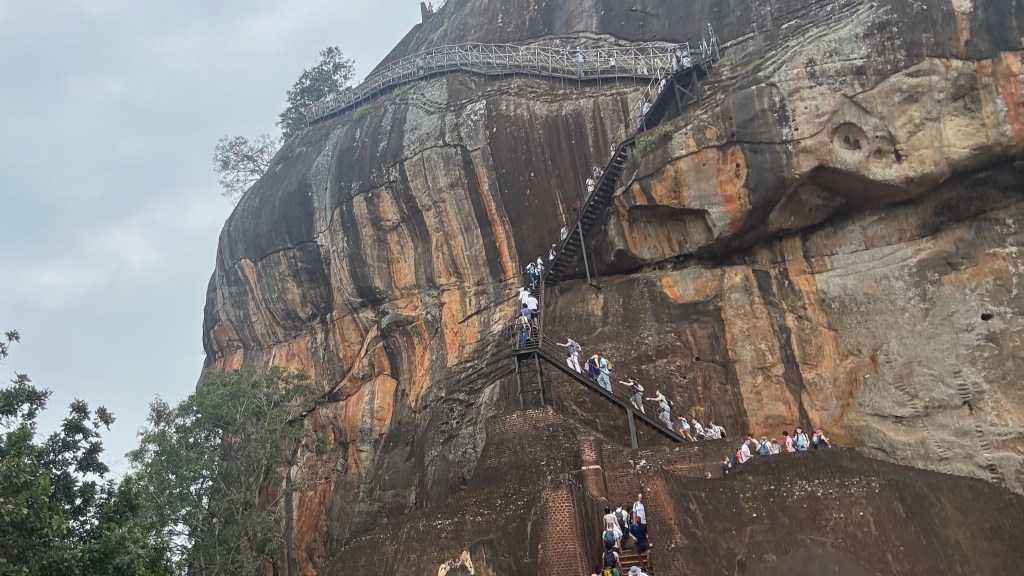
We went early in the morning, so the crowds were less and the experience was calmer. Stood in front of the huge lion’s paws (hence the rock’s nickname) that are the gateway to the fortress, we were mystified how the king and all his entourage would have travelled up and down – we ended up concluding that potentially a system of pulleys and ropes! On the way down, it is worth some extra steps up a spiral staircase to see the king’s ‘pornographic’ images that once adorned the whole fortress. They won’t let you take photos, but they are harmless depictions of scantily clad girls – interesting to see their clothes, and what they are serving.
Polonnaruwa
Polonnaruwa was the second ancient capital city in Sri Lanka following the destruction of Anuradhapura in 993. It contains the ruins of a beautiful and vast city created initially by King Parakramabahu and is a UNESCO World Heritage site. The city lasted three centuries and is an example of a highly sophisticated society, with technical superiority, including complex irrigation systems, schools and hospitals.
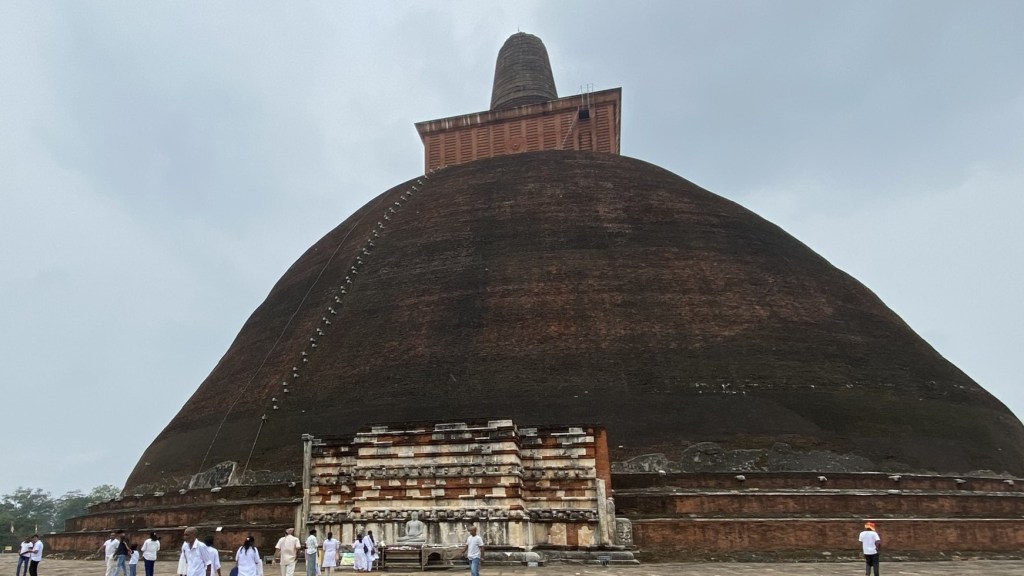
Today, Polonnaruwa is well worth a visit, though it is on a vast scale. We had a knowledgeable driver, who simply drove us to all the most relevant sections – enormous Stupas, ponds and palace remains, you can also hire bikes and cycle around the city remains. Three things put us off this…firstly the condition of the bike, secondly the heat and thirdly, finding your way around the array of roads, crumbling buildings and religious temples.
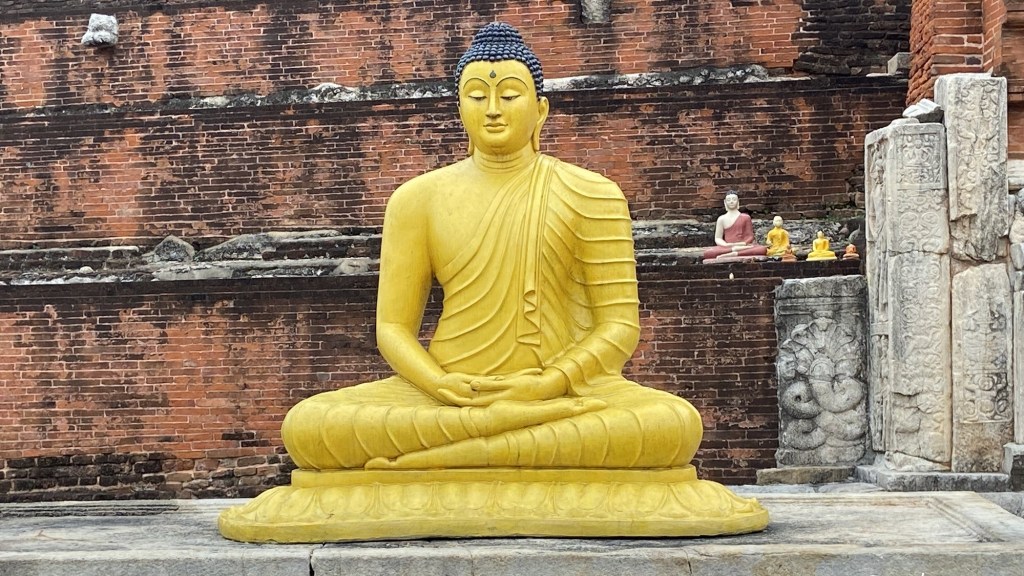
Anuradhapura
Established in the 5th century before Christ, this vast ancient city, on a par with Rome, was the original capital of Sri Lanka. Its archeological remains still cover 49 square kilometers, with much still uncovered. It is a UNESCO world heritage site and demonstrates the vast wealth and importance of Sri Lanka in the ancient world, trading spices, gems, elephants and religious order. At its heyday, there were 10,000 Buddhist monks living there.
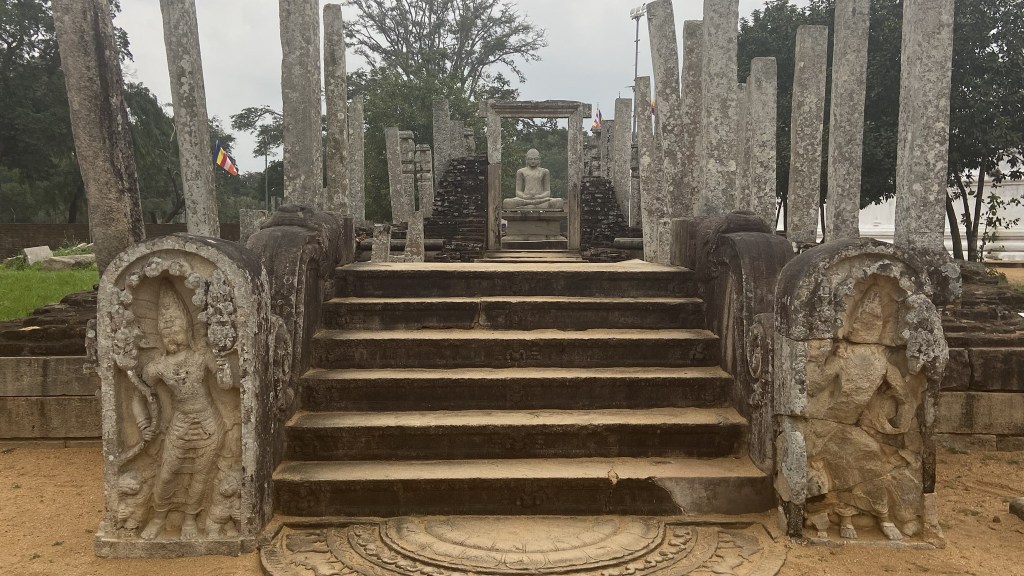
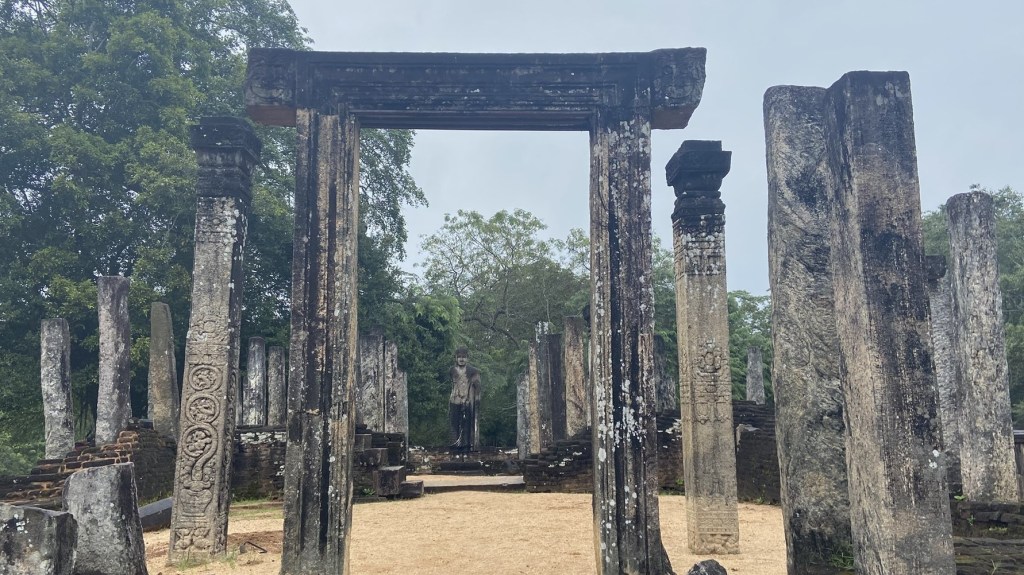
You can wander for hours through the remains of houses and see the temples. It is eerily quiet, the site being so big that away from the main entrance, you can get lost in the myriad of streets and gardens. It is a reminder of how sophisticated ancient civilisations were and how little we have moved on since.
Anuradhapura is also close to the Jaya Sri Maha Bodhi, a sacred fig tree taken from a cutting of the tree Buddha was sitting under when he first found enlightenment. It was planted in 236 BCE, and is reputed to be one of the oldest planted trees in the world – over 2300 years. Today it is a revered, pilgrimage site. Thousands of devout Buddhists visit every day, all bearing gifts and wearing white. We were welcomed there as tourists, though did show the utmost respect – we were covered, quiet, shoeless and refrained from taking photographs. It is a very special place irrespective of your religious or spiritual beliefs.
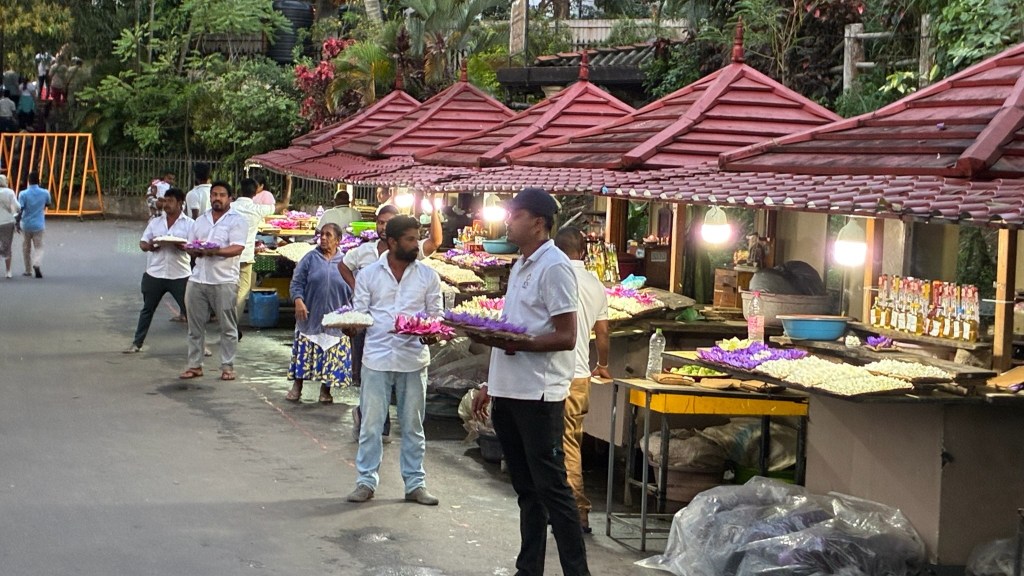
Kandy
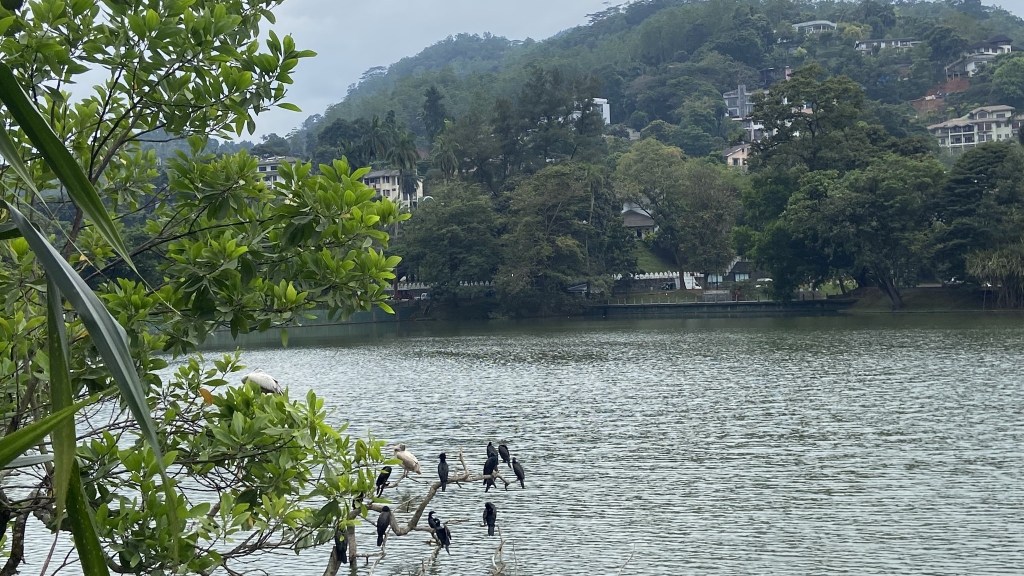
Kandy is a bustling metropolis made famous by its Temple of the Sacred Tooth relic and scenic railway – sadly not running due to the recent storms. When you arrive, it feels large compared to other towns and villages we had visited. It’s proud of its very modern shopping centre…on numerous floors…with a car park and branded shops – very novel for Sri Lanka. We stayed in a lovely home stay on a hill overlooking the city. Once we had acclimatised a little, we realised that it is actually quite small, just concentrated around the man-made lake and temple. You can walk round the lake, where we actually found the most ‘happening’ bar in the whole area…the ‘Hideout’ with DJs and great food – definitely worth a visit. Rather than the sad Queens Hotel right by the lake.
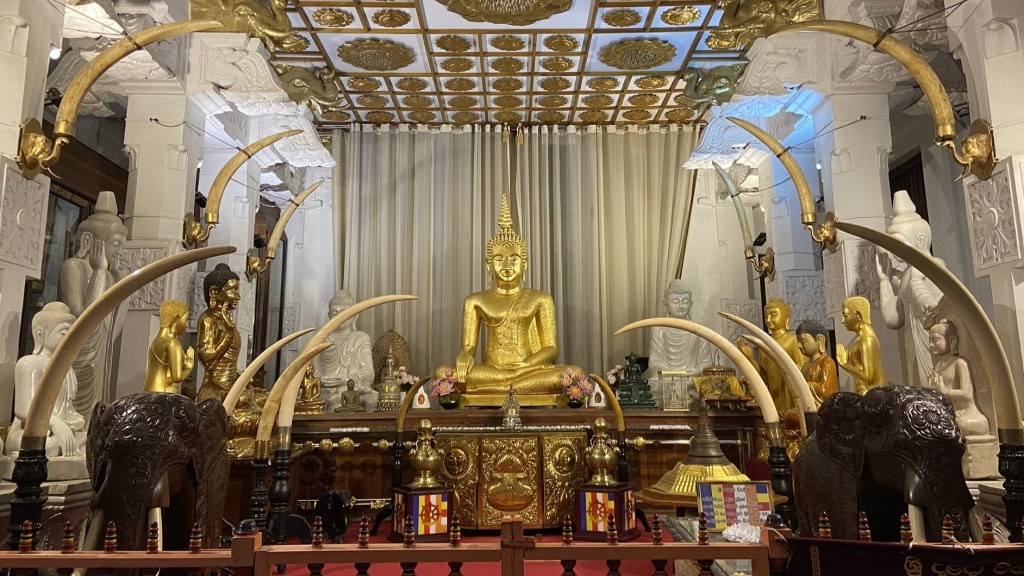
The Temple of the Sacred Tooth is beautiful and well worth a visit. It is a place of pilgrimage. Buddhists and tourists alike, visit in their thousands to get a glimpse of Buddha’s tooth held securely in its gold casket. If you get there around 5.30pm you can stay and participate in the nightly ceremony. Firstly, drumming before the doors of the room holding the casket are opened. We queued to view the gold casket…which was organised efficiently and the ‘walk by’ was super fast, devotees and us, contributing cash to a collection tray. Once a year, a special ceremony takes the casket on an elephant procession through the town with all the pomp and pageantry you would expect.
You can also see some traditional dance, acrobatics and fire eating for a small fee at the Kandyan Cultural centre in the evening. It is gloriously chaotic. If you want great seats get there early and they write your name on a card to reserve seats. Beware many of the tour companies block book seats. There’s plenty of seats for those less organised. In fact, it reminded me of a Shakespearean theatre. People walked in and out throughout the one-hour show, chatted loudly, gesticulated widely and moved about.
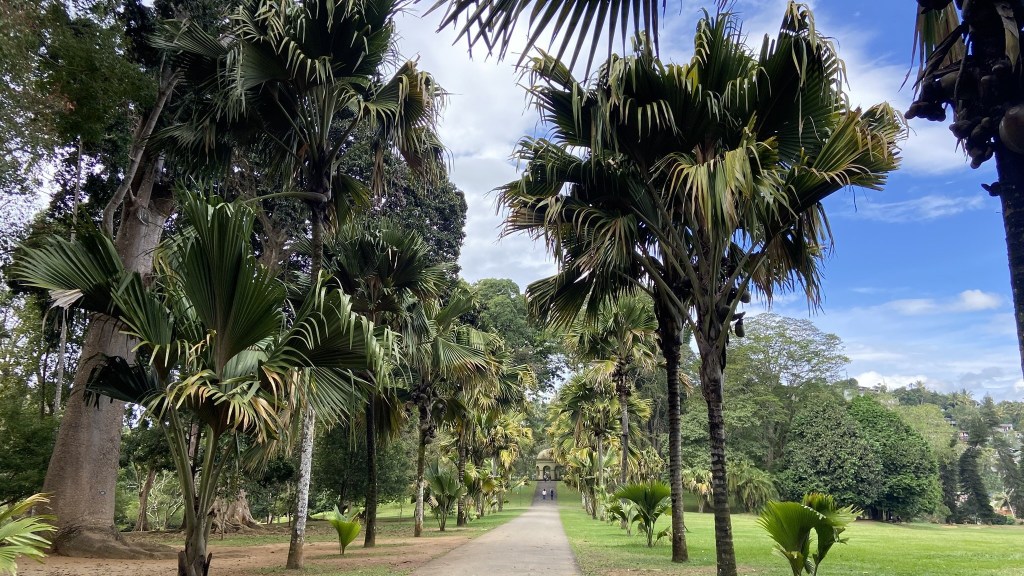
The Botanical Gardens are a wonderful and economical way to spend a few hours, wandering amongst the exotic fauna and flora. Covering 147 acres, they encompass over 4000 plants, beautiful lawns and greenhouses. We marvelled at the trees filled with huge bats and peacocks.
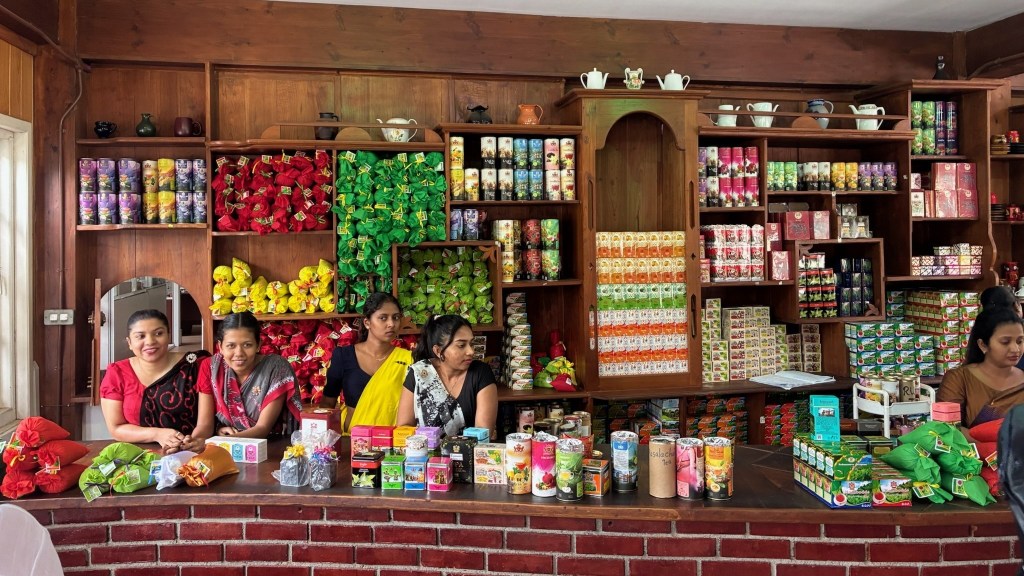
We also visited a wonderful tea factory in Kandy that showed us how the tea is picked and manufactured. It gives you time to learn about the different types of tea and there is time to do leisurely tea tasting, before shopping in the cafe! We also went to the tea museum in Kandy – but by far enjoyed the factory more as you could see the whole process from start to finish.
Ella
We arrived in Ella in blustery, biblical rain. Ella station was a cacophony of wet travelers, harboring under overhangs and umbrellas as they scanned the mayhem of the station car park, for their driver, taxi or tuk tuk.
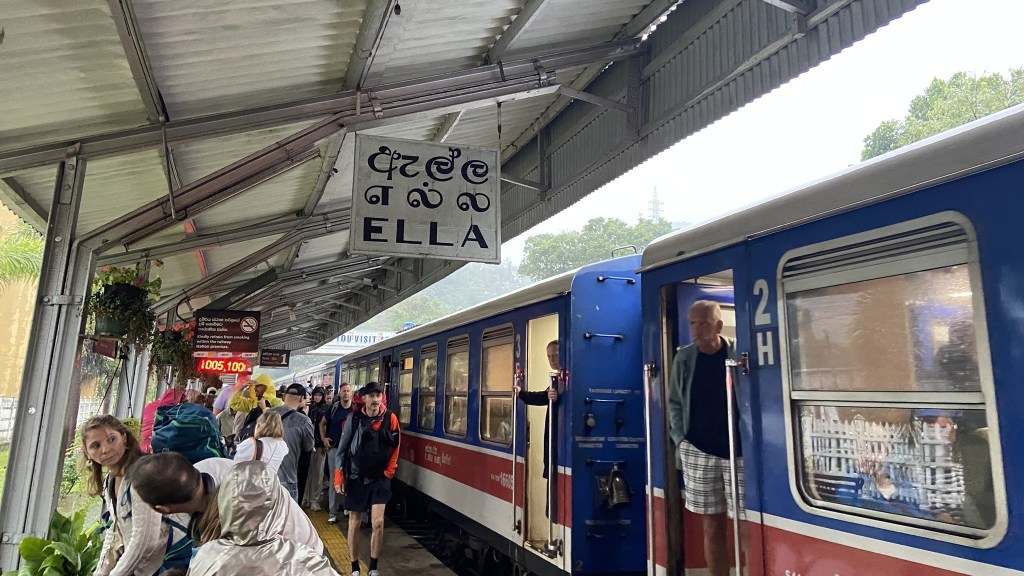
Ella is an absolute gem of a surprise. Its tourist boom has only happened in recent years. Until then, it was a small, simple village at the centre of the island, with a railway station. Over the last ten years, tourism has exploded and Ella is now fully on the map, with backpackers, hikers and those wishing to travel on the scenic train ride. It has a collection of bars and cafes, some very tasteful, trendy shops, some charging high prices and a lovely vibe. The locals have adapted quickly, with many opening rooms within their home for the tourists. We navigated numerous backstreets, before being shown into a beautiful room, with its own terrace and a jacuzzi in the bathroom – sadly we only had the evening to enjoy it as we had a very early start. We ate in the ‘White Rabbit’ – which has a refreshingly different Sri Lankan menu to what you find everywhere else and great cocktails. Our biggest shock here was how expensive Ella is compared to everywhere else. Jewelry trinkets selling everywhere else for a few rupees were £20 in the shops here.
The Pekoe Trail
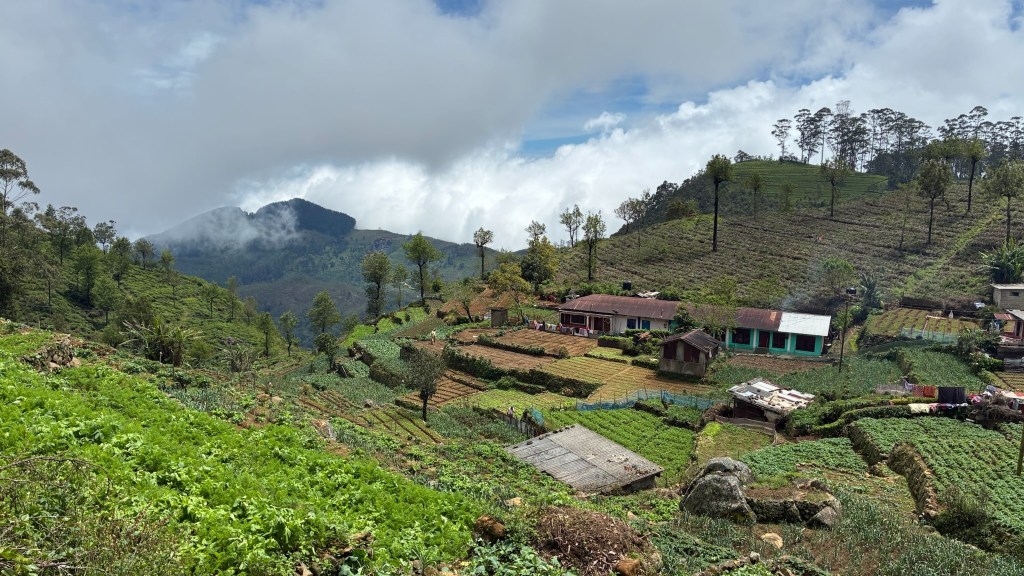
The Pekoe Trail opened in 2023. It is 400 km long, organised into 22 stages and aims to promote sustainable tourism in the hill country.
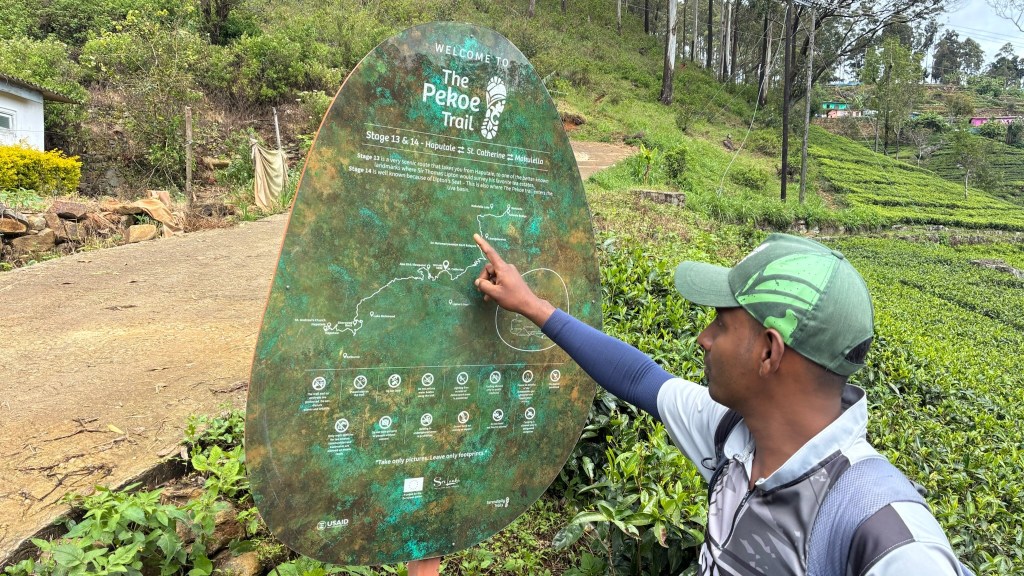
The stages cover a diverse landscape and in places are not easy – if you are not used to hiking. You can download the app or check it out on social media. There you will be able to find a guide who can navigate you sensitively through the tiny villages, give you information about the fauna and flora, and as a bonus, make sure you go the right way. These guides have spent time training and know the Pekoe trails well. By hiring a guide, you are also contributing to this stunning, but still developing country’s fiscal income – in other words – giving some young people the opportunity to enter into the embryonic tourist trade. Equally, you can follow your GPS and the small orange signs.
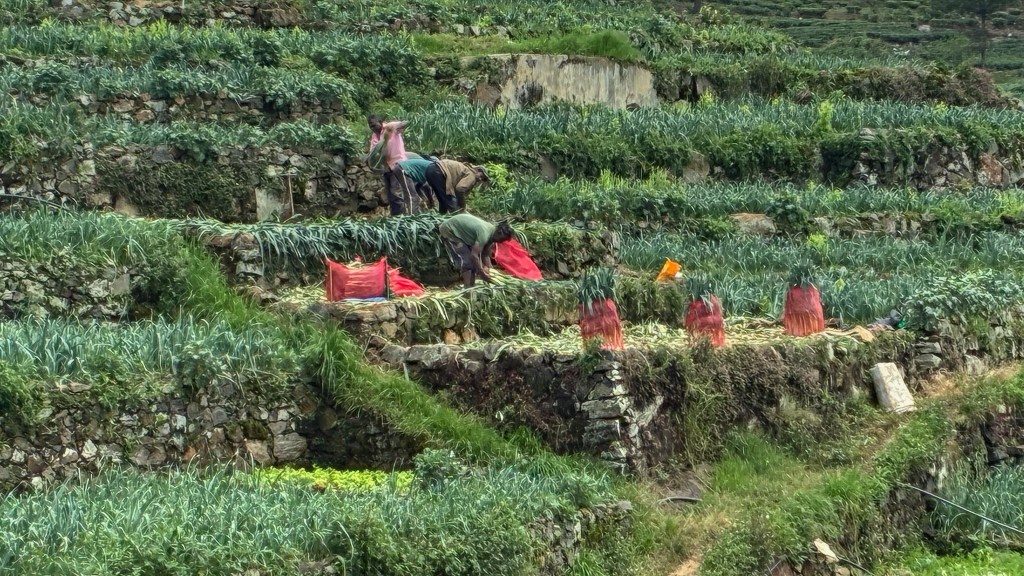
We did stages 13 and 14 on day 1…staying overnight in a ‘homestay’. This was not a simple hike, around 23 km up a large mountain and then a steep descent through the plantations and tiny villages, taking us around 6 hours – though we did take our time. On day 2, we walked the 6 miles back to Ella on stage 15.
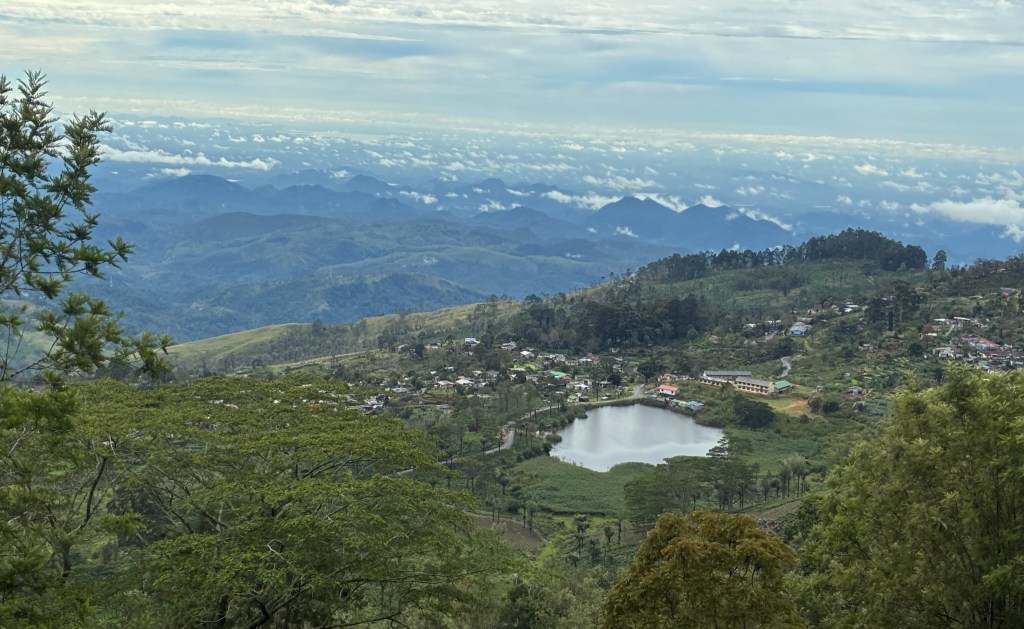
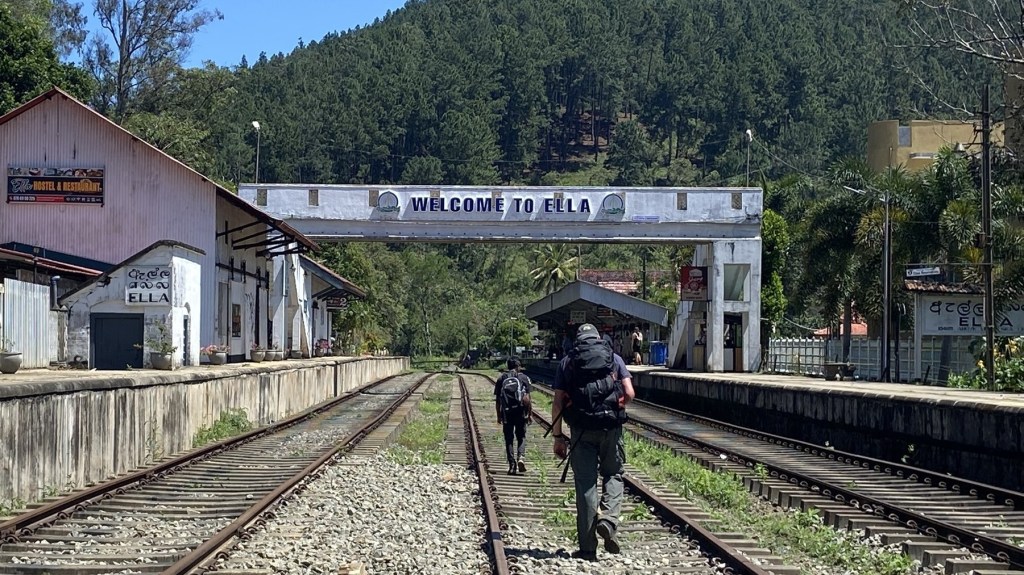
We climbed up to Ella Rock and then descended down into the town…walking the last stretch along the railway lines. Many tourists simply walk up to Ella Rock, and it was a bit of a shock being suddenly thrown back into tourism after the solitude of stages 13 and 14.
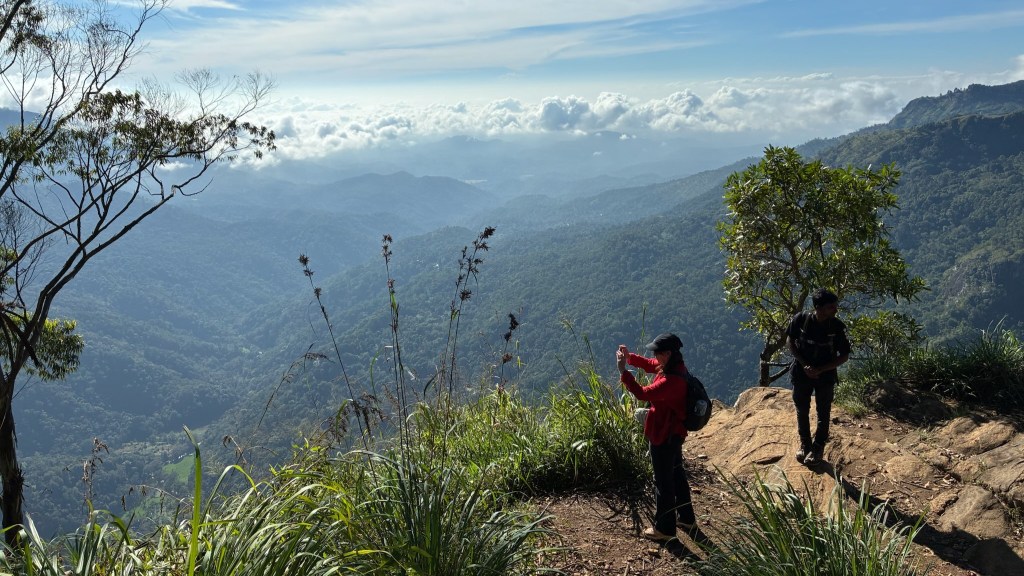
Udawalewe National Park
We travelled to Udawalewe with a private driver – a ‘brother cousin’ from our accommodation and stayed close to the ‘Elephant Transit House’ (ETH). Run by the government, it rescues injured elephants or orphaned calves, and as its name suggests, it is a transit house. They are fed, nourished and eventually returned to the wild. Those of you that have read my other south-east Asia blogs, will know my feelings about elephant conservation.
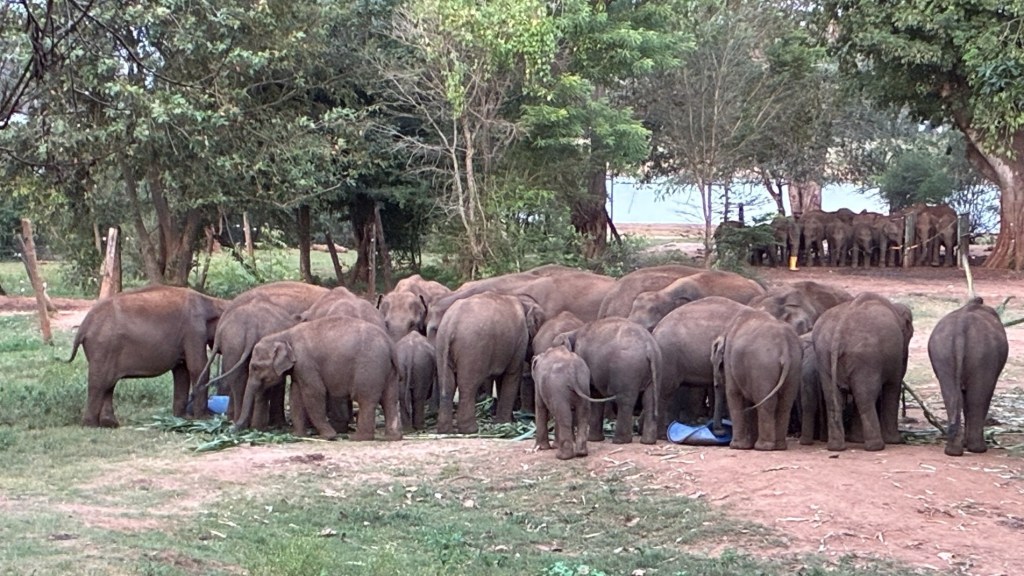
Sri Lanka has hundreds of wild elephants, many located in their 26 National parks. But where wild elephants and man exist, there is always conflict. The Human-Elephant Conflict (HEC) has become the main government conservation priority in Sri Lanka. Some farmers lay traps, electrocute and put down ‘mouth bombs’ that the elephants eat, or shoot them to protect their crops – though all of this is illegal and there are heavy prison sentences for those caught doing so. Elephants also get hit by cars or trains. The government is working hard so that elephants and people can co-exist. You will see lots of electric fences, like those used for cattle, stopping wild elephants from wandering into villages or onto roads. You may see a tall structure in a paddy field, where a farmer will sit watch all night, to protect his crop. And of course, education. Personally, we think elephants in Sri Lanka are gold currency – tourists like us – will travel across the world to catch sight of an elephant.
The Elephant Transit House, is not tourist entertainment. They do not want the elephants to grow friendly with humans – the aim is to relocate them back to the national park as soon as they are ready.
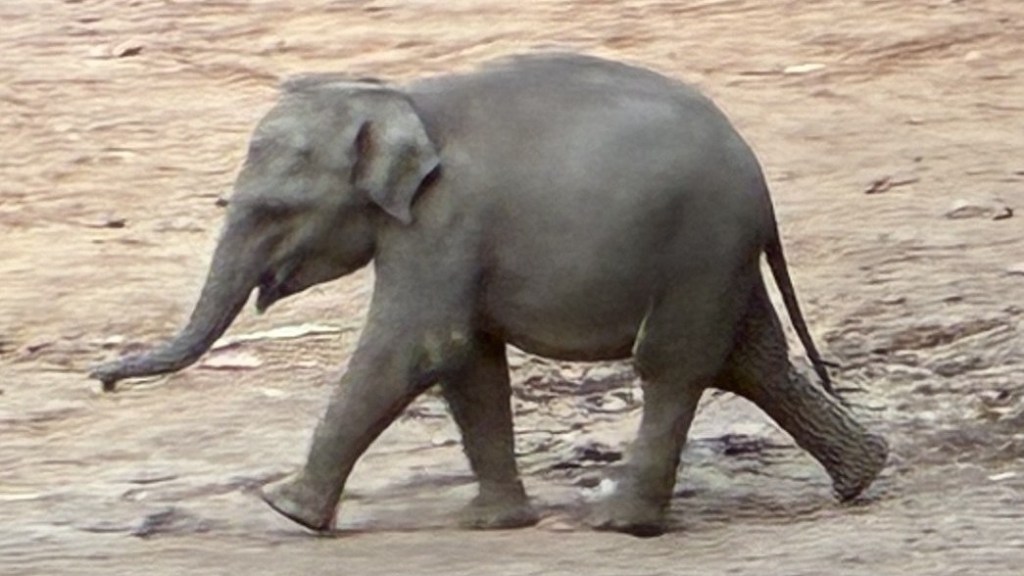
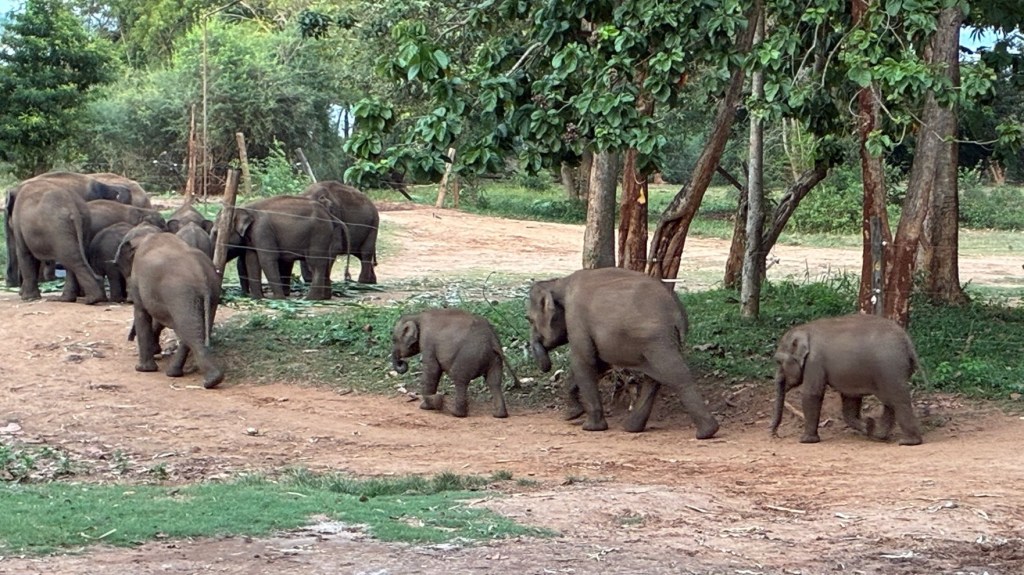
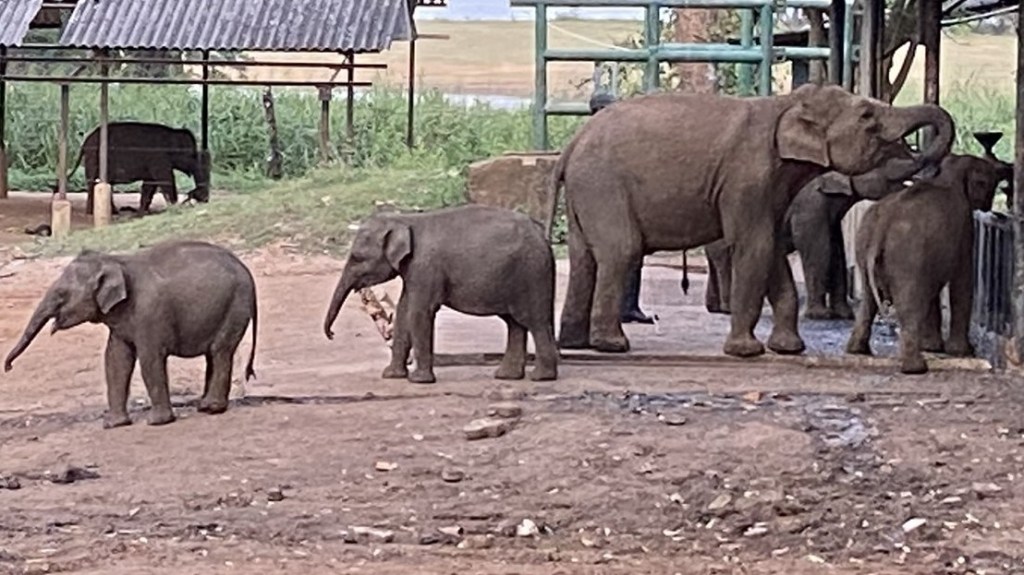
You can only go in to view them during feeding times – 10.30, 2.30 and 6.00 – for a small fee. You watch from a distance, as they are allowed into the feeding area two or three at a time. They run to the ‘milk station’ to drink and then move across to eat sweet corn. Some are quite big, some very tiny and there are loud squabbles and disputes as some try to get extra helpings, barge each other or push the little ones out of the way. One man manages all of this, with a stick. He walks amongst them, ensuring everyone gets the correct amount, lifting the stick sometimes, sometimes tapping their behind. One confident ‘teenage’ elephant, already having had his fill, kept sneaking up behind the man, a bit like a game of ‘Mr Wolf’, getting told off but finally managing to grab a trunkful of extra milk from the bucket. There is a choreography to this…milk, then corn, then back out into the national park. Subsidised by the government, who have now declared elephants endangered in Sri Lanka, each person who visits, pays for one elephant’s milk for one day. Clearly at some point, it will be marketed to make it more sustainable – t-shirts, bags and the like…But its simple set up is perhaps what makes it so endearing. Extraordinarily magical and emotional. We went three times!
Marissa
Arriving from rural Sri Lanka, Marissa was a bit of a shock both in terms of the business of the resort and the prices for food and drink, double that we had been paying. There are numerous, beautifully proportioned beaches, which you navigate precariously to via small rock clusters and back alleyways that don’t appear to be the entrance to any beach. Cafes and restaurants pepper the beaches, offering a more touristy menu – burgers, fries and pizzas. You can snorkel at turtle beach when the sea is calm in the morning or enjoy some surfing on the main beach. It is as you would expect, a tropical beach in paradise…palm trees, white sand, warm ocean.
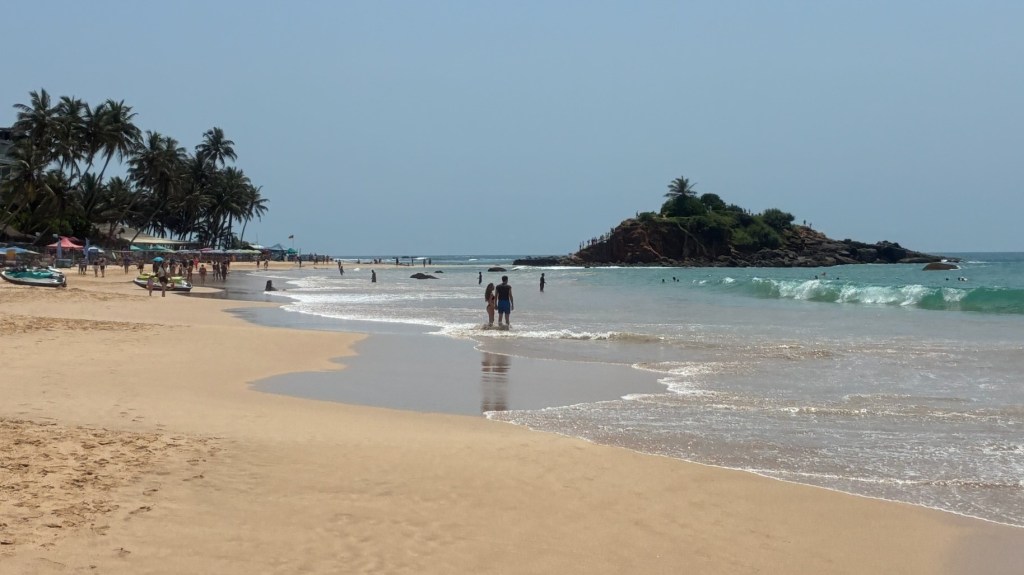
As all towns and villages appear to be in Sri Lanka, Marissa is a ribbon development along a very ‘manic and dusty, traffic filled road, making an evening stroll complex and challenging. We routinely carry small head torches which are great to hold in your hand, so that you can see the road and the road can see you! There are lots of restaurants matching everyone’s tastes and pockets.
Marissa – whale watching
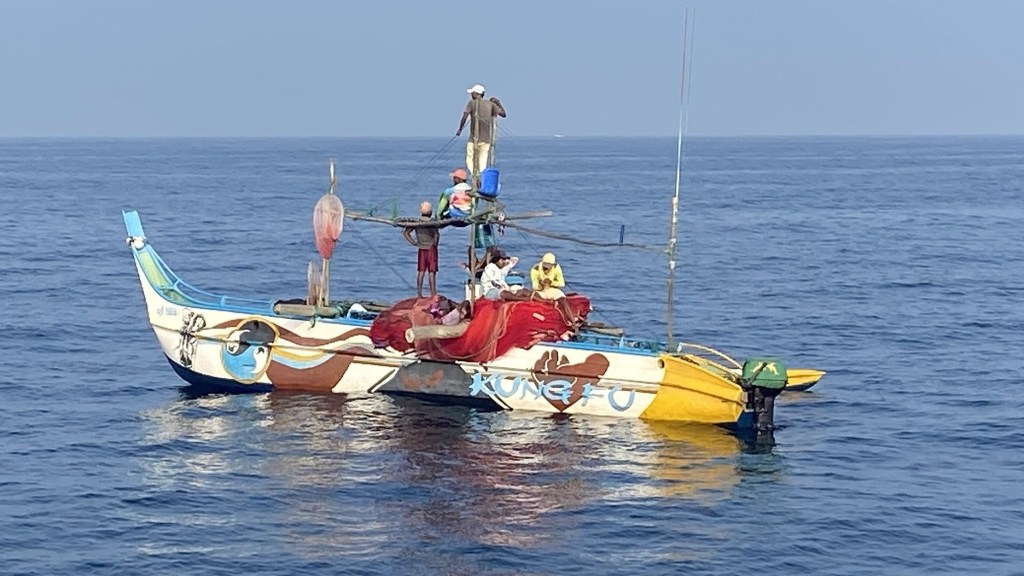
Whale watching in Marissa is popular due to the proximity of the migration Gulf Stream just off the coast and also what the Sri Lankans call the ‘resident’ whales and dolphins. But like any safari, this one includes lots of scanning the ocean and phoning other boats for spotting. It’s an early start – the boats leave at 7am from the bustling fish harbour and take you a number of kilometres out to sea. They tell you at the start that it could last two hours or more, depending on whether you see any whales – clearly the holy grail. Ours lasted almost five hours.
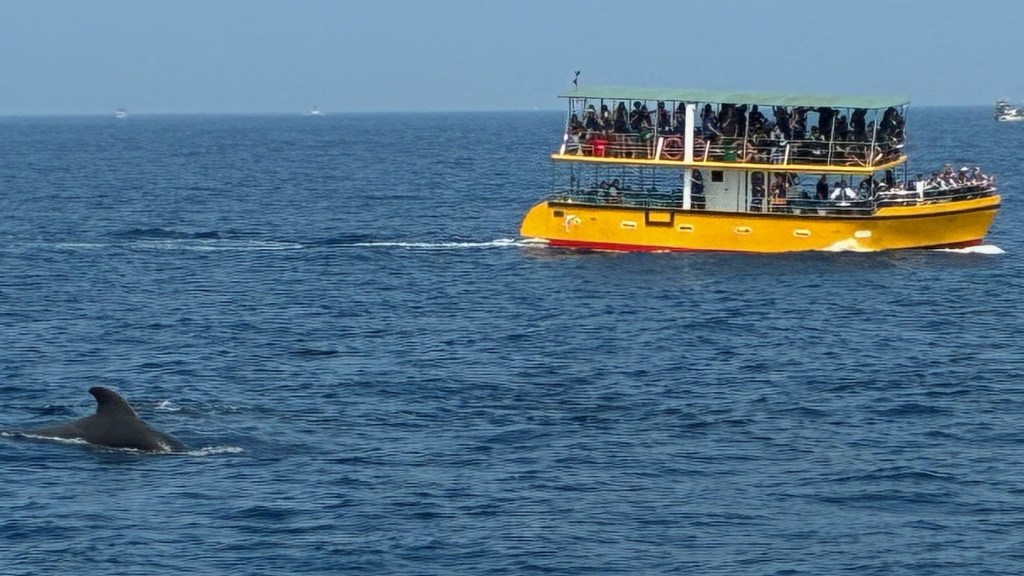
We saw several pods of dolphins, some very large turtles and finally a pod of pilot whales. The weather was lovely, the sea calm, so it was a lovely way to spend the morning – though you do arrive back feeling completely windswept, Like all safaris, there is a sense of intrusion on the natural world. As soon as any marine life is located, all the boats swoop to the area and at times it did feel like we were hounding these majestic creatures.
Weligama Beach
This is a young, trendy, surfing area frequented by many experienced and not so experienced surfers. Depending on your skill level, there are numerous smaller beaches that surfers head to, along this stretch of coastline. The waves are robust, the beach long, with surf schools encouraging you to ‘try out surfing’, littered along the beach.
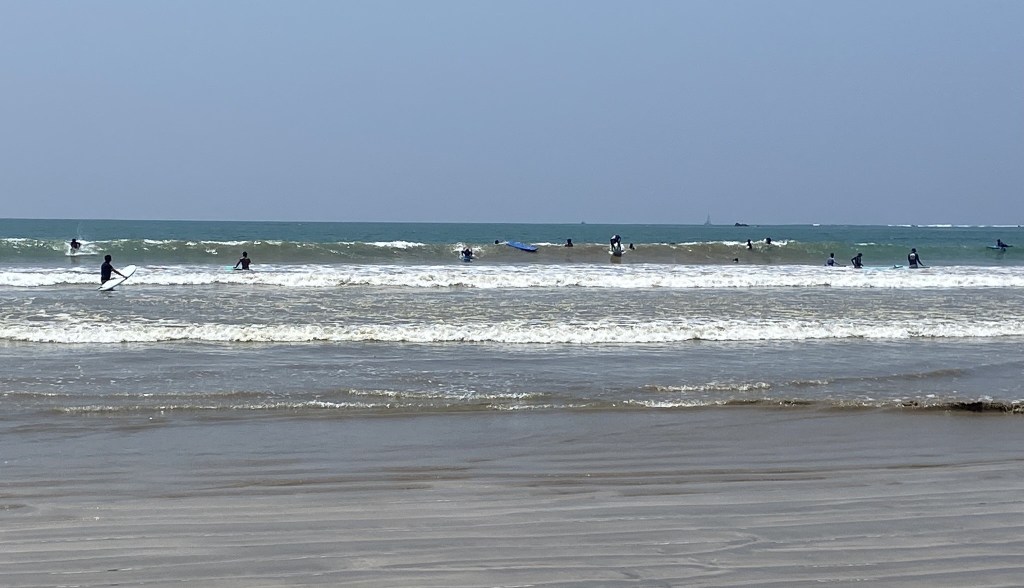
We didn’t particularly like this beach. The surf schools and expensive hotels have countless, unused beach beds, but charge hefty fees if you want to use them – even if you buy a meal in their cafe/restaurant. The beach wasn’t as clean as the others we had visited and the sand in places is dark, making the periphery of the sea muddy looking. There are trendy places to eat – but they are stretched across this vast area and so difficult to navigate unless you have a great recommendation and can go straight there.
Unawatuna Beach
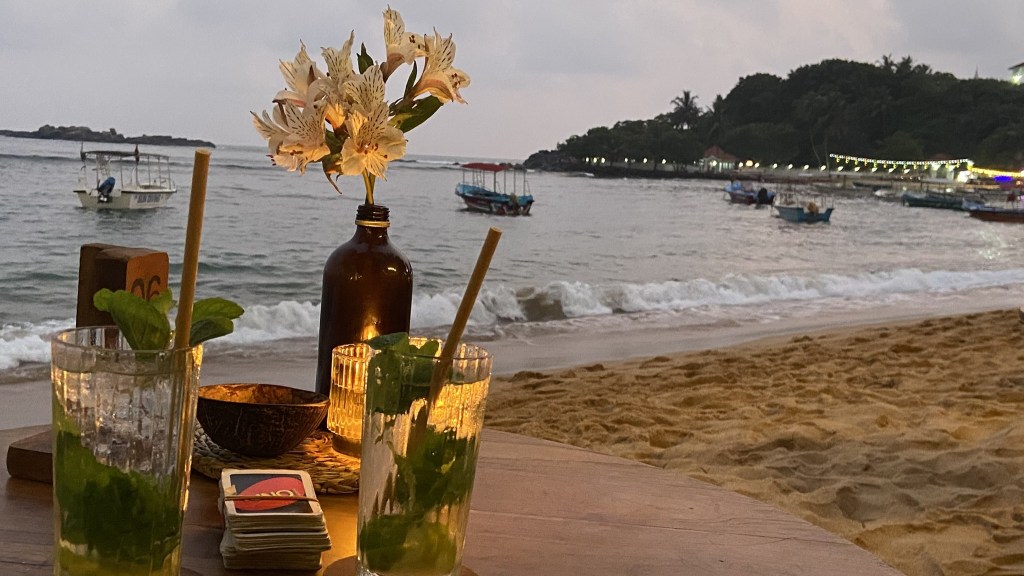
Unawatuna Beach is a huge crescent of white sand that strolls easily into the warm Indian Ocean.
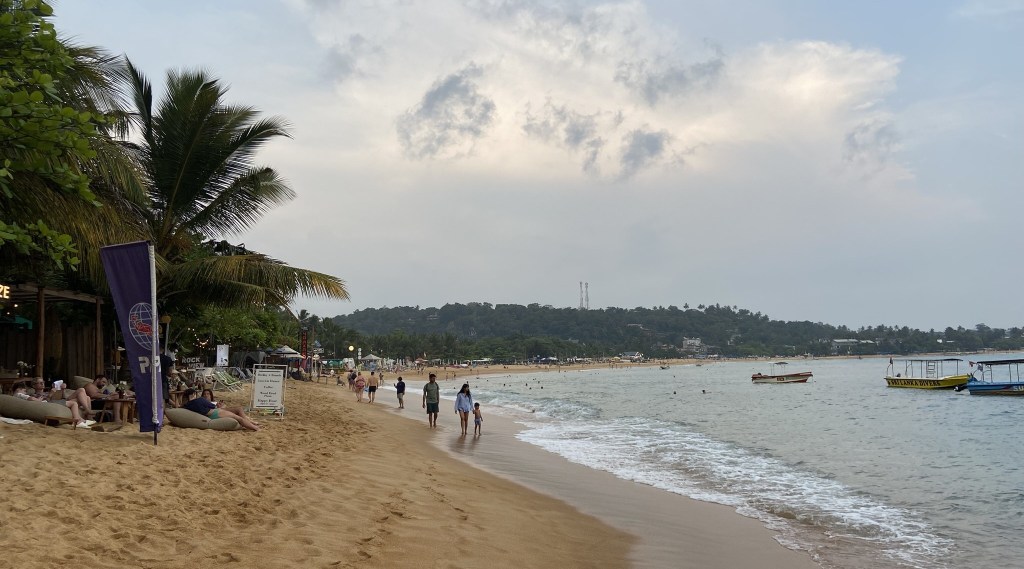
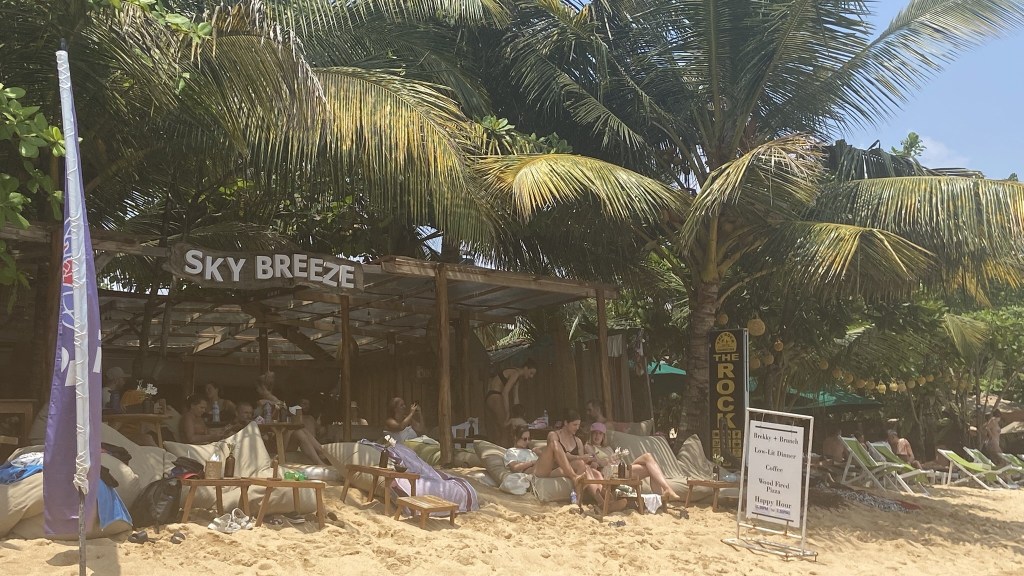
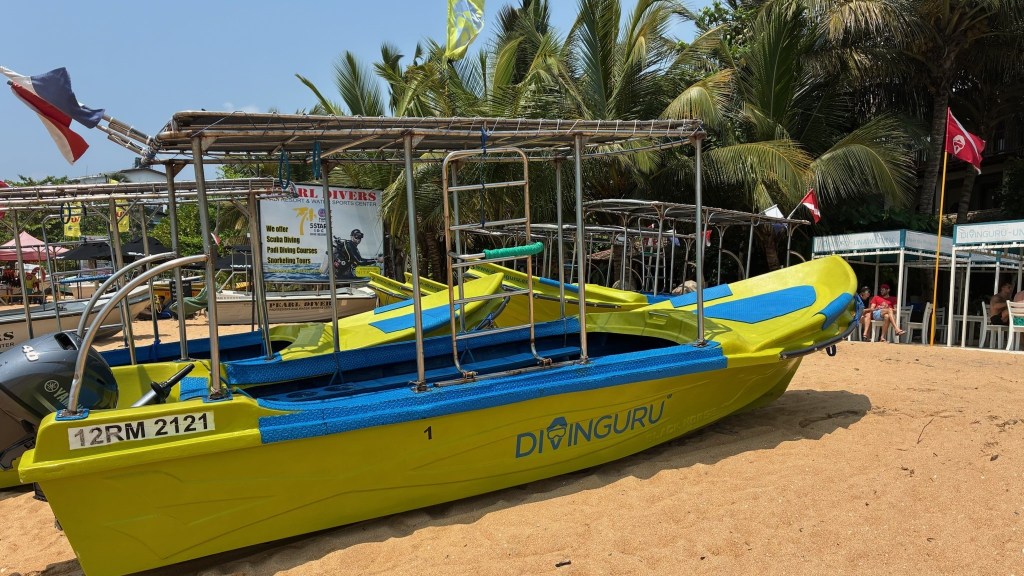
We chose this beach due to the number of PADI dive centres and the relaxing atmosphere. Unlike the ribbon resorts, this has a small area of tourist shops and restaurants/bars that you can wander around in the evenings, off the main road. Many of the bars and restaurants are on the beach, so at night we wandered the beach and sat with a cocktail or two, waves yards from our bare feet. Our absolute favourite place to eat of the whole holiday was The Sky Breeze Cocktail bar at the far end – it had the most incredible handmade, wood fired pizzas, fantastic menu of interesting dishes, a relaxing vibe and great hosts. Plus it’s right on the beach!
There is a grotesque, brutalist 5-star resort that attracts Russian visitors and is a blight on the otherwise beautiful landscape – we are hoping that as tourism numbers increase – more of these monstrosities won’t follow.
The beach resorts are one aspect of Sri Lankan culture and a great way to relax at the end of a trip. However, there is so much more to see and immerse yourself in. Sadly, some tourists simply come here to sit on a beach for two weeks.
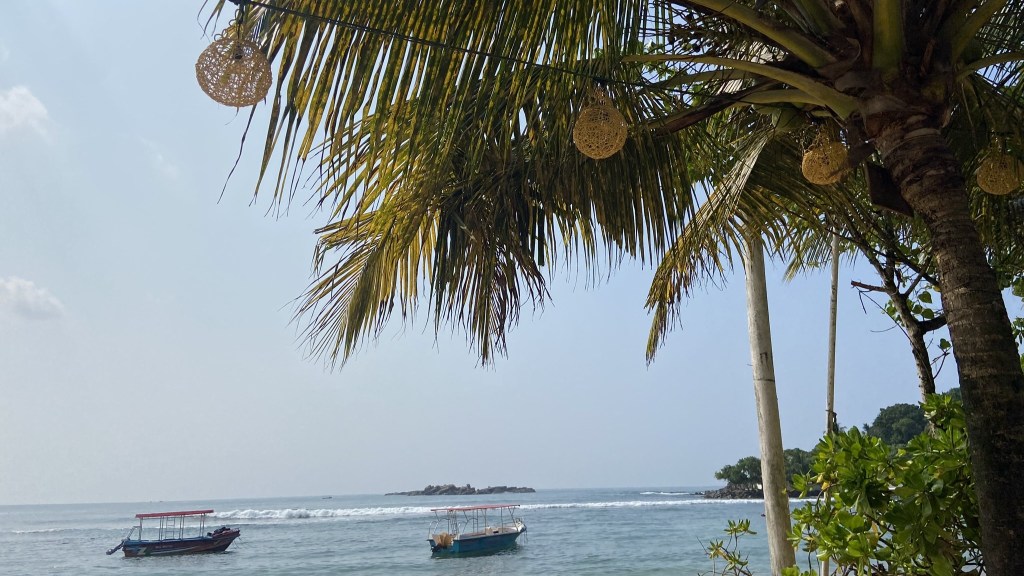
Galle
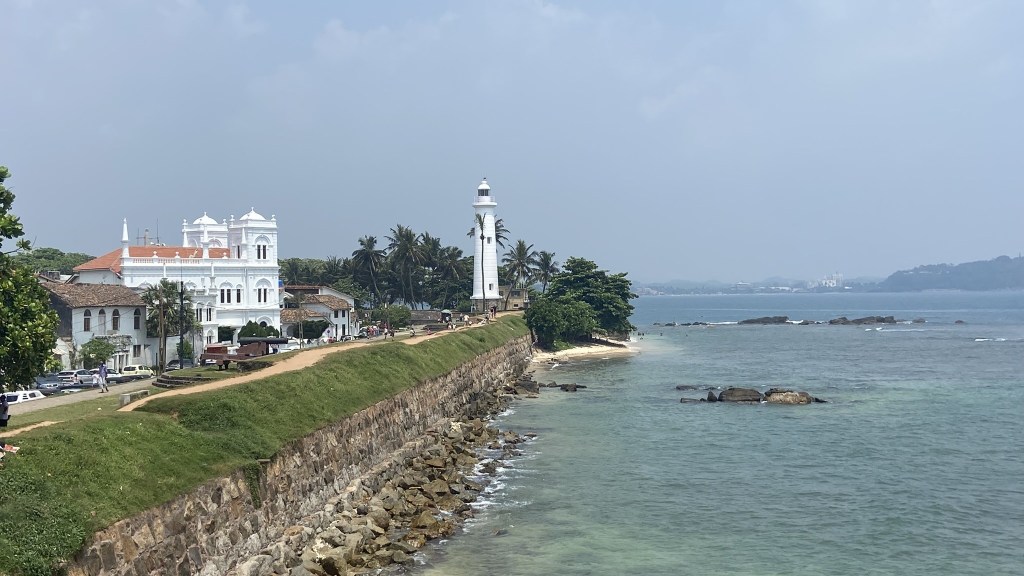
Galle Fort and old town is a UNESCO world heritage site. built in the 16th century by the Portuguese, it had numerous fortifications by the Dutch in the 17th century before taken over by the British. The town is surrounded by robust ramparts and battlements. Within, it is a bustling community of homes, shops and cafes, visited daily by thousands of tourists. You can wander this small town, visit the beautiful cricket pitch or catch a sunset swim in one of the small beaches.
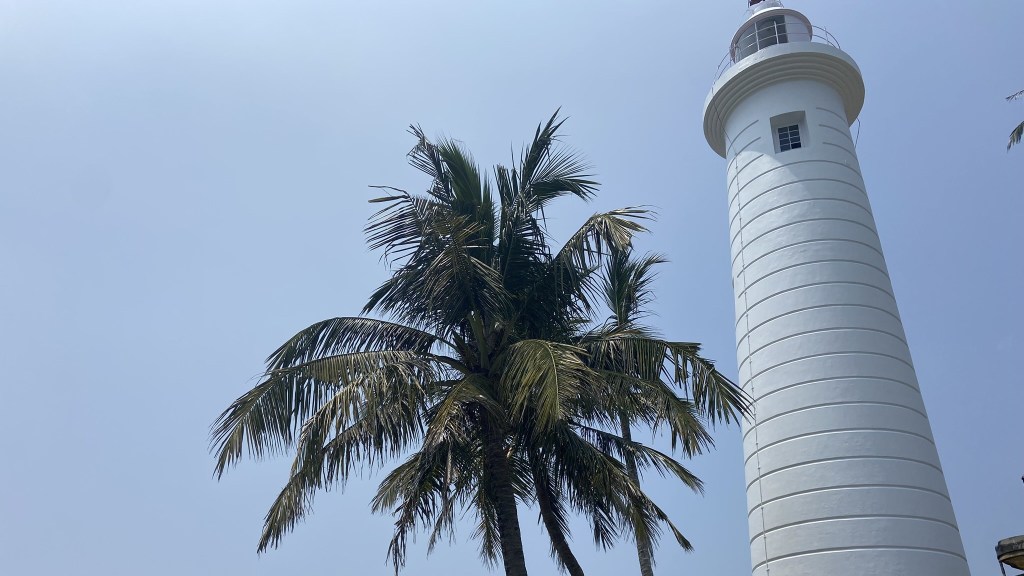
Galle Fort is a fascinating and picturesque example of colonialism mixed with a huge dose of Sri Kansan culture. During the day we ambled through the cacophony of shops and cafes in the mid afternoon heat. With sunset, came an ease from the heat, as the town now illuminated, discharged those that had hidden for an afternoon siesta. It was a wonderful way to spend a day, exploring the many shops selling upmarket art, gems and clothing and ambling along the many walls and battlements.
Colombo
Colombo is the commercial capital, a vast, sprawling metropolis, 37 km square and densely populated by 13% of the population. You will see huge modern buildings, sharing the same space as dilapidated shacks, the train trundling past all, irrespective of creed or cash.
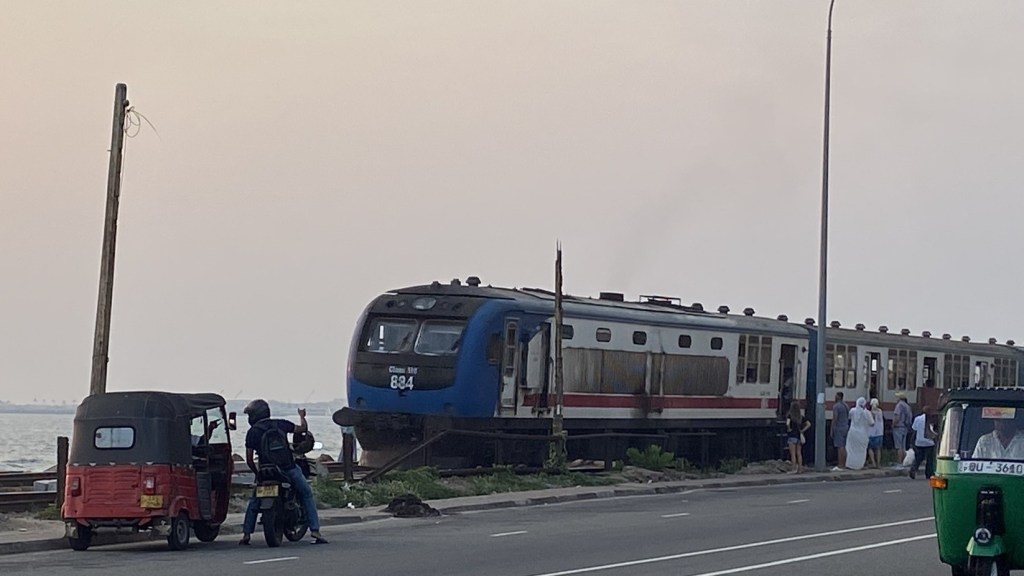
The Galle Face Green promenade sits at its heart. Originally built by the British Governor Sir Henry George Ward in 1859 for promenading and horse racing, it had been used previously by the Dutch to defend themselves against the Portuguese. Today it is flanked by 5-star hotels, casinos, embassies and a brand-new shopping mall, selling high-end goods. Colombo is a city of contrasts – the very richest and the very poorest. Security is still a priority in Colombo. Hotels and the malls, have airport-style security to get into the buildings. Many hotels will offer a ‘city tour’ which usually comprises the green, the Red Mosque and the National Museum.
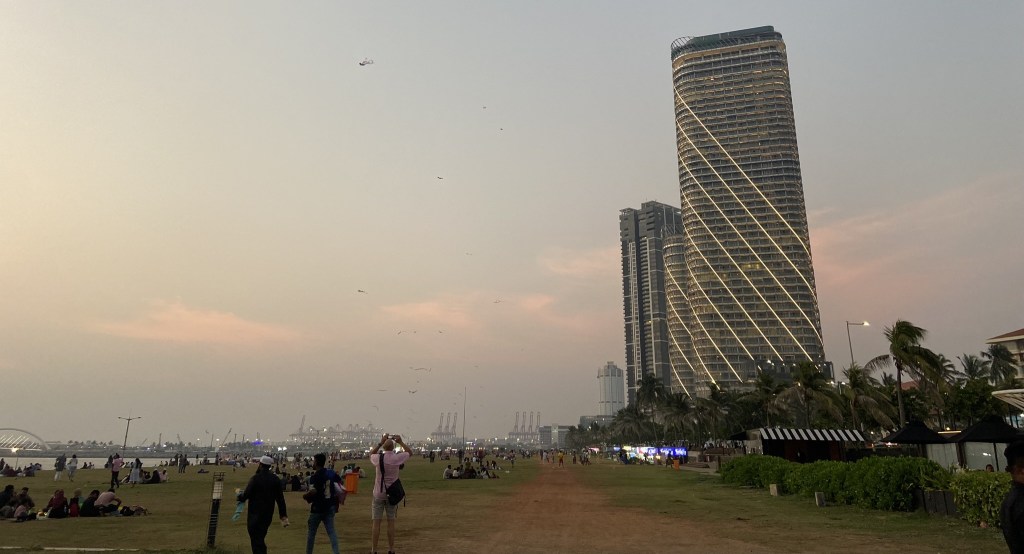
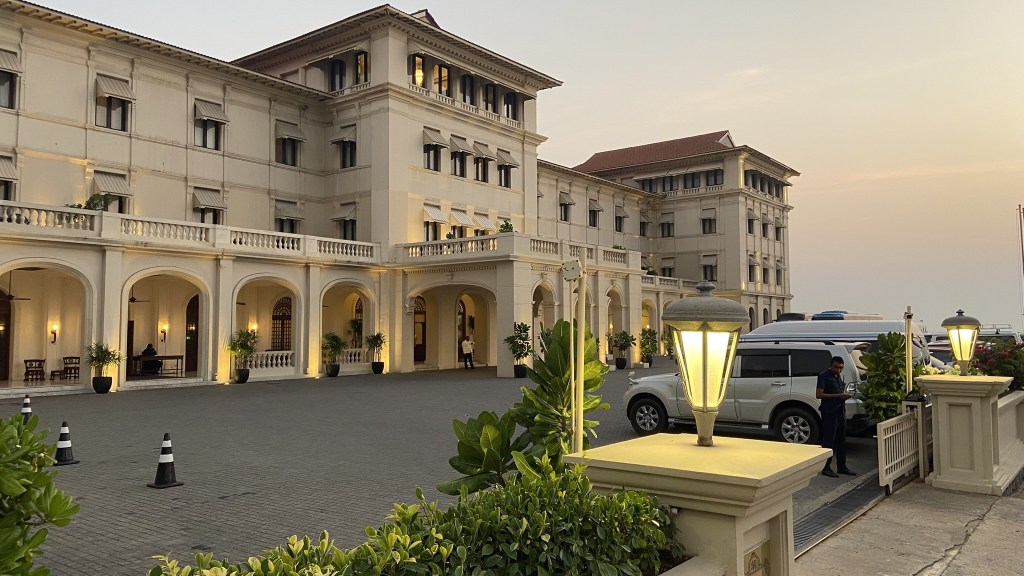
We were fortunate to arrive on Poya day (bank holiday). Galle Face Green was in full festival mode. Families of every religion had set up picnics and games of cricket. Hawkers sold street food and children’s toys, random drummers played. Most spectacular was the kite fliers. Everywhere, every family flew a kite – paper thin, simple and spectacular. We spent a glorious hour flying one we purchased cheaply from one of the numerous kite stalls. A Muslim family offered us some food. We then went to the famous Galle Face Hotel for some supper. It is a beautiful, colonial hotel at the top of the green. Don’t be put off by its exquisite exterior, it has numerous restaurants, catering to different budgets and tastes and was a joy. Just remember, that on Poya days, no alcohol is allowed to be sold anywhere in Sri Lanka, irrespective of hotel class…so we enjoyed soft drinks and coffee.
We had a wonderful night in Colombo. But we didn’t feel the need to stay longer. We stayed in a beautiful hotel with a rooftop pool and did enjoy an early morning swim. But we were equally excited to get out of the city and back to the other side of Sri Lanka.

 We travel not to escape life, but for life not to escape us.